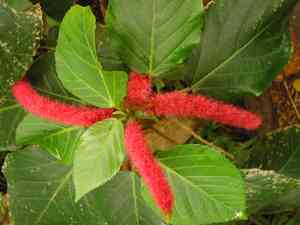
Red hot cat's tail (Acalypha hispida)
Also known as: Foxtail, Philippines medusa, Monkey Tail
Acalypha hispida, commonly known as Red hot cat's tail, is a tropical evergreen shrub. It gets its name from the French word "Chenille," which means caterpillar, due to its distinctive fuzzy red flowers. This plant flourishes in warm, humid environments with full sunlight and well-draining soil.
In This Article
Attributes of Red hot cat's tail
Lifespan
Perennial
Plant Type
Shrub
Plant Height
50 cm to 3 m
Spread
1.5 m to 2.5 m
Leaf Color
Green
Flower Size
30 cm
Flower Color
Red
Images of Red hot cat's tail

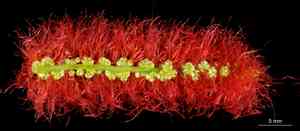
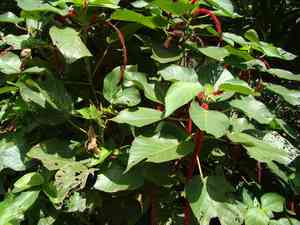
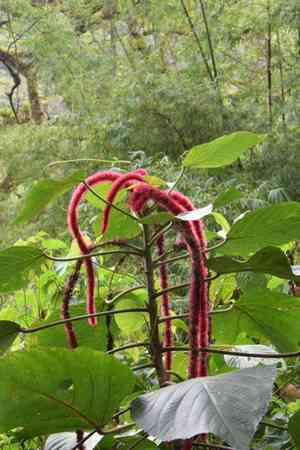
Quickly Identify Red hot cat's tail
1
Vibrant, drooping pendant flowers up to 18 inches (46 cm) long.
2
Medium green leaves, oval to heart-shaped, 4-8 inches (10-20 cm) long.
3
Striking flowers resemble dark pink to red caterpillars, 16 inches (40 cm) long.
Scientific Classification of Red hot cat's tail
Phylum
Vascular plants
Class
Dicotyledons
Order
Nances, spurges, willows and allies
Family
Spurge
Genus
Copperleafs
Species
Red hot cat's tail
Planting and Growing of Red hot cat's tail
Care Difficulty
Easy
Watering Schedule
Every 4 days
Sunlight Requirements
Full sun
Sunshine Duration
4-6 hours
Ideal Temperature
65-80℉
Soil Type
Potting Mix, Peat Mix
Soil pH
6.5-7.5
Fertilizer Type
Balanced
Pruning Season
Spring, Summer
Pruning Area
Branches, Leaves
Pruning Frequency
2 times a year
Repotting Season
Spring
Pot Type
Plastic, Ceramic
 How to Water Red hot cat's tail?
Acalypha hispida requires a consistent watering approach where soil should be kept moist but not waterlogged. It's important that water seeps through the bottom of the pot during watering, ensuring the soil is thoroughly saturated. Typically, around 500 ml per session is ideal to maintain healthy growth.
What are the symptoms of an underwatered Red hot cat's tail?
›
What should I do if my Red hot cat's tail is not getting enough water?
›
What are the symptoms of an overwatered Red hot cat's tail?
›
How to save an overwatered Red hot cat's tail?
›
 What Are the Sunlight Requirements for Red hot cat's tail?
Acalypha hispida prefers a range of full sun to partial sun, which ensures optimal blooming and healthy foliage. Proper lighting leads to robust flowering and lively growth.
More About Sunlight Requirements Techniques→
What type of sunlight does Acalypha hispida need?
›
How to achieve ideal lighting for Acalypha hispida?
›
Why is ideal lighting important for Acalypha hispida?
›
 What Is the Ideal Temperature Range for Red hot cat's tail?
The ideal temperature range for Acalypha hispida, commonly known as Chenille Plant, typically lies between 65°F and 80°F. This range ensures optimal growth and vibrant foliage. Acalypha hispida thrives in warm environments and is sensitive to cold temperatures, which can inhibit its growth and cause stress on the plant.
 What Soil is Best for Red hot cat's tail?
Acalypha hispida thrives in soils that can retain adequate moisture without becoming waterlogged. Consistent moisture aids in the plant's vibrant growth and flower production, ensuring its characteristic fluffy red spikes don't succumb to wilting. This plant demands a nutrient-rich soil to support its lush foliage and prolific flowering. Soils imbued with organic matter or compost provide essential nutrients that enhance growth and development. While retaining moisture, the soil must also have good drainage properties. Proper drainage prevents root rot and other diseases, helping the plant maintain a strong and healthy root system.
 How to Fertilize Red hot cat's tail?
Acalypha hispida responds well to a moderate amount of fertilizer. Use a balanced liquid fertilizer diluted to half strength, approximately 20-30 ml per liter of water, ensuring every plant receives adequate nutrients without risk of overfeeding.
 How to Prune Red hot cat's tail?
Begin pruning Acalypha hispida by using a pair of sharp, clean shears. Trim back any dead or diseased branches first to maintain plant health. Then, prune excess foliage to shape the plant and encourage denser growth. Cut just above a leaf node to stimulate new growth from that point. To boost flower production, strategically prune old flowers and branches that have already bloomed. By removing spent flowers, you direct the plant’s energy towards producing new bloom clusters, ensuring constant visual appeal and vibrant flowering throughout the growing seasons.
More About Pruning Techniques→
 How to Propagate Red hot cat's tail plant?
1
For seed propagation, collect mature seeds from healthy plants. For cuttings, use sterilized pruning shears to take 4-6 inch stem cuttings from non-flowering parts of the plant.
2
For seeds, fill trays with a seed-starting mix. For cuttings, use a mix of peat moss and perlite. This ensures good drainage and aeration, critical factors for rooting.
3
Sow seeds lightly and cover with a thin layer of soil. For cuttings, ensure at least 2 inches are buried. Water them adequately and place them in a warm, well-lit area but away from direct sunlight.
 How to Repot Red hot cat's tail plant?
1
Repotting Acalypha hispida is necessary when the plant outgrows its pot or roots start appearing through drainage holes. Spring or early summer is ideal as the plant experiences growth spurts.
2
Choose a pot that is 1-2 inches larger in diameter than the current one. This ensures enough room for root growth while preventing waterlogging, which can lead to root rot.
3
Opt for a rich, well-draining soil mix. This type of soil helps retain the right amount of moisture while allowing excess water to escape, reducing the risk of root rot.
Learn More About Red hot cat's tail Diseases
Anthracnose
Bacterial Leaf Spot
Bacterial Soft Rot
Bacterial Wilt
Black Spot
Chemical Injury
Crown Gall
Damping-off
Downy Mildew
Drought Stress
Fusarium Wilt
Gray Mold
Leaf Curl
Leaf Spot
Mosaic
Nutrient Deficiency
Nutrient Toxicity
Powdery Mildew
Root Rot
Root-knot Nematode
Rusts
Sooty Mold
Spider Mites
Temperature Stress
Thrips Damage
White Mold



