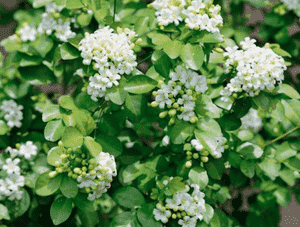
Orange jasmine (Murraya paniculata)
Also known as: Chinese box, Orange jessamine
Orange jasmine, a tropical evergreen tree or shrub, can reach heights of up to 7 meters. Closely related to citrus plants, it features small, fragrant white flowers that attract bees and other pollinators. Additionally, its small fruits serve as a food source for various bird species, making it a versatile plant for hedges and gardens.
In This Article
Attributes of Orange jasmine
Lifespan
Perennial
Plant Type
Shrub
Plant Height
12 m
Spread
3.5 m
Leaf Color
Green
Flower Size
2 cm
Flower Color
White
Images of Orange jasmine
Quickly Identify Orange jasmine
1
Recognizable by its glossy, pinnate leaves, small fragrant white flowers, and bright red or orange berries. The plant has a dense, bushy appearance and an overall glossy sheen.
Scientific Classification of Orange jasmine
Phylum
Vascular plants
Class
Dicotyledons
Order
Sapindales
Family
Rue
Genus
Murraya
Species
Orange jasmine
Planting and Growing of Orange jasmine
Care Difficulty
Easy
Watering Schedule
Every 3 days
Sunlight Requirements
Partial sun
Sunshine Duration
6-10 hours
Ideal Temperature
65-80℉
Soil Type
Potting Mix, Peat Mix
Soil pH
6.5-7.5
Fertilizer Type
Balanced
Pruning Season
Spring, Summer
Pruning Area
Branches, Leaves
Pruning Frequency
2 times a year
Repotting Season
Spring
Pot Type
Plastic, Ceramic
 How to Water Orange jasmine?
When watering Murraya paniculata, it's crucial to ensure the soil is uniformly moist but not waterlogged. Aim for around 250 milliliters each session, allowing the soil to dry slightly between waterings to prevent root rot.
More About Watering Techniques→
What are the symptoms of an underwatered Orange jasmine?
›
What should I do if my Orange jasmine is not getting enough water?
›
What are the symptoms of an overwatered Orange jasmine?
›
How to save an overwatered Orange jasmine?
›
 What Are the Sunlight Requirements for Orange jasmine?
Partial sunlight is perfect, providing benefits like enhanced blooming, richer leaf color, and sustained growth. Adequate light exposure mimics Murraya paniculata's native habitat, supporting its overall health and resilience.
More About Sunlight Requirements Techniques→
Amount of Light Needed
›
Solutions for Ideal Lighting
›
Benefits of Ideal Lighting
›
 What Is the Ideal Temperature Range for Orange jasmine?
The ideal temperature range for Murraya paniculata, commonly known as Orange Jasmine, is between 65°F and 80°F. This warmth aligns with their native tropical and subtropical climates, providing optimal conditions for growth and blooming. To ensure robust health and flowering, maintaining this temperature range is advised, as it mimics the natural environment of the species.
 What Soil is Best for Orange jasmine?
Murraya paniculata thrives in well-drained soil, which allows excess water to pass through easily, preventing waterlogging and root rot. This promotes healthy root development and vigorous growth. The plant benefits from soil rich in organic matter. Nutrient-rich soil supports better flowering and overall vitality, providing essential nutrients that foster lush foliage. While the soil should be well-drained, it should also retain some moisture to keep the plant hydrated during dry spells. This balance ensures sustained growth and resilience against drought.
More About Soil→
 How to Fertilize Orange jasmine?
For Murraya paniculata, use a balanced liquid fertilizer at a concentration of 20-20-20. When using solid fertilizer, ensure an even application of approximately 1 pound per 100 square feet of soil, adjusting based on plant size and growth stage.
More About Fertilizing Techniques→
 How to Prune Orange jasmine?
Start by trimming away any branches that are obviously dead, diseased, or damaged. This helps redirect energy to healthier parts of the plant. Trim to maintain the plant's natural shape or encourage a denser growth. Cut just above a leaf node pointing in the desired direction. Thin out overly dense areas to improve airflow, which prevents fungal diseases. This is crucial especially in regions with high humidity.
 How to Propagate Orange jasmine plant?
1
Murraya paniculata seeds can be collected from mature fruit when they turn orange or red. Ensure the seeds are cleaned and dried before planting to prevent fungal infections.
2
Take semi-hardwood cuttings from the parent plant in spring. Cut about 10-15 cm long sections from healthy shoots with at least three nodes present.
3
Place the seeds or cuttings in a well-draining growing medium. Plant seeds about 1 cm deep and cuttings should be planted deep enough to hold steady, ensuring contact with the soil.
 How to Repot Orange jasmine plant?
1
The best time to repot Murraya paniculata is when you notice the roots are growing through the drainage holes, the plant is becoming root-bound, or growth appears stunted. These signs indicate that the plant needs more space to grow, and repotting will allow it to thrive and continue its lush development.
2
Choose a pot that is 2 to 4 inches larger in diameter than the current one. This allows the roots ample space to expand without drowning them in excess soil, which could lead to water retention problems. A pot with drainage holes is crucial to prevent waterlogging and promote healthy root aeration.
3
Opt for a well-draining potting mix composed of peat, vermiculite, and perlite. Such a mix ensures adequate air circulation and moisture retention. This balance helps prevent root rot, allows the plant to absorb nutrients effectively, and supports robust growth.
Learn More About Orange jasmine Diseases
Anthracnose
Bacterial Leaf Spot
Bacterial Soft Rot
Bacterial Wilt
Black Spot
Chemical Injury
Crown Gall
Damping-off
Drought Stress
Fusarium Wilt
Gray Mold
Leaf Curl
Leaf Spot
Mosaic
Nutrient Deficiency
Nutrient Toxicity
Powdery Mildew
Root Rot
Root-knot Nematode
Sooty Mold
Spider Mites
Temperature Stress
Thrips Damage



