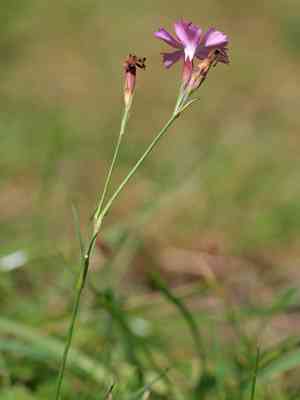
The Hidden Danger in Your Home? Unmasking the Toxicity of the Carthusian pink Plant.
1
Carthusian pink possesses saponins, rendering every part of the plant slightly poisonous to people, felines, and canines.
2
Consuming carthusian pink may lead to digestive issues such as throwing up, loose stools, and an upset stomach in all species.
3
Prompt veterinary attention is vital for animals that consume carthusian pink to address symptoms efficiently.
Is Carthusian pink harmful to people?
Carthusian pink exhibits a low level of toxicity to humans, mainly through consumption. The whole plant contains saponins, which are the poisonous compounds responsible for its harmful nature. If consumed, carthusian pink can induce various symptoms due to saponins' capacity to disrupt typical cell function. Individuals who eat parts of carthusian pink might experience digestive upset, marked by sickness, throwing up, and loose stools. The effects are usually not severe but can be quite unpleasant. Since all parts of carthusian pink are toxic, caution should be exercised to prevent accidental intake, especially where children or animals might encounter the plant.
Is Carthusian pink harmful to felines?
Carthusian pink shows slight toxicity to cats. Felines can be poisoned if they accidentally consume any portion of the plant, as its complete structure holds toxic elements. The existence of saponins in carthusian pink can cause negative responses in cats. Exposure typically results in digestive disturbances, which might appear as throwing up, loose stools, or other signs of distress. Cat guardians should observe their pets carefully and get immediate veterinary help if poisoning is suspected to guarantee their feline friend's health and welfare.
Is Carthusian pink harmful to canines?
The plant species carthusian pink is categorized as having minor toxicity to dogs. Dogs can be poisoned if they ingest any part of the plant, as the entire plant is poisonous. When consumed by error, dogs may display signs such as digestive upset, which could involve throwing up and loose stools. The presence of saponins in carthusian pink is accountable for these negative impacts. If a dog consumes carthusian pink, it is vital to seek immediate veterinary attention to ensure proper treatment and management of any symptoms.



