How to Prune English sundew?
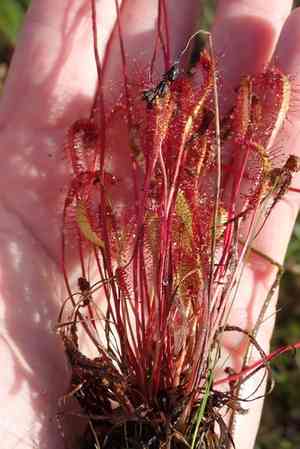
This insectivorous variety, characterized by sticky, dew-laden filaments that trap insects, needs very little trimming. For english sundew, snip off faded blossoms once they've bloomed and discard any deceased or darkened foliage to ensure its well-being and appearance. Execute these actions in the spring or summer to coincide with english sundew's vigorous development phase. Trimming aids it by encouraging strong development and averting decomposition. Sanitized implements are essential to avert the transmission of pathogens during this sensitive procedure.
Advantages of Trimming English Sundew
Advantages of Trimming English Sundew
Trimming english sundew ensures the removal of non-functional or dead traps, helping it to conserve energy and resources, which leads to more robust growth. This upkeep also helps maintain english sundew in its desired compact shape, enhancing its unique look.
Optimal Period for Trimming English Sundew
Optimal Period for Trimming English Sundew
Trimming english sundew from late spring to early summer aligns with its post-dormancy phase when the plant resumes active development. During this time, cutting can stimulate english sundew's growth, as it will have the entire season to recover and produce new foliage. Additionally, this timing avoids pruning the plant during its blooming period and prevents stressing it during winter dormancy. Late spring to early summer pruning also ensures the plant stays healthy and maintains a compact, appealing form. Furthermore, it allows gardeners to remove any winter-damaged or deceased tissue, encouraging a vigorous return in growth.
Essential Tools for Trimming English Sundew
Precision Pruners
Given the small size and delicate nature of english sundew, precision pruners or micro-tip snips are ideal. They enable accurate removal of dead or dying leaves without harming the rest of the plant.
Tweezers
Tweezers are recommended for english sundew when needing to extract small insects or debris caught in the sticky traps without damaging the plant's sensitive leaves.
Scissors with Fine Tips
Scissors with fine tips can be utilized for careful trimming of english sundew's leaves if precision pruners are unavailable. Ensure they are sharp to prevent tearing the leaves.
How to Trim English Sundew
Sanitation
Sterilize your pruning tools with isopropyl alcohol or a 10% bleach solution to prevent the spread of disease to english sundew.
WitheredLeaves
Gently remove withered leaves at their base using your fingers or tweezers, pulling away from english sundew's stem to avoid damage to the plant's delicate structure.
DiseasedLeaves
Carefully trim away any diseased leaves from english sundew with sterilized scissors or pruning shears, cutting at the base of the leaf where it meets the stem.
DiseasedStems
Cut back any diseased stems of english sundew to healthy tissue, ensuring a clean cut to prevent the disease from spreading further.
Disposal
Properly dispose of all pruned material away from english sundew and other plants to avoid re-infection or attracting pests.
Common Trimming Errors with English Sundew
Over-pruning
Removing too many leaves or traps of english sundew can stress the plant, leading to stunted growth or even death.
Pruning healthy traps
Cutting off healthy traps from english sundew diminishes its ability to capture prey and photosynthesize effectively; only prune dead or dying parts.
Dirty tools
Using unsterilized tools can introduce disease to english sundew, causing more harm than good during the pruning process.
Pruning during dormancy
While the best season is excluded, pruning english sundew during its dormancy period is a mistake as it needs all its energy reserves to survive until the growing season.
General Trimming Advice for English Sundew
Disinfect tools
Before pruning english sundew, always sterilize your tools to prevent the spread of pathogens.
Remove only dead tissue
Prune only the brown, dead traps to avoid harming the plantâs growth. Live traps, even if they are not actively catching prey, still contribute to photosynthesis.
Use precision
Be precise when pruning english sundew, cutting close to the base of the dead trap without damaging nearby healthy tissue.
Regular inspection
Check english sundew regularly for dead traps, especially after flowering, as they can drain energy from the plant if not removed.



