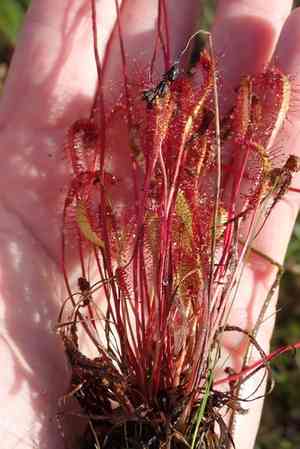
English sundew (Drosera anglica)
Also known as: Narrow-leaf sundew
The English sundew (Drosera anglica) is a temperate carnivorous plant found in northern parts of North America, Europe, and Asia, including Japan. It typically thrives in open marshes and bogs. Characterized by its numerous hair-like structures coated with sticky "dew," the plant traps insects, causing its paddle-shaped leaves to curl around the prey for digestion.
In This Article
Attributes of English sundew
Lifespan
Perennial
Plant Type
Herb
Plant Height
2 cm
Spread
5 cm
Leaf Color
Green, often with red highlights
Flower Size
6 mm
Flower Color
White
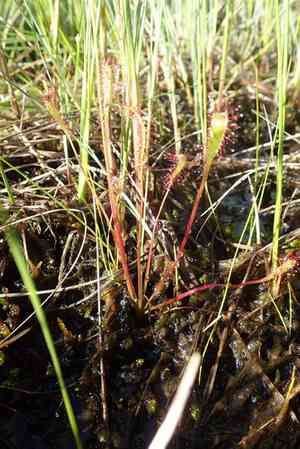
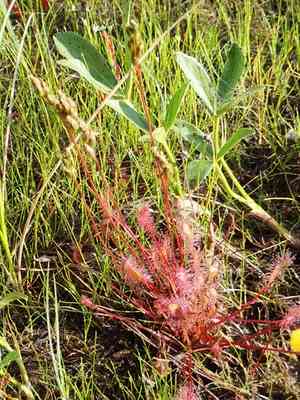
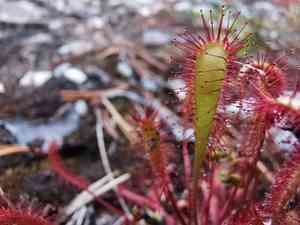
Images of English sundew
Quickly Identify English sundew
1
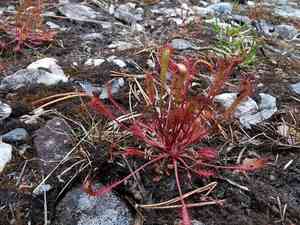
Drosera anglica can be identified by its elongated, narrow leaves that are covered in glandular hairs (trichomes) secreting a sticky substance. The plant typically exhibits a reddish hue due to the high concentration of anthocyanins.
Scientific Classification of English sundew
Phylum
Vascular plants
Class
Dicotyledons
Order
Caryophyllales
Family
Sundew
Genus
Sundews
Species
English sundew
Planting and Growing of English sundew
Care Difficulty
Hard
Watering Schedule
Every 15 days
Sunlight Requirements
Full sun
Sunshine Duration
4-6 hours
Ideal Temperature
50-77℉
Soil Type
Potting Mix, Peat Mix
Soil pH
4-5.5
Fertilizer Type
Balanced
Pruning Season
Spring, Summer
Pruning Area
Branches, Leaves
Pruning Frequency
2 times a year
Repotting Season
Spring
Pot Type
Plastic, Ceramic
 How to Water English sundew?
Drosera anglica, commonly known as the English Sundew, thrives in wet, boggy conditions. This plant prefers its soil to be consistently moist but not waterlogged. Aim to keep about 250 mL of distilled water in its growing medium at each watering session. The guiding principle here is to replicate its natural bog environment, ensuring the substrate is always damp to encourage healthy growth.
What are the symptoms of an underwatered English sundew?
›
What should I do if my English sundew is not getting enough water?
›
What are the symptoms of an overwatered English sundew?
›
How to save an overwatered English sundew?
›
 What Are the Sunlight Requirements for English sundew?
Drosera anglica thrives in full to partial sunlight environments. Ensuring consistent light exposure encourages photosynthesis, supports its carnivorous activities, and leads to vibrant colors and sturdy growth.
More About Sunlight Requirements Techniques→
What is the optimal light condition for Drosera anglica?
›
How can one achieve the ideal light conditions for this plant?
›
What benefits does Drosera anglica gain from ideal light exposure?
›
 What Is the Ideal Temperature Range for English sundew?
Drosera anglica thrives best at temperature ranges between 50°F and 77°F. This is because the plant is adapted to naturally cooler climates often found in temperate regions. The conditions mimic those of its natural habitats, providing sufficient warmth during growth periods while avoiding excessive heat, which could stress the plant.
 What Soil is Best for English sundew?
Drosera anglica thrives in soils that retain a high level of moisture. This ensures that the roots are consistently hydrated, which supports the plant's ability to capture insects for nutrients. Moist, acidic conditions mimic their natural boggy habitats and are crucial for their survival. The plant favors an acidic soil environment with a low pH. This acidity helps in nutrient availability, aiding in the plant's digestive processes as it extracts nutrients from both the soil and its prey. Drosera anglica has evolved to thrive in nutrient-poor soils. The relative lack of soil nutrients encourages the plant to focus on its insect-catching mechanisms, supplementing its diet with vital nutrients not found in the soil.
 How to Fertilize English sundew?
For Drosera anglica, minimal fertilization is required. When using liquid fertilizer, dilute to 1/4 strength to avoid root burn. Slow-release fertilizer should also be at a quarter of the suggested dosage and used sparingly.
 How to Prune English sundew?
Begin by carefully inspecting the plant to identify any dead or dying leaves. These will be brown or black and lack the distinctive dew of healthy leaves. Once you have identified the dead leaves, use your sharp tools to trim them close to the base of the plant, ensuring you don't damage any healthy parts. During pruning, it’s also a good time to check for pests or diseases, making sure to clean and treat as necessary to prevent any detrimental effects on the plant. After pruning, closely monitor new growth to ensure the plant is responding well. Look for vibrant and sticky new leaves, which indicate a healthy plant.
More About Pruning Techniques→
 How to Propagate English sundew plant?
1
Start by collecting seeds from mature Drosera anglica plants. Clean the seeds thoroughly to remove any debris, as this can affect germination. Use a sieve to rinse seeds under running water, then allow them to dry on a paper towel.
2
Fill seed trays with a nutrient-poor, acid-based medium like sphagnum moss or a peat and sand mixture. Sow seeds on the surface without covering them, as light aids their germination. Mist with distilled water to keep moist.
3
For tissue culture, prepare a sterile working environment. Select healthy tissue samples from a parent plant and use a sterile scalpel to cut them into small pieces. Place pieces on a culture medium under controlled conditions.
 How to Repot English sundew plant?
1
Drosera anglica should be repotted when you notice root overgrowth or declining health due to depleted soil nutrients. Ideally, check during the Spring or early Summer when the plant begins its growth phase.
2
Choose a pot slightly larger than the root ball, ideally plastic or glazed ceramic, to retain moisture without letting the soil dry out too quickly. The pot should have drainage holes to prevent waterlogging, which is detrimental to this aquatic plant.
3
Opt for an acidic peat-based soil mix without added fertilizers. This mix mimics the nutrient-poor acidic bog conditions of their natural habitat, preventing mineral burn and ensuring proper moisture retention.



