How to Prune Jumping cholla?
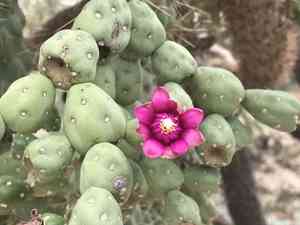
Recognized for its chain-link fence aesthetic and readily detaching barbed spines, jumping cholla needs very little trimming. Essential methods include eliminating deceased or injured stalks and managing its expansion by severing at the junctures. The most suitable period for pruning is from late winter to early spring, while the plant is inactive, to stimulate robust new development. Important precautions involve donning protective attire to avoid harm from its spines. Trimming benefits jumping cholla by preserving its form, fostering development, and lessening unintentional encounters with its easily detached spines.
What Are the Benefits of Pruning Jumping Cholla?
What Are the Benefits of Pruning Jumping Cholla?
Trimming jumping cholla encourages robust development and maintains its form, fostering a controlled, healthy plant structure suited to its surroundings.
What Is the Best Time for Pruning Jumping Cholla?
What Is the Best Time for Pruning Jumping Cholla?
Trimming jumping cholla in late winter and early spring aligns with the period just before the start of the new growth cycle, which typically begins in spring. This timing is ideal as it ensures that any cuts made will soon be followed by fresh growth, allowing jumping cholla to recover quickly and reducing the chances of stress or illness. Additionally, at the close of winter, the plant is still dormant, making it simpler to view the structure of jumping cholla without leaves obstructing the sight. This facilitates a more accurate pruning process. Furthermore, removing parts of jumping cholla before it directs energy into new growth ensures that energy is conserved for healthy sections of the plant, leading to more vigorous development in the growing season. Pruning in early spring, just prior to flowering, can also help shape the plant and manage its size without significantly impacting the bloom or fruiting that occurs later in the year.
What Tools Do I Need to Prune Jumping Cholla?
Heavy-duty gloves
Protection is vital when trimming jumping cholla. The plant's spines can pierce skin, so thick, robust gloves are essential for hand safety.
Long-handled loppers
These are needed to reach into and trim jumping cholla's thick, woody stems safely from a distance, minimizing the risk of getting spines embedded in the skin.
Pruning saw
A saw might be required for larger, more mature stems of jumping cholla where loppers cannot handle the thickness. It provides a clean cut, which is important for the plant's health.
Rake
After trimming jumping cholla, use a rake with sufficiently long handles to gather and discard the cuttings without direct contact, due to the plant's spines that can detach and stick to the skin.
Tweezers or tongs
These can assist in removing any spines that become lodged in tools or clothing during the trimming of jumping cholla, enabling safe disposal.
How to Prune Jumping Cholla
Preparation
Wear sturdy gloves and use long-handled pruning tools to guard against jumping cholla's sharp spines. Clean tools with disinfectant to prevent disease transmission.
Identifying
Inspect jumping cholla for dead or diseased branches, which may appear shriveled, discolored, or exhibit an unusual growth pattern.
Cutting Dead Branches
Sever dead branches at their base where they meet healthy tissue, using pruning shears or a saw, depending on thickness. Make clean, precise cuts to avoid harming jumping cholla.
Removing Diseased Branches
Eliminate diseased branches by cutting well into the healthy tissue beyond the affected area to ensure all infected parts are removed from jumping cholla.
Disposal
Promptly and carefully discard removed material to prevent any pieces from rooting or spreading disease. Do not compost jumping cholla's cuttings.
Common Pruning Mistakes with Jumping Cholla
Utilizing Improper Tools
Using dull or unsuitable tools can harm the jumping cholla's tissue, leading to poor healing and potential infection.
Pruning Too Much
Excessive pruning can stress the jumping cholla, potentially hindering its growth or even causing its demise. Remove only what is necessary.
Neglecting Safety Measures
Jumping cholla, like other cacti, possesses spines that can cause injury. Failing to wear protective gloves and use tools like tongs can result in painful encounters.
Incorrect Cutting Angle
Cuts made at improper angles can leave the jumping cholla vulnerable to pathogens. Always cut at an angle that encourages water runoff away from the cut surface.
Tearing Branches
Jagged or torn limbs can occur if branches are pulled off instead of cut cleanly, inviting diseases and pests.
Common Pruning Tips for Jumping Cholla
Use Sharp Tools
Ensure that cutting instruments are sharp and clean to achieve precise cuts, minimizing damage and promoting faster healing.
Protective Gear
When trimming the jumping cholla, always wear thick protective gloves and use tools like tongs to maintain a safe distance from the spines.
Selective Pruning
Focus on removing only dead or diseased material and any growth that detracts from the plant's form or health.
Disinfect Tools
Between cuts, especially when moving between different plants, disinfect tools to prevent the spread of disease.
Appropriate Disposal
Carefully dispose of the removed sections of the jumping cholla to prevent them from taking root elsewhere or causing injuries.



