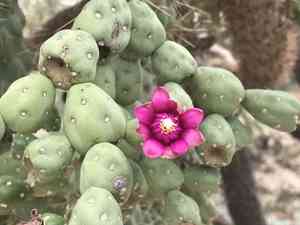
Jumping cholla (Cylindropuntia fulgida)
Also known as: Hanging chain cholla
The jumping cholla stands out due to its tree-like structure and branches densely packed with spines, giving it a fuzzy look. Each stem segment often ends with a fleshy fruit that eventually loses its spines and can stay attached for years.
In This Article
Attributes of Jumping cholla
Lifespan
Perennial
Plant Type
Tree, Shrub
Plant Height
2.5 m
Spread
1.5 m
Leaf Color
Leaves are reduced to small, non-functional leaves that fall off soon after sprouting
Flower Size
2.5 - 3.5 cm (around 1 - 1.4 inches)
Flower Color
Purple Pink Green Red
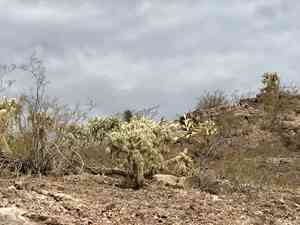
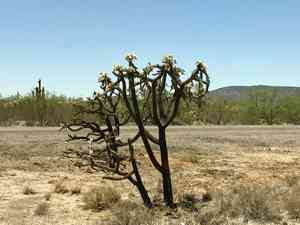
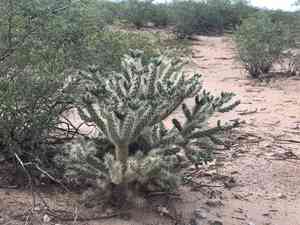
Images of Jumping cholla
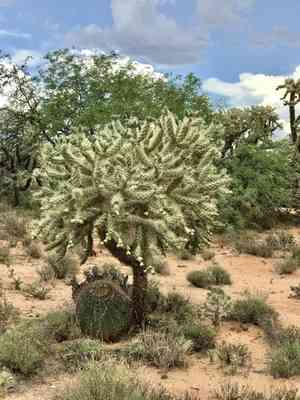
Quickly Identify Jumping cholla
1
Identify Cylindropuntia fulgida by its distinctive cylindrical stems, spiny segments, and the chain-like arrangement of its fruits. The plant often appears to almost \'jump\' and attach to passersby, hence the nickname \'Jumping cholla\'.
Scientific Classification of Jumping cholla
Phylum
Vascular plants
Class
Dicotyledons
Order
Caryophyllales
Family
Cactuses
Genus
Chollas
Species
Jumping cholla
Planting and Growing of Jumping cholla
Care Difficulty
Easy
Watering Schedule
Every day
Sunlight Requirements
Full sun
Sunshine Duration
6-10 hours
Ideal Temperature
70-90℉
Soil Type
Potting Mix, Peat Mix
Soil pH
6.5-7.5
Fertilizer Type
Balanced
Pruning Season
Spring, Summer
Pruning Area
Branches, Leaves
Pruning Frequency
2 times a year
Repotting Season
Spring
Pot Type
Plastic, Ceramic
 How to Water Jumping cholla?
When watering Cylindropuntia fulgida, aim to provide approximately 100 milliliters of water each time. This cactus requires sparse watering, primarily mimicking its natural desert environment. Ensure that the soil is completely dry before the next watering to prevent root rot.
What are the symptoms of an underwatered Jumping cholla?
›
What should I do if my Jumping cholla is not getting enough water?
›
What are the symptoms of an overwatered Jumping cholla?
›
How to save an overwatered Jumping cholla?
›
 What Are the Sunlight Requirements for Jumping cholla?
Cylindropuntia fulgida thrives in full sun conditions, requiring 8 to 10 hours of direct sunlight each day. Ideal light conditions enhance its drought resistance and vibrant appearance.
More About Sunlight Requirements Techniques→
How much sun does it need?
›
What's the best way to achieve ideal lighting?
›
What benefits does ideal lighting bring?
›
 What Is the Ideal Temperature Range for Jumping cholla?
Cylindropuntia fulgida thrives best in warm climates with temperatures ranging from 70°F to 90°F. This range provides optimal conditions for the plant's physiological processes, including photosynthesis and nutrient uptake. Proper growth is sustained when temperatures are consistently warm during both day and night. Maintaining this ideal range ensures that the plant exhibits healthy growth, strong spine development, and vibrant coloration.
 What Soil is Best for Jumping cholla?
Cylindropuntia fulgida thrives in soil that allows excellent drainage, preventing root rot. This feature is crucial in avoiding waterlogged conditions that can lead to plant diseases, ensuring the cactus remains healthy and robust. This plant prefers nutrient-poor soils as it is adapted to arid environments. Excessive nutrients can actually hinder its growth, making a lean soil mix ideal for maintaining its natural growth cycle. A soil with a mineral-rich composition, replicating its native desert habitat, provides the essential elements for growth. This ensures the cactus can develop strong, healthy tissues despite minimal organic material.
More About Soil→
 How to Fertilize Jumping cholla?
For Cylindropuntia fulgida, the amount of fertilizer should be cautiously measured. Aim for approximately a quarter of the recommended amount compared to other houseplants due to their low nutrient requirements. Utilize a balanced fertilizer to ensure all necessary nutrients are provided.
More About Fertilizing Techniques→
 How to Prune Jumping cholla?
Focus on removing any dead, diseased, or damaged branches. Cut close to the base to promote healthy growth elsewhere on the plant. Prune strategically to maintain the desired shape and size of the plant. This keeps it from becoming unruly and encourages robust growth.
More About Pruning Techniques→
 How to Propagate Jumping cholla plant?
1
Choose healthy, disease-free stems from the parent plant. The stems should be firm and have a vibrant color, demonstrating the plant's health and readiness for propagation.
2
Use a sharp knife to cut a segment of about 6-8 inches in length. Let the cuttings callous over for a few days in a dry place to prevent rotting when planted.
3
Plant the calloused cuttings in a well-draining potting mix. Ensure the soil is dry before planting and provide indirect sunlight to allow proper rooting.
 How to Repot Jumping cholla plant?
1
Notice if your Cylindropuntia fulgida has outgrown its pot or if its growth has stalled unexpectedly. These are signals to repot. Additionally, if you observe poor drainage or roots protruding from the drainage holes, it's time to consider repotting.
2
Select a pot that is slightly larger than the current one. It should have drainage holes to prevent waterlogging. A well-chosen pot ensures the succulent's roots have room to grow and reduces the risk of root rot from excessive moisture.
3
Opt for a gritty cactus mix with added sand or perlite. This composition facilitates good drainage, crucial for preventing root rot and promoting a healthy environment for your Cylindropuntia fulgida.
Toxicity
Ingestion, Contact with sap
WARNING
The judgment on toxicity and danger is for reference only. We DO NOT GUARANTEE any accuracy of such judgment. Therefore, you SHALL NOT rely on such judgment. It is IMPORTANT TO SEEK PROFESSIONAL ADVICE in advance when necessary.



