How to Prune Blue-beard?
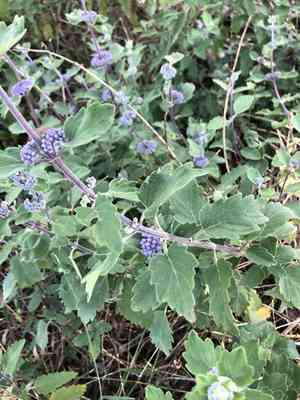
This leaf-shedding bush is recognized for its aromatic azure blossoms and silvery-green leaves. To encourage vigorous development and abundant flowering in blue-beard, trim it in late winter or early spring prior to the emergence of new shoots. Drastically reduce the plant, retaining approximately one-third of the prior year's development, to stimulate new stems and boost bloom production. Consistent trimming also aids in preserving an appealing form and averts excessive density, guaranteeing improved air movement and general plant well-being.
Advantages of Trimming Blue-beard
Advantages of Trimming Blue-beard
Trimming blue-beard promotes more robust development by eliminating old or dead sections, fostering healthier leaves and blossoms. It also aids in preserving the plant's form, ensuring a compact and visually appealing look.
Optimal Period for Trimming Blue-beard
Optimal Period for Trimming Blue-beard
Trimming blue-beard in late winter to early spring is ideal as this precedes the start of its new growth cycle. Pruning at this time allows for the removal of dead or damaged branches, which could impede new growth or lead to illness. Furthermore, since blue-beard flowers on new wood, pruning in late winter or early spring stimulates vigorous growth and abundant summer blooms. This timing ensures the plant has ample time to recover and produce new, flower-bearing growth. It's also simpler to discern the plant's structure without leaves, enabling more precise cuts. Additionally, the risk of disease transmission is lower in cooler weather. Adhering to these guidelines aligns with the plant's natural growth rhythm and prepares it for strong health and optimal flowering.
Necessary Tools for Trimming Blue-beard
Bypass Pruners
These are perfect for making clean cuts on the smaller, living stems of blue-beard, which can improve the shrub's health and appearance.
Lopping Shears
Useful for cutting through thicker branches that bypass pruners cannot manage, while still offering the precision needed for blue-beard's dense foliage.
Handheld Pruning Saw
Recommended for any mature or woody growth too large for loppers, ensuring minimal damage to blue-beard during trimming.
Hedge Shears
For shaping blue-beard, especially when maintaining hedges or dealing with multiple shrubs planted closely.
Pruning Gloves
Protection is crucial to prevent scratches from blue-beard's branches and any other potential irritants during the trimming process.
Disinfectant
To cleanse the trimming tools before and after use, which prevents the spread of disease among blue-beard plants or from other garden plants.
How to Trim Blue-beard
Sanitization
Before trimming blue-beard, clean and sterilize the pruning tools to prevent disease transmission.
Removal
Identify and cut away all diseased and withered leaves, as well as dead and diseased branches, using sharp pruning shears or loppers.
Shape
Trim blue-beard for shape by selectively removing any overgrown branches to maintain a tidy appearance; aim for an even, rounded silhouette.
Thinning
Thin out the center of the blue-beard to enhance air circulation and sunlight penetration by removing some of the older, inner stems at their base.
Cleanup
After trimming, clear away the removed plant material from around blue-beard, and properly dispose of any diseased parts to prevent re-infection.
Common Trimming Errors with Blue-beard
Excessive trimming
Removing too much foliage can stress blue-beard and hinder its growth. A good guideline is to trim no more than one-third of the plant at a time.
Incorrect cuts
Improper cutting techniques can harm blue-beard's stems. Cuts should be made at a 45-degree angle just above a node where new growth can emerge.
Neglecting tool sanitation
Using unsterilized tools can introduce diseases to blue-beard. It's vital to clean pruning tools before and after use to prevent pathogen spread.
Trimming for shape only
While shaping blue-beard is important for aesthetics, gardeners should also focus on removing dead, damaged, or diseased wood to promote plant health.
General Trimming Advice for Blue-beard
Identify growth pattern
Understand that blue-beard blooms on new wood. Trimming should encourage new growth where flowers can develop.
Thin out old wood
Regularly remove old, woody stems to rejuvenate blue-beard, which encourages new growth and better flowering.
Maintain plant size
Keep blue-beard within its desired size by cutting back stems uniformly, which also helps in maintaining an attractive shape.
Encourage basal growth
Cutting back blue-beard to the base will help in promoting more vigorous and fresh growth from the ground level.



