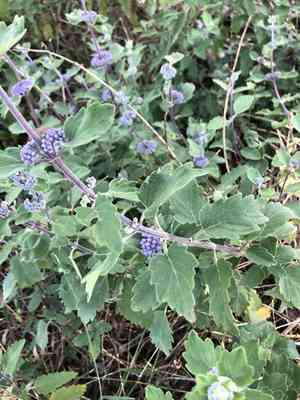
Blue-beard (Caryopteris incana)
Also known as: Blue Mistflower, Bluebeard, Blue Spirea
Caryopteris, commonly known as Bluebeard, originates from China and Japan. This small, compact shrub is known for its striking blue flowers that attract bees and butterflies. The plant's leaves and flowers emit a pleasant fragrance. It is easy to care for, resistant to deer, and can be utilized effectively as a hedge, in mixed borders, or as a perennial with blooms that extend into the fall season.
In This Article
Attributes of Blue-beard
Lifespan
Perennial
Plant Type
Shrub
Plant Height
1.2 m
Spread
1.5 m
Leaf Color
Green
Flower Size
2.5 cm
Flower Color
Blue Purple
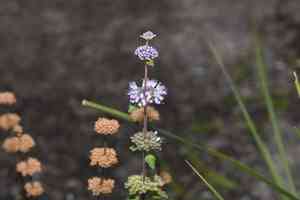
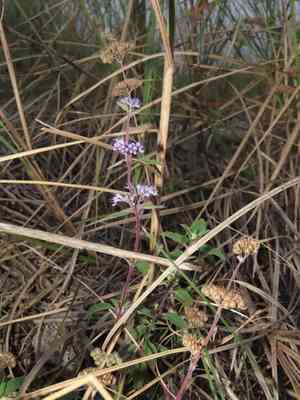
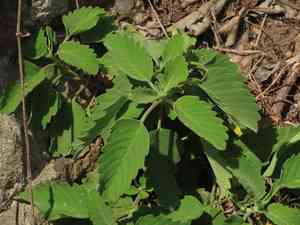
Images of Blue-beard
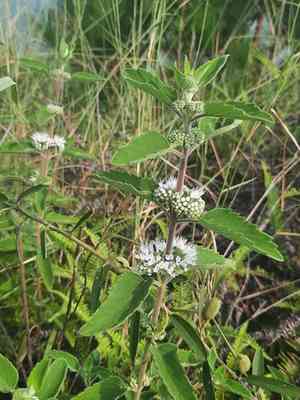
Quickly Identify Blue-beard
1
Identify Caryopteris incana by its small, fragrant, opposite leaves that are grey-green on top and silvery beneath. The flowers are typically blue, clustered in dense terminal or axillary cymes. It blooms from late summer to early fall.
Scientific Classification of Blue-beard
Phylum
Vascular plants
Class
Dicotyledons
Order
Mints plantains olives and allies
Family
Mint
Genus
Bluebeards
Species
Blue-beard
Planting and Growing of Blue-beard
Care Difficulty
Easy
Watering Schedule
Every 4 days
Sunlight Requirements
Full sun
Sunshine Duration
6-10 hours
Ideal Temperature
65-75℉
Soil Type
Potting Mix, Peat Mix
Soil pH
6.5-7.5
Fertilizer Type
Balanced
Pruning Season
Spring, Summer
Pruning Area
Branches, Leaves
Pruning Frequency
2 times a year
Repotting Season
Spring
Pot Type
Plastic, Ceramic
 How to Water Blue-beard?
Caryopteris incana prefers its soil to be consistently moist but never waterlogged. Ensure the water reaches 500 ml per session. This will allow the water to penetrate deeper, reaching the roots effectively, but ensure you do not see pooling on the surface.
What are the symptoms of an underwatered Blue-beard?
›
What should I do if my Blue-beard is not getting enough water?
›
What are the symptoms of an overwatered Blue-beard?
›
How to save an overwatered Blue-beard?
›
 What Are the Sunlight Requirements for Blue-beard?
Caryopteris incana ideally benefits from full sun to partial sun, enhancing its blooming potential and strengthening its structure thanks to adequate energy from sunlight for vibrant growth and flower production.
More About Sunlight Requirements Techniques→
What is the ideal lighting condition?
›
How to achieve ideal lighting?
›
What are the benefits of ideal lighting?
›
 What Is the Ideal Temperature Range for Blue-beard?
The ideal temperature range for Caryopteris incana to thrive is between 65°F to 75°F. This range provides optimal conditions for growth, ensuring that the plant maintains healthy foliage and vibrant blooms. Consistent temperatures within this range promote the best flowering and overall plant health.
 What Soil is Best for Blue-beard?
Caryopteris incana thrives in well-drained soil as it prevents waterlogging, which can lead to root rot. A well-drained environment ensures that the roots have sufficient access to air, encouraging healthy plant growth. This plant prefers soil with moderate fertility. Excess nutrients can lead to excessive foliage growth with fewer flowers. Providing a balanced nutrient mix helps in maintaining the plant's vibrant flowering. Soil with a neutral to slightly alkaline pH (6.5-7.5) ensures optimal nutrient availability for Caryopteris incana. Maintaining this pH balance helps in the absorption of critical nutrients like potassium and phosphorus.
 How to Fertilize Blue-beard?
Caryopteris incana, commonly known as bluebeard, prefers a moderate fertilization approach. When using liquid fertilizers, dilute them to half the recommended strength, applying about 500ml per plant. For solid fertilizers, use 50-70 grams per plant, evenly distributed around the root zone.
 How to Prune Blue-beard?
Start pruning Caryopteris incana in late spring when new growth becomes visible. Identify any dead or damaged stems; these should be removed immediately to promote plant health. Trim back the plant by about one-third its size using clean, sharp shears to encourage a bushier growth and better airflow. Focus on cutting just above a leaf node and angle the cut slightly, which helps water runoff and prevents disease. Ensure that you cut no more than one-third of any healthy stem to prevent shocking the plant, which could hinder its growth.
More About Pruning Techniques→
 How to Propagate Blue-beard plant?
1
Fill seedling trays with a well-draining potting mix. Sow Caryopteris incana seeds on the surface and cover with a light layer of soil. Keep the soil consistently moist until germination occurs.
2
Select healthy stems and cut about 4-6 inches below a node. Remove leaves from the bottom half of the cutting and dip the cut end into rooting hormone before inserting into potting medium.
3
Once seedlings or cuttings have developed a strong root system, transplant them into individual pots filled with well-draining soil, allowing them to grow further before moving outdoors.
 How to Repot Blue-beard plant?
1
Knowing when to repot Caryopteris incana is crucial. If you notice the roots are circling the soil surface or emerging from the drainage holes, it's time. Additionally, when growth slows or the plant appears stressed despite adequate care, consider repotting. This ensures your plant continues to thrive in an optimal environment.
2
When selecting a pot for Caryopteris incana, opt for one that's slightly larger than the current pot, ideally one or two inches wider in diameter. This allows room for root expansion and prevents excessive soil moisture retention, reducing the risk of root rot. Ensure the pot has drainage holes to facilitate adequate water drainage.
3
Selecting the right soil is crucial for Caryopteris incana. Opt for a well-drained sandy loam mix, which provides excellent drainage while retaining necessary nutrients. This type of soil ensures the roots don't sit in water, fostering a healthier root system and promoting robust growth.
Learn More About Blue-beard Diseases
Anthracnose
Bacterial Leaf Spot
Bacterial Soft Rot
Bacterial Wilt
Black Spot
Chemical Injury
Crown Gall
Damping-off
Downy Mildew
Drought Stress
Fusarium Wilt
Gray Mold
Leaf Curl
Leaf Spot
Mosaic
Nutrient Deficiency
Nutrient Toxicity
Powdery Mildew
Root Rot
Root-knot Nematode
Rusts
Sooty Mold
Spider Mites
Temperature Stress
Thrips Damage
White Mold



