How to Propagate Blue-beard?
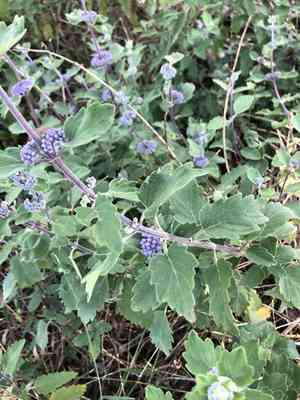
Caryopteris, recognized for its fragrant leaves and striking azure blossoms, flourishes when reproduced via cuttings. To ensure successful cultivation, choose a robust, non-blooming stalk and sever a section approximately 4-6 inches in length. Submerge the severed tip in rooting compound to stimulate root formation and embed it in adequately draining substrate. Preserve uniform dampness and supply diffused illumination until roots are firmly set, guaranteeing a vigorous beginning for nascent development.
Optimal Period for Blue-beard Propagation
Propagation Method
Cutting
Propagation Period
Autumn,Winter
Tools Required for Blue-beard Propagation
Sharp pruning shears
Crucial for making clean, precise cuts on blue-beard stems, minimizing damage and disease risk. Sharp blades prevent jagged edges, vital for cutting health and rapid recovery.
Rooting hormone powder or gel
Encourages quicker root formation and boosts cutting success by stimulating root growth at the cut. This aid is especially helpful for blue-beard, fostering a robust root system faster.
Sterilizing agent (e.g., isopropyl alcohol)
Used to sanitize pruning shears before and after use to prevent pathogen spread. Maintaining sterile tools is essential for blue-beard's health during propagation, ensuring infection-free cuttings.
Propagation trays
Serve as containers for planting freshly cut blue-beard stems. These trays must offer proper drainage and space, critical for the cuttings' initial growth phase.
Lightweight, well-draining potting mix
Prevents blue-beard's delicate new roots from sitting in waterlogged soil, which can cause rot. A propagation-specific mix improves aeration and supports healthy root growth.
Plastic covers or mini greenhouses
Help maintain humidity and temperature around blue-beard cuttings, creating an ideal environment for root initiation and development. This is key to prevent cuttings from drying out before rooting.
How to Propagate Blue-beard?
Propagation Type
Moderately Difficult
Post-Propagation Care for Blue-beard
How to Care for Your Newly Propagated Blue-beard?
Once roots have formed, typically in a few weeks, gradually introduce blue-beard to less humid conditions by removing the plastic cover. Continue to provide blue-beard with sufficient water to keep the soil consistently moist but not saturated. Place blue-beard in full sun to partial shade and apply a balanced, slow-release fertilizer to support its growth. Regular pruning of blue-beard after flowering helps maintain its shape and encourages vigorous growth for the next season.
Common Errors to Avoid When Propagating Blue-beard
Overwatering cuttings
Excessive moisture can lead to root rot, hindering growth and potentially killing young blue-beard cuttings. Continuously wet soil deprives roots of oxygen, creating a breeding ground for harmful pathogens.
Using non-sterile tools
Propagating blue-beard with unclean tools can introduce diseases, harming the delicate new growth. Infected plants typically exhibit slower development and may not survive.
Cutting too short a stem
Short stems lack enough nodes to support strong root development. Insufficient rooting nodes can result in weak plants that struggle to establish after transplanting.
Advice for Propagating Blue-beard
Utilize sharp, sterile tools
Ensures clean cuts that heal quickly, minimizing stress and reducing disease risk in blue-beard.
Select semi-hardwood stems
Semi-hardwood stems have begun to mature and slightly harden, making them more resilient during the rooting process. They often have greater success in establishing a strong root system.
Maintain moderate moisture
Keeping the soil slightly damp ensures blue-beard cuttings remain hydrated without becoming waterlogged. This balance is crucial for healthy root development.



