How to Prune Tree anemone?
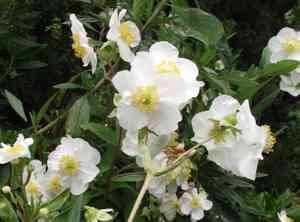
Hailing from California, Carpenteria californica is recognized for its abundant evergreen leaves and white, aromatic blossoms that mimic anemones. Trimming should focus on eliminating deceased or compromised wood and occur in early spring or winter to preserve its form and stimulate robust development. Do not remove more than a third of the limbs, concentrating on thinning congested sections to boost air movement. This practice improves blooming and plant vitality, simultaneously lowering disease susceptibility.
Advantages of Trimming Tree Anemone
Advantages of Trimming Tree Anemone
Trimming tree anemone promotes more abundant flowering and aids in warding off pests and illnesses by eliminating compromised areas and enhancing air circulation around the foliage.
Optimal Period for Trimming Tree Anemone
Optimal Period for Trimming Tree Anemone
Pruning in early spring is advantageous as tree anemone is just emerging from dormancy, making it the ideal time for revitalization and shaping. Early spring pruning allows gardeners to easily identify and remove any damaged or diseased wood without the obstruction of full foliage. Additionally, since tree anemone typically blooms on new growth, pruning at this time optimizes flowering by stimulating new, healthy growth that can support the upcoming blooming cycle. Pruning in winter is not recommended as it can stress tree anemone when it is vulnerable and may lead to frost damage on the new cuts.
Required Tools for Pruning Tree Anemone
Bypass Pruners
Perfect for making clean cuts on live tree anemone. They are effective for snipping off dead or overgrown branches up to 1/2 inch in diameter.
Loppers
Useful for reaching deeper into tree anemone or cutting thicker branches, typically up to 2 inches in diameter. The long handles provide leverage to make cutting easier.
Pruning Saw
Essential for removing larger branches exceeding 2 inches in diameter. The saw allows for precise cuts without harming the tree anemone.
Hand Shears
Excellent for shaping tree anemone and trimming smaller branches, especially for creating a desired plant form or encouraging bushier growth.
Pruning Gloves
Protects the gardener's hands from thorns and sharp branches while pruning tree anemone.
Sharpening Tool
Keeps all pruning tools sharp to ensure clean cuts, which help tree anemone recover more quickly from pruning.
How to Prune Tree Anemone
Clean Tools
Before pruning tree anemone, sterilize pruning tools with a solution of one part bleach to nine parts water to prevent the spread of disease.
Remove Diseased Parts
Carefully cut away any diseased leaves and branches from tree anemone, making sure to remove the entire affected area to prevent infection from spreading.
Deadhead Flowers
Trim off withered flowers from tree anemone to encourage new growth and improve the plant's overall appearance.
Cut Dead Branches
Remove dead branches from tree anemone by making clean cuts at the base of the branch to promote healthy growth and improve air circulation.
Thin Growth
Thin out excessive growth branches on tree anemone to maintain the desired shape and enhance light penetration, which can improve the health and flowering of the plant.
Common Pruning Mistakes with Tree Anemone
Over Pruning
Removing too much foliage at once can stress tree anemone, leading to poor health and reduced flowering. Aim to remove no more than one-third of the overall growth.
Improper Cut Locations
Cutting too far from a bud, node, or main branch can result in unsightly stubs and potential entry points for disease. Make cuts close to, but not right against, these points to promote better healing and regrowth.
Tearing Bark
Ragged cuts can cause the bark to tear, which can damage the cambium layer and affect tree anemone's ability to transport nutrients and water. Use sharp tools to ensure clean cuts.
Flush Cuts
Making flush cuts against the main branches can remove the branch collar, leading to poor wound closure and increased susceptibility to disease. Leave the branch collar intact to encourage proper healing.
Pruning Healthy Wood
Unnecessarily cutting away healthy growth can limit tree anemone's vigour and bloom potential. Focus on removing only dead, diseased, or crossed branches to maintain the plant's strength.
Common Pruning Tips for Tree Anemone
Sharp Tools
Use sharp, clean pruning shears to make precise cuts, which help tree anemone heal faster and reduce the risk of disease.
Gradual Pruning
If rejuvenation is necessary, spread the pruning over several seasons, allowing tree anemone to recover between pruning sessions.
Selective Thinning
Thin out crowded branches to improve air circulation and light penetration, which is crucial for tree anemone's health and flowering. Be selective and maintain the plant's natural shape.
Promote New Growth
Prune just above outward-facing buds to encourage tree anemone to grow in a desirable direction, facilitating an attractive, open structure.
Post-Bloom Pruning
Since tree anemone's pruning season details are excluded, focus on removing spent flowers to encourage more blooms and prevent the plant from using energy to produce seeds, unless seed production is desired for propagation.



