How to Propagate Nettle-leaved mullein?
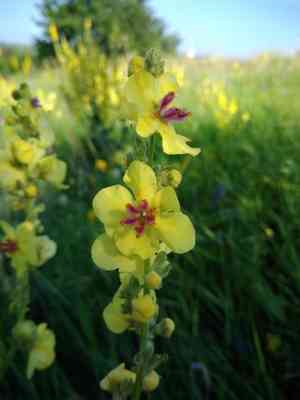
A member of the Scrophulariaceae family, nettle-leaved mullein is most effectively multiplied via cuttings. To achieve successful propagation, collect semi-hardwood cuttings while the plant is actively growing. Confirm that the cuttings possess several leaves for light absorption and strip off the bottom leaves in preparation for insertion. Place the cuttings into a sterile, free-draining potting substrate, supplying sufficient humidity and diffused illumination to stimulate root formation. Consistent spraying will preserve the required moisture levels without waterlogging the medium, which is vital for the fragile root structures of nettle-leaved mullein cuttings.
When Is the Optimal Time to Propagate Nettle-leaved Mullein?
Propagation Type
Cutting
Propagation Season
Spring,Summer
What Tools Are Utilized for Nettle-leaved Mullein Propagation?
Sharp pruning shears
Crucial for obtaining clean, precise cuttings from nettle-leaved mullein, sharp pruning shears help minimize harm to both the parent plant and the cutting itself. A clean cut enhances the likelihood of successful rooting by reducing the exposed area, thereby lessening the potential for infection and promoting healthier initial growth.
Rooting hormone
Applying a rooting hormone to the severed end of the nettle-leaved mullein's stem aids in stimulating root development more rapidly and effectively. This boosts the success rate of cuttings by encouraging quicker root growth, which is vital for the establishment of new nettle-leaved mullein plants.
Sterilized potting mix
Employing a sterilized potting mix guarantees that new nettle-leaved mullein cuttings are planted in a pathogen-free environment, significantly lowering the chance of infection. The mix should be light and drain well to support delicate new roots and retain sufficient moisture without causing rot.
Humidity dome or plastic cover
Maintaining high humidity around new nettle-leaved mullein cuttings is essential for their survival, as it prevents excessive water loss through the leaves. A humidity dome or a simple plastic cover creates a microenvironment that retains moisture and warmth, thus facilitating improved root development.
Plant labels and permanent marker
Labeling is vital when propagating multiple varieties or species, including nettle-leaved mullein. Use plant labels and a permanent marker to track the cuttingsâ progress and specific requirements, which assists in providing appropriate care and monitoring growth until the plants are established.
How to Propagate Nettle-leaved Mullein?
Propagation Type
Easy
How to Care for Your Newly Propagated Nettle-leaved Mullein?
How to Care for Your Newly Propagated Nettle-leaved Mullein?
Following propagation, continue to keep the nettle-leaved mullein's soil slightly moist and ensure proper drainage to prevent waterlogging. Gradually introduce the new plant to less humid conditions over several weeks before permanently placing it in a brighter spot. Once established, nettle-leaved mullein will flourish in full sun to partial shade and requires minimal watering, adapting well to drier environments.
Common Errors to Avoid When Propagating Nettle-leaved Mullein
Overwatering
Excessive watering of nettle-leaved mullein seeds or cuttings can lead to root rot and fungal diseases, as this plant prefers well-drained soil.
Deep Planting
Planting seeds or cuttings too deeply can prevent nettle-leaved mullein from receiving adequate light for proper germination and growth.
Overcrowding
Sowing nettle-leaved mullein seeds too closely together can impede proper air circulation and foster disease proliferation, limiting growth and survival rates.
Ignoring Soil Composition
Using soil that is too rich or compacted can hinder root development for nettle-leaved mullein, as it prefers a mix with good drainage and moderate fertility.
Neglecting to Harden Off
Failing to gradually acclimate nettle-leaved mullein seedlings to outdoor conditions can result in shock and reduced survival when transplanted outdoors.
Tips For Propagating Nettle-leaved Mullein
Moderate Watering
Provide nettle-leaved mullein with consistent, moderate irrigation to keep the soil slightly damp but not waterlogged, encouraging robust root growth.
Surface Sowing
Sow nettle-leaved mullein seeds on the soil surface or cover them lightly with soil, as they require light for optimal germination.
Spacing
Adequately space nettle-leaved mullein seeds or seedlings to ensure sufficient airflow and sunlight, reducing the risk of disease and competition.
Soil Preparation
Prepare a well-draining soil with some organic matter to promote strong root development for nettle-leaved mullein without encouraging excessive moisture retention.
Acclimation
Gradually expose nettle-leaved mullein seedlings to outdoor conditions over several days to harden them off, improving their resilience when planted outside.



