How to Propagate Chinese artichoke?
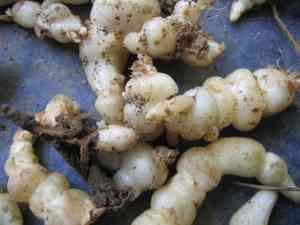
Stachys affinis can be successfully multiplied using its tubers, leading to quick development and rooting. To achieve the best outcomes, choose robust, pathogen-free tubers and plant them promptly after collection to preserve their vitality. Provide ample spacing between tubers to accommodate their expansion. Consistent irrigation and enriching the soil are vital for successful multiplication.
Optimal Period for Chinese Artichoke Propagation
Propagation Method
Seeding
Propagation Period
Spring
Tools Utilized in Chinese Artichoke Propagation
Garden Fork
A garden fork is essential for loosening and aerating the soil before planting chinese artichoke tubers. Well-aerated soil promotes robust root growth and facilitates tuber expansion.
Trowel
A trowel is useful for excavating small holes or trenches to position chinese artichoke tubers at the correct depth. This tool enables precise control over planting depth, ensuring tubers are neither too deep nor too shallow.
Watering Can with a Fine Rose
Consistent moisture is crucial following the planting of chinese artichoke tubers. A watering can equipped with a fine rose attachment allows for gentle irrigation that doesn't disturb the soil or expose newly planted tubers.
Garden Labels and Permanent Marker
These are employed to mark the planting locations of chinese artichoke and to record the planting date. This assists in monitoring growth progress and ensures appropriate spacing in garden management.
Organic Fertilizer
Slow-release organic fertilizer enriches the soil with necessary nutrients for chinese artichoke without the burning risk associated with chemical fertilizers. This supports vigorous root and shoot development after tuber planting.
Mulch
Mulching around the chinese artichoke planting area helps retain soil moisture and suppress weed growth. This creates a healthier environment for tubers to develop without nutrient competition.
How to Propagate Chinese Artichoke
Propagation Difficulty
Simple
Post-Propagation Care for Chinese Artichoke
Post-Propagation Care for Chinese Artichoke
After propagation, care for chinese artichoke by watering when the top inch of soil feels dry. Ensure effective weed control and apply a mild, balanced fertilizer mid-season to encourage growth and tuber development. Harvest chinese artichoke by carefully digging around the plants at the end of the growing season when the foliage begins to senesce.
Common Errors to Avoid During Chinese Artichoke Propagation
Overcrowding tubers
Planting chinese artichoke's tubers too closely can restrict their growth due to competition for nutrients and space. This dense planting can result in smaller tubers and reduced overall yield.
Incorrect soil type
Utilizing heavy clay or poorly drained soil for chinese artichoke can hinder tuber development. These conditions are unfavorable as they may lead to waterlogging and subsequent root rot, severely impacting plant health.
Excessive watering
While chinese artichoke requires moist conditions, overwatering can lead to fungal diseases and tuber rot. It is vital to balance moisture levels to prevent these issues.
Advice for Propagating Chinese Artichoke
Soil preparation
Select well-draining, fertile soil with ample organic matter. Ensuring the soil is loose and airy facilitates easy tuber development and prevents water retention that could cause rot.
Spacing tubers
When planting chinese artichoke's tubers, ensure they are spaced at least 15-20 cm apart. Proper spacing provides adequate room for each tuber to develop, minimizing nutrient competition and reducing disease risk.
Moderate watering
Maintain consistent moisture levels by watering moderately; the soil should be damp but not saturated. This promotes healthy growth and prevents complications from both underwatering and overwatering.



