How to Propagate Gray-headed Coneflower?
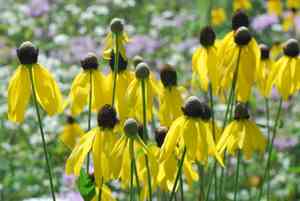
Gray-headed Coneflower reproduces readily by planting seeds in the springtime. Successful sprouting is evident when young plants with robust foliage appear. Ensure sufficient hydration and prevent excessive density for peak development.
Optimal Period for Gray-headed Coneflower Propagation
Propagation Method
Seeding
Propagation Season
Spring
Tools Utilized for Gray-headed Coneflower Propagation
Garden trowels
Garden trowels are handheld implements featuring a pointed, scoop-shaped metal blade, perfect for excavating small holes or furrows for planting gray-headed Coneflower seeds. They aid in achieving the correct planting depth, ensuring proper soil contact for the seeds, which is vital for successful sprouting.
Seedling trays
Seedling trays are shallow containers divided into compartments, enabling organized and simple management of gray-headed Coneflower during its initial growth phases. They offer a controlled environment for germination and facilitate effortless transplanting with minimal root disturbance.
Misting spray bottle
A misting spray bottle dispenses a fine water mist, gently moistening the soil surface without causing erosion or dislodging seeds. This tool is crucial for maintaining sufficient moisture levels, which are essential for the germination of gray-headed Coneflower seeds.
Soil thermometer
Soil thermometers measure the temperature of the planting medium. As gray-headed Coneflower seeds have specific temperature ranges for optimal germination, a soil thermometer helps confirm the environment is within the ideal range, promoting better germination rates.
Seed-starting mix
Seed-starting mix is a specially formulated soilless growing medium with a light and airy texture, ideal for sowing gray-headed Coneflower seeds. It provides the necessary aeration and moisture retention to support seed germination and seedling development.
Plant labels and marker
Plant labels and markers are used to identify various plantings of gray-headed Coneflower. This is important for monitoring germination rates, growth progress, and maintaining accurate records, which is beneficial for achieving consistent propagation outcomes.
Seed dibber
A seed dibber is a pointed instrument used to create uniform holes or depressions in the soil. When propagating gray-headed Coneflower, it can be employed to establish consistent and appropriately spaced planting sites, which aids in optimizing seedling growth and ensuring even distribution.
Steps for Propagating Gray-headed Coneflower
Propagation Method
Seeding
Difficulty Level
Simple
Post-Propagation Care for Gray-headed Coneflower
Post-Propagation Care for Gray-headed Coneflower
After propagation, consistent care for gray-headed Coneflower is essential. Gradually introduce indoor-started seedlings to outdoor conditions over one to two weeks before transplanting them. This process is known as hardening off. Once established, gray-headed Coneflower can withstand drought and poor soil conditions. It's best to water deeply but infrequently, encouraging deep root development. Fertilization is generally not required, but a balanced, slow-release fertilizer can be applied in the spring. Monitor for pests and diseases, though gray-headed Coneflower is relatively resistant. Removing spent flowers can encourage more blooms. In late autumn or early winter, cut back dead foliage to neaten the garden if desired, although seed heads can be left for winter interest and bird food.
Common Errors to Avoid When Propagating Gray-headed Coneflower
Excessive watering
Propagating gray-headed Coneflower requires maintaining balanced soil moisture. Overwatering can lead to root rot and fungal diseases, negatively impacting the health of young plants.
Deep planting
Planting gray-headed Coneflower seeds too deeply can hinder successful germination because the seeds may not receive sufficient light or may struggle to break through the soil surface.
Failure to stratify
Gray-headed Coneflower seeds require a period of cold stratification to break dormancy. Skipping this step can result in low germination rates.
Ignoring pest management
Neglecting to protect gray-headed Coneflower from pests during early growth stages can lead to damage and reduced survival rates.
Overcrowding
Sowing gray-headed Coneflower seeds too densely or not thinning seedlings can lead to competition for resources, resulting in weaker plants.
Advice for Propagating Gray-headed Coneflower
Moisture control
Ensure the soil remains consistently moist but not waterlogged when propagating gray-headed Coneflower to promote healthy root development without the risk of rot.
Seed depth
Sow gray-headed Coneflower seeds at the appropriate depth, typically just lightly covered with soil, allowing for adequate light exposure and easier germination.
Stratification
Cold stratify gray-headed Coneflower seeds before sowing to mimic natural winter conditions and break seed dormancy, thereby enhancing germination success.
Pest protection
Employ gentle pest management strategies while gray-headed Coneflower seedlings are establishing to prevent insect damage without harming the young plants.
Space management
Thin gray-headed Coneflower seedlings according to recommended spacing guidelines to ensure ample room for growth and access to nutrients, light, and air.



