How to Propagate Narrowleaf four o'clock?
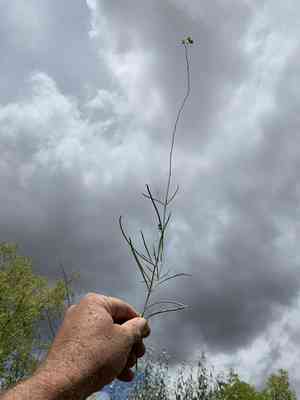
Mirabilis linearis is generally reproduced by planting seeds. Achieving success with this technique requires employing a substrate that drains effectively to prevent excessive moisture and verifying that the seeds are positioned at the appropriate depth. Supplying an adequate cultivation medium that holds some hydration but also permits ample air movement will encourage robust root formation. Careful handling of the fragile young plants during relocation is essential to avert stress, which might impede their development. Regular irrigation, suitable illumination, and safeguarding from harsh environmental factors will improve the likelihood of successful integration.
Optimal Period for Narrowleaf Four O'clock Propagation
Propagation Method
Seeding
Propagation Period
Spring
Essential Tools for Narrowleaf Four O'clock Propagation
Seed trays
Seed trays are crucial for initiating narrowleaf four o'clock from seeds, providing young seedlings ample room to establish roots before transplanting. The individual compartments aid in managing seedlings separately, minimizing root disturbance during relocation, which is vital for narrowleaf four o'clock's delicate root system.
Horticultural sand
Incorporating horticultural sand into the soil enhances drainage and aeration, qualities vital for narrowleaf four o'clock seed germination. This medium prevents waterlogging and root rot, issues that can negatively impact seed germination and seedling vitality.
Misting bottle
A misting bottle is essential for gently irrigating narrowleaf four o'clock seeds and seedlings. It delivers a fine spray that moistens the soil without dislodging small seeds or harming young seedlings, ensuring uniform moisture distribution critical for germination.
Heat mat
A heat mat can provide consistent soil warmth, important for stimulating seed germination in narrowleaf four o'clock. It ensures the soil temperature is ideal, especially in cooler regions or during colder times of the year, promoting a faster and more successful germination process.
Grow lights
Grow lights are advantageous if narrowleaf four o'clock is propagated indoors or in conditions with insufficient natural light. They provide the necessary light spectrum to support healthy growth and development of seedlings, mimicking natural sunlight to foster robust, healthy plant structures.
Propagating Narrowleaf Four O'clock: A Guide
Propagation Difficulty
Simple
Post-Propagation Care for Narrowleaf Four O'clock
Post-Propagation Care for Narrowleaf Four O'clock
Following propagation, continue to water narrowleaf four o'clock consistently, allowing the soil to dry slightly between watering sessions. Narrowleaf four o'clock thrives in full sun but can endure partial shade. Fertilize sparingly during the growing season and prune as needed to maintain shape and encourage healthier growth. Shield the plant from extreme temperatures and monitor for pests or diseases.
Common Errors to Avoid When Propagating Narrowleaf Four O'clock
Overwatering
Excessive moisture can lead to root rot in narrowleaf four o'clock, which prefers drier conditions. Overwatering can suffocate roots, hinder growth, and ultimately cause plant demise.
Deep planting of seeds
Planting seeds too deeply can prevent narrowleaf four o'clock seeds from germinating due to inadequate light and excessive moisture. This can significantly delay or impede the growth of new plants.
Ignoring soil quality
Using soil that lacks proper drainage or is overly nutrient-rich can result in poor plant health. Narrowleaf four o'clock thrives in well-draining soil, and excessively fertile soil can promote abundant foliage over flower production.
Tips for Propagating Narrowleaf Four O'clock
Appropriate soil preparation
Prepare a well-draining soil mix that emulates narrowleaf four o'clock's natural environment. A blend of sand and loam is ideal, promoting adequate drainage and preventing waterlogging.
Correct seed depth
Sow the seeds of narrowleaf four o'clock just beneath the soil surface, approximately 1/8 inch deep. This allows for proper light exposure, which is crucial for germination.
Moderate watering
Water narrowleaf four o'clock seeds and cuttings sparingly. The soil should remain lightly moist but never saturated. Allow the soil to dry out slightly between waterings to mimic the natural dry conditions narrowleaf four o'clock adapts to.



