How to Propagate Jepson ceanothus?
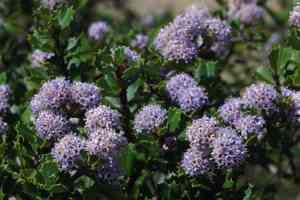
Jepson ceanothus flourishes most effectively when reproduced via cuttings. This technique leverages its capacity to generate robust root systems from stem portions. To achieve successful propagation, choose vigorous, semi-hardwood sections and apply rooting hormone to them to stimulate root formation. Confirm that the cuttings are placed in a growing medium that drains efficiently and are maintained in a regulated setting to preserve humidity without becoming oversaturated.
What Is the Best Time To Propagate Jepson Ceanothus?
Propagation Type
Cutting
Propagation Season
Spring,Summer
What Tools Are Used in Jepson Ceanothus Propagation?
Sharp Pruning Shears
Crucial for making clean, precise cuts on jepson ceanothus stems for propagation. Sharp blades minimize tissue damage, promoting faster healing and reducing infection risk. They cut cleanly through woody stems, vital for healthy root development from cuttings.
Rooting Hormone Powder or Gel
Stimulates root growth from jepson ceanothus cuttings by encouraging root cell development. Applying rooting hormone to the cutting's base greatly increases successful rooting, essential for this species which might otherwise struggle to establish roots.
Sterilized Potting Mix
Offers a clean, disease-free environment for jepson ceanothus cuttings to root. A well-draining, balanced medium supports optimal root growth without excess water, which could cause rot. Sterilized mix also reduces disease risk, crucial for vulnerable rooting cuttings.
Propagation Trays
Used to organize and manage the initial growth of jepson ceanothus cuttings. These trays help maintain consistent moisture and can be covered for high humidity, preventing cuttings from drying out and stressing, which is vital for their survival and root development.
Heating Mats
Promote better rooting by providing consistent warmth, critical for jepson ceanothus cuttings, especially in cooler climates or seasons. Underneath warmth mimics natural ground temperatures, optimizing the environment for root induction and growth.
How to Propagate Jepson Ceanothus?
Propagation Type
Moderately Difficult
How to Care for Your Newly Propagated Jepson Ceanothus?
How to Care for Your Newly Propagated Jepson Ceanothus?
Once rooted, gradually introduce cuttings to drier conditions by partially opening the humidity dome or plastic bag daily over a week. Replant them into a larger pot with a well-draining soil mix. Water jepson ceanothus to keep the soil moist but not soggy, and provide partial shade, initially avoiding direct afternoon sun. Fertilization is generally not needed for the first year.
Common Mistakes to Avoid When Propagating Jepson Ceanothus
Overwatering
Excessive watering can cause root rot in jepson ceanothus, especially if the soil lacks proper drainage. Too much moisture around the roots fosters fungal growth, which can severely harm or kill young plants.
Using garden soil
Garden soil may contain pathogens and is often too dense for proper root growth in propagation containers for jepson ceanothus. This can impede root development and lower survival rates during and after propagation.
Improper cuttings
Taking cuttings that are too short or from the wrong part of the plant can lead to rooting failure. For jepson ceanothus, cuttings must be from healthy, semi-hardwood sections to ensure they have the necessary growth nodes.
Tips For Propagating Jepson Ceanothus
Well-draining medium
Utilize a well-draining propagation medium, such as a perlite and peat mixture. This prevents waterlogging and enhances aeration, both essential for the root development of jepson ceanothus.
Rooting hormone
Applying a rooting hormone to jepson ceanothus cuttings can significantly boost root growth. This hormone stimulates root production, helping cuttings establish more quickly and robustly.
Indirect light
Provide indirect light for jepson ceanothus cuttings. Direct sunlight can be too intense, causing stress or scorching young cuttings before they establish roots. Soft, filtered sunlight supports healthy growth without overwhelming fragile new plants.



