The Swamp loosestrife Plant Advantage: Maximizing Home and Office Appeal and Wellness
1
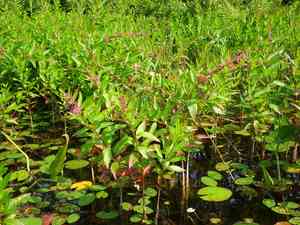
Decodon verticillatus is vital to wetland environments, helping to secure the soil.
2
This particular plant offers key living spaces for diverse animal life.
3
Decodon verticillatus assists in cleansing water within its natural settings.
How Does Swamp loosestrife Stabilize Soil?
Root System and Erosion Control
Swamp loosestrife possesses an extensive root network that aids in preventing soil erosion. Its roots bind soil particles, lessening the erosive force of water flow in marshy regions. This stabilization is vital for preserving wetland structure and integrity.
Improvement of Soil Structure
Beyond erosion prevention, Swamp loosestrife also enhances soil structure by introducing organic matter through fallen leaves and root secretions. This organic material boosts soil aeration, water retention, and nutrient cycling, fostering a healthier environment for other flora and microorganisms.
What Habitat Benefits Does Swamp loosestrife Offer?
Shelter and Breeding Grounds
Swamp loosestrife offers crucial shelter and nesting sites for various wildlife. Birds, insects, amphibians, and small mammals utilize this plant for nesting and protection from predators. Its dense foliage provides a safe haven and contributes to wetland biodiversity.
Food Source for Animals
In addition to providing refuge, Swamp loosestrife serves as a food source for numerous wetland creatures. The plant's seeds, leaves, and stems are consumed by insects, birds, and other wildlife, supporting the food web within these ecosystems.
How Does Swamp loosestrife Contribute to Water Purification?
Nutrient Uptake and Filtration
Swamp loosestrife plays a significant role in water purification by absorbing excess nutrients from the water, such as nitrogen and phosphorus. This process prevents harmful algal blooms and improves water quality in wetland ecosystems. The plant's uptake of these nutrients helps maintain ecological balance.
Sediment Trapping
Furthermore, the dense root mats of Swamp loosestrife capture sediments and particles suspended in the water. This sediment trapping reduces water turbidity and enhances the clarity of water bodies, benefiting aquatic life and improving the overall health of the ecosystem.
Ecological Value of Swamp loosestrife
Biodiversity Support
The presence of Swamp loosestrife in wetland ecosystems contributes to greater biodiversity. By providing habitats, food sources, and improved water conditions, this plant supports a wide array of species. High biodiversity, in turn, enhances ecosystem resilience and stability.
Climate Change Mitigation
Swamp loosestrife also contributes to mitigating climate change by sequestering carbon in its biomass and the surrounding soil. This carbon storage helps reduce greenhouse gas concentrations in the atmosphere, highlighting the importance of wetland conservation in global climate strategies.



