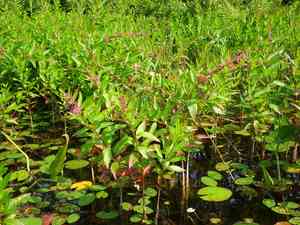
Swamp loosestrife (Decodon verticillatus)
Also known as: Willow-herb
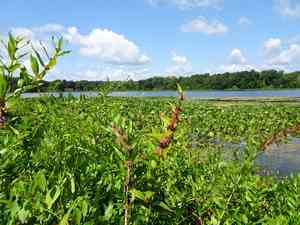
Swamp loosestrife thrives in wet, swampy environments throughout eastern North America, often spreading quickly and forming floating mats on calm waters. Its flowers are visited by various insects, including swallowtail butterflies and bees. Additionally, ducks are known to eat the seeds.
In This Article
Attributes of Swamp loosestrife
Lifespan
Perennial
Plant Type
Herb
Plant Height
1.8 m to 2.5 m
Spread
1.8 m to 2.5 m
Leaf Color
Green Blue
Flower Size
2.5 cm
Flower Color
Pink Purple Red
Images of Swamp loosestrife
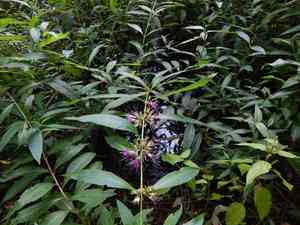
Quickly Identify Swamp loosestrife
1
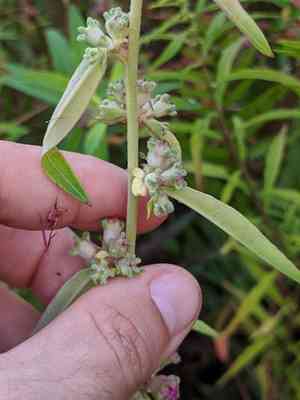
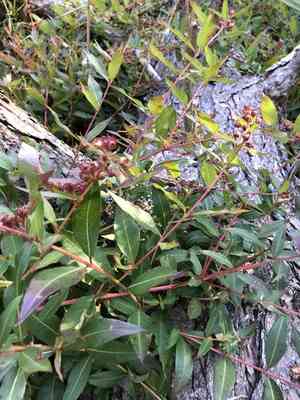
To identify Decodon verticillatus, look for its tall, arching stems and whorled leaves. During the flowering season, it produces small pink to purple flowers in clusters. The plant thrives in wetland areas, so its presence in such environments can be a clue.
Scientific Classification of Swamp loosestrife
Phylum
Vascular plants
Class
Dicotyledons
Order
Myrtales
Family
Loosestrife
Genus
Decodon
Species
Swamp loosestrife
Planting and Growing of Swamp loosestrife
Care Difficulty
Moderate
Watering Schedule
Every 4 days
Sunlight Requirements
Full sun
Sunshine Duration
4-8 hours
Ideal Temperature
60-75℉
Soil Type
Potting Mix, Peat Mix
Soil pH
5.5-7
Fertilizer Type
Balanced
Pruning Season
Spring, Summer
Pruning Area
Branches, Leaves
Pruning Frequency
2 times a year
Repotting Season
Spring
Pot Type
Plastic, Ceramic
 How to Water Swamp loosestrife?
Decodon verticillatus thrives in moist environments and prefers its soil to be consistently damp but not waterlogged. A good rule of thumb is to apply enough water to moisten the soil to a depth of about 4 inches, which typically translates to about 500 milliliters per session. This ensures that its roots can access the necessary moisture without drowning.
What are the symptoms of an underwatered Swamp loosestrife?
›
What should I do if my Swamp loosestrife is not getting enough water?
›
What are the symptoms of an overwatered Swamp loosestrife?
›
How to save an overwatered Swamp loosestrife?
›
 What Are the Sunlight Requirements for Swamp loosestrife?
Decodon verticillatus thrives in partial to full sun, benefiting from a healthy balance that ensures robust growth. Ideal light fosters lush foliage and maintains the plant's vivid coloration, crucial for its ornamental appeal.
More About Sunlight Requirements Techniques→
Best Location for Light
›
Optimal Time for Sunlight
›
Practical Solutions for Ideal Light
›
 What Is the Ideal Temperature Range for Swamp loosestrife?
For optimal growth, Decodon verticillatus prefers a moderate climate with temperatures between 60°F and 75°F. These conditions support vigorous growth and ensure that the plant develops healthy foliage and blooms. Maintaining this range encourages the plant's natural processes, including photosynthesis and nutrient uptake, to function at peak efficiency. By providing the ideal environmental conditions, you can expect the plant to thrive and reach its full aesthetic and biological potential.
 What Soil is Best for Swamp loosestrife?
Decodon verticillatus thrives in well-drained soil that prevents waterlogging. This ensures adequate oxygen reaches the roots, reducing the risk of root diseases and promoting healthy growth. The plant benefits significantly from soil enriched with organic matter. This adds essential nutrients, improves soil structure, and enhances moisture retention, crucial for its development. Maintaining consistent moisture in the soil is vital for Decodon verticillatus. Without it, the plant may suffer from stress, leading to poor growth and vitality.
 How to Fertilize Swamp loosestrife?
For Decodon verticillatus, it's important to use a balanced fertilizer to promote healthy growth. Use a liquid fertilizer at a dilution rate of 1/4 teaspoon per gallon of water. For slow-release fertilizers, apply at a rate of 1 teaspoon per plant and ensure the granules are evenly distributed in the soil.
 How to Prune Swamp loosestrife?
Start by identifying any dead or overgrown branches. These will often appear discolored or wilted compared to the healthy foliage. Gently remove them using clean, sharp pruning shears to avoid damaging the plant’s healthy tissue. When pruning for shape, aim to maintain a natural silhouette. Trim back any branches that disrupt the desired form of the plant, cutting just above a node to ensure new growth emerges correctly, giving it a tidy and compact appearance. Pruning encourages new growth by redirecting energy to developing shoots. Focus on cutting back older wood to stimulate youthful and vigorous branches, which can lead to a fuller and lush plant over time.
More About Pruning Techniques→
 How to Propagate Swamp loosestrife plant?
1
Harvest seeds from mature Decodon verticillatus plants when the seed heads have dried. Carefully clean and dry the seeds before storing or planting them to ensure maximum viability.
2
Select healthy stems from the plant and use pruning shears to cut sections about 4-6 inches long. Ensure each cutting has at least two nodes, where new roots and shoots will emerge.
3
Gently dig around the base of the plant to expose the root ball. Divide the root clumps by hand or with a sharp knife, ensuring each section has shoots and roots attached for successful re-establishment.
 How to Repot Swamp loosestrife plant?
1
Decodon verticillatus typically signals the need for repotting when you notice its roots beginning to grow through the drainage holes of the current pot. Another sign is when new growth seems stunted or slow despite optimal care conditions. Ideally, aim to repot at the start of the growing season to give the plant ample time to adjust and thrive.
2
Aim for a pot that is one size larger than the current one, ideally with ample drainage holes. Ceramic or plastic pots with good aeration are recommended. A slightly larger pot provides enough room for root development, which is crucial for promoting healthy vertical growth of this aquatic plant. Ensure the pot's material also aids in retaining the moisture needed for Decodon verticillatus.
3
This plant thrives in loamy, acidic, and well-draining soil, mimicking its natural habitat. Such soil ensures optimal moisture retention without the risk of root rot, providing a stable environment for the plant's roots. Adding peat can enhance the soil's acidity and texture, creating an ideal growing medium for Decodon verticillatus.
Learn More About Swamp loosestrife Diseases
Anthracnose
Bacterial Leaf Spot
Bacterial Soft Rot
Bacterial Wilt
Crown Gall
Cyst Nematode
Damping-off
Downy Mildew
Drought Stress
Fusarium Wilt
Gray Mold
Leaf Spot
Mosaic
Nutrient Deficiency
Nutrient Toxicity
Powdery Mildew
Root Rot
Root-knot Nematode
Rusts
Sooty Mold
Spider Mites
Temperature Stress
Thrips Damage
White Mold



