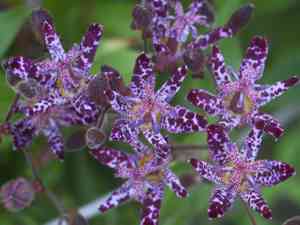
Toad lily(Tricyrtis hirta)

Toad lily (Tricyrtis hirta)

Also known as: Japanese toad lily

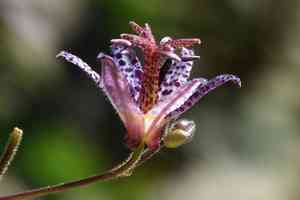
Toad lilies are prized in gardens for their unique, orchid-like flowers that bloom late in the summer and extend into the fall. The name "toad lily" is believed to come from the plant's speckled flowers, reminiscent of a toad's skin. Additionally, there is a myth that indigenous peoples used the plant's sticky sap on their hands to help catch frogs, as the scent supposedly attracted them and the sap made them easier to catch.

Attributes of Toad lily

Lifespan
Perennial
Plant Type
Herb
Plant Height
61 cm to 91 cm
Spread
30 cm
Leaf Color
Green
Flower Size
2.5 cm
Flower Color
White Purple Violet

ForwardPlant - Identify plants with a snap

Identify and diagnose plants, get toxicity alerts, and explore safety guides for all types of fungi.

Try for Free

Images of Toad lily

Toad lily(Tricyrtis hirta)

Quickly Identify Toad lily

1
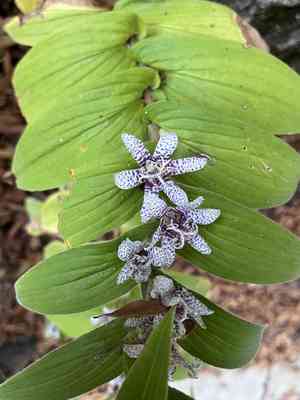
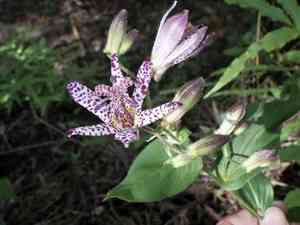
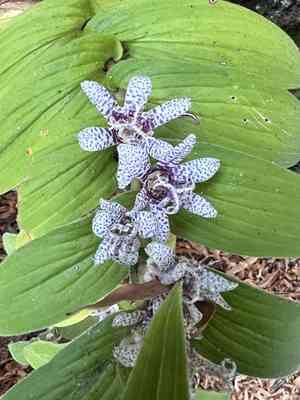
Star-shaped blossoms with spotted petals in white to lilac hues.
2
Sac-like nectaries at the base of outer tepals, distinctive floral trait.
3
Lush green foliage with fine, hair-like texture on stems and leaves.
4
Cylindrical seed capsule splitting to release disc-shaped, self-sowing seeds.
5
Upright stem with transparent hairs, arched growth habit, and smooth texture.

Scientific Classification of Toad lily

Phylum
Vascular plants
Class
Monocotyledons
Order
Liliales
Family
Lily
Genus
Toad lilies
Species
Toad lily

Planting and Growing of Toad lily

Care Difficulty
Easy
Watering Schedule
Every 6 days
Sunlight Requirements
Partial sun
Sunshine Duration
6-10 hours
Ideal Temperature
60-75℉
Soil Type
Potting Mix, Peat Mix
Soil pH
6.5-7.5
Fertilizer Type
Balanced
Pruning Season
Spring, Summer
Pruning Area
Branches, Leaves
Pruning Frequency
2 times a year
Repotting Season
Spring
Pot Type
Plastic, Ceramic

water icon How to Water Toad lily?

Tricyrtis hirta prefers its soil to be consistently moist. Aim for approximately 250 ml of water per session. Ensure the water seeps through to the roots, but the soil should not be soggy, as this can lead to root rot.
What are the symptoms of an underwatered Toad lily?
What should I do if my Toad lily is not getting enough water?
What are the symptoms of an overwatered Toad lily?
How to save an overwatered Toad lily?

sunlight icon What Are the Sunlight Requirements for Toad lily?

Sunlight Requirements: Partial sun, Full shade
Duration of light: 2-6 hours daily
Tricyrtis hirta thrives best in partial sun to full shade. Such conditions help replicate its native habitat, supporting robust growth, vibrant blooms, and reducing stress from extreme light conditions.
How much light does Tricyrtis hirta need?
How can you position Tricyrtis hirta for ideal light?
What benefits does ideal lighting bring to Tricyrtis hirta?
More About Sunlight Requirements Techniques

temperature icon What Is the Ideal Temperature Range for Toad lily?

Ideal Temperature: 60 ~ 75℉
Tricyrtis hirta thrives in environments where temperatures are consistently between 60°F and 75°F. This range ensures optimal metabolic activity and healthy growth, supporting both foliage and flowering stages. Maintaining this temperature is crucial for minimizing stress and promoting lush foliage and abundant blossom production.

soil icon What Soil is Best for Toad lily?

Soil type: Loam, Sandy loam, Peat soil
Soil PH: 6.5 ~ 7.5
Tricyrtis hirta thrives best in well-drained soil, as excessive moisture can lead to root rot. Ensuring good drainage allows the roots to access necessary oxygen, promoting robust growth and vibrant blooms. This plant prefers soil rich in organic matter, resembling its natural forest floor habitat. Organic matter improves soil structure, retains moisture, and slowly releases nutrients, providing the plant with sustained nourishment. While drainage is crucial, the soil should also retain some moisture. This balance prevents the soil from drying out, essential during the growing season, ensuring the plant remains hydrated and healthy.

fertilize icon How to Fertilize Toad lily?

Fertilizer type: Balanced
For Tricyrtis hirta, applying a balanced fertilizer is ideal. When using liquid fertilizers, dilute it to half the recommended strength to avoid overfeeding. A typical measurement would be about a quarter teaspoon of liquid fertilizer in half a gallon of water for each feeding.

prune icon How to Prune Toad lily?

Pruning Time: Spring, Summer
Always use clean, sharp pruning shears to make precise cuts, reducing the risk of plant damage and disease transmission. Dull or dirty tools can crush stems and leave jagged edges that may invite pests. Be careful not to over-prune, as excessive foliage removal can stress the plant and inhibit growth. Focus on removing only dead, damaged, or wayward stems to maintain the plant’s natural form. More About Pruning Techniques

propagate icon How to Propagate Toad lily plant?

Propagate Time: Spring,Early summer
1
Before sowing seeds or planting cuttings, prepare a well-draining soil mix using peat moss and sand. Ensure the soil is slightly moist but not waterlogged to promote healthy root development.
2
To propagate by seeds, sprinkle the seeds evenly across the prepared seed tray. Lightly press them into the soil without covering them completely, as they require light for germination.
3
When using cuttings, select non-flowering stems of roughly 10cm long. Cut just below a node, strip lower leaves, and dip in rooting hormone to enhance root formation.
More About Propagating Techniques

repot icon How to Repot Toad lily plant?

Repotting frequency: Every 2-4 years
1
Repot Tricyrtis hirta when you notice roots poking through the drainage holes, the soil dries out very quickly after watering, or the plant overall appears too large for its current pot. Ideally, this should be done in spring or early autumn to give the plant time to adjust to its new home before extreme temperatures hit.
2
Select a pot that is 1 to 2 inches larger in diameter than the current pot. This allows the roots room to spread without overwhelming the plant with excess soil that could lead to waterlogged conditions. Ensure the new pot has good drainage holes; the material can be plastic, ceramic, or terracotta depending on your aesthetic preferences and local climate.
3
Opt for a soil blend that is rich in organic matter while ensuring good drainage. A mixture of potting soil, perlite, and peat moss works well to mimic the forest floor conditions that Tricyrtis hirta naturally prefers. This kind of soil will hold enough moisture to keep the plant hydrated while allowing excess water to escape efficiently.

ForwardPlant - Identify plants with a snap

Find the best spots for them to optimize their health, simply using your phone.

Try for Free

Toxicity of Toad lily

Is Toad lily toxic to cat?

Toad lily carries a moderate toxicity risk for cats. If a cat consumes any portion of the toad lily plant, it may result in poisoning. Pet owners should remain vigilant for possible symptoms, which may include physical discomfort or other indications of illness in their feline companions. It is essential to act swiftly by obtaining veterinary care if a cat ingests toad lily, as this can help prevent the worsening of these negative health outcomes.

Is Toad lily toxic to dog?

The toad lily plant species is recognized for having a moderate toxicity level concerning dogs. If a dog consumes any portion of this plant, which is toxic in its entirety, there exists a risk of poisoning. Dogs usually suffer from toxicity due to the ingestion of the plant material. After consuming toad lily, dogs may display a range of symptoms that suggest poisoning has occurred. Dog owners must remain alert and take precautions to keep their pets away from toad lily and prevent any consumption. Should a dog ingest toad lily, it is vital to seek prompt veterinary assistance to ensure the best possible recovery for the affected animal.

Identify toxic plants for your safety

Learn which plants are harmful to you and your pets, and make informed choices for a safer home!

Try for Free
WARNING
The judgment on toxicity and danger is for reference only. We DO NOT GUARANTEE any accuracy of such judgment. Therefore, you SHALL NOT rely on such judgment. It is IMPORTANT TO SEEK PROFESSIONAL ADVICE in advance when necessary.
More About Toxic Techniques