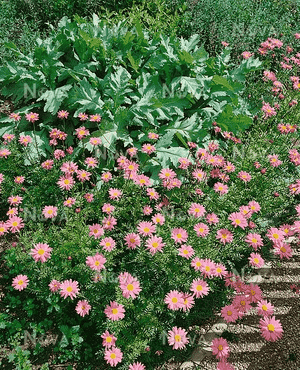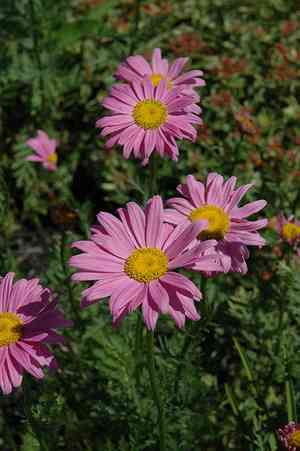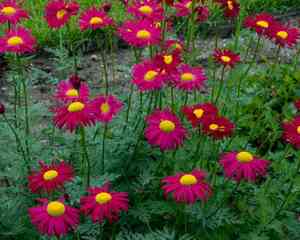
Pyrethrum(Tanacetum coccineum)

Pyrethrum (Tanacetum coccineum)

Also known as: Garden pyrethrum, Feverfew

Tanacetum coccineum, commonly known as the painted daisy, is a flowering plant indigenous to southwestern Asia. This plant is notable for its ability to attract butterflies while being resistant to deer.

Attributes of Pyrethrum

Lifespan
Perennial, Annual
Plant Type
Herb
Plant Height
75 cm
Spread
45 cm
Leaf Color
Green
Flower Size
2.5 cm to 5 cm
Flower Color
Pink Red White Yellow Purple

ForwardPlant - Identify plants with a snap

Identify and diagnose plants, get toxicity alerts, and explore safety guides for all types of fungi.

Try for Free

Images of Pyrethrum

Pyrethrum(Tanacetum coccineum)

Quickly Identify Pyrethrum

1
Look for finely divided, fern-like leaves and bright, multi-petaled flowers that typically range in colors from red, pink, to white. The plant usually has a bushy form and can be distinguished by its distinct daisy-like flower structure.

Scientific Classification of Pyrethrum

Phylum
Vascular plants
Class
Dicotyledons
Order
Asterales
Family
Daisy
Genus
Tansies
Species
Pyrethrum

Planting and Growing of Pyrethrum

Care Difficulty
Easy
Watering Schedule
Every 4 days
Sunlight Requirements
Full sun
Sunshine Duration
4-8 hours
Ideal Temperature
60-70℉
Soil Type
Potting Mix, Peat Mix
Soil pH
6.5-7.5
Fertilizer Type
Balanced
Pruning Season
Spring, Summer
Pruning Area
Branches, Leaves
Pruning Frequency
2 times a year
Repotting Season
Spring
Pot Type
Plastic, Ceramic

water icon How to Water Pyrethrum?

For Tanacetum coccineum, the watering should be thorough but not excessive. Ensure the water reaches about 6 inches into the soil, allowing the entire root zone to be evenly moist. This prevents the risk of waterlogging while keeping the plant hydrated.
What are the symptoms of an underwatered Pyrethrum? ›
What should I do if my Pyrethrum is not getting enough water? ›
What are the symptoms of an overwatered Pyrethrum? ›
How to save an overwatered Pyrethrum? ›

sunlight icon What Are the Sunlight Requirements for Pyrethrum?

Sunlight Requirements: Full sun, Partial sun
Duration of light: 6-8 hours daily
Partial sun to full sun is ideal, providing Tanacetum coccineum with around 6 to 8 hours of light daily, promoting optimal blooming, healthy growth, and vibrant foliage.
What is the best lighting condition for Tanacetum coccineum? ›
How can I ensure ideal lighting for Tanacetum coccineum? ›
What benefits does ideal lighting provide to Tanacetum coccineum? ›
More About Sunlight Requirements Techniques→

temperature icon What Is the Ideal Temperature Range for Pyrethrum?

Ideal Temperature: 60 ~ 70℉
The ideal temperature range for cultivating Tanacetum coccineum, also known as the painted daisy, is between 60°F to 70°F. This range fosters optimal growth and blooming conditions, ensuring the plant receives the right amount of warmth without experiencing stress from excessive heat. It's important to maintain this temperature range consistently to allow the plant to flourish and exhibit its full potential in terms of vibrant blooms and healthy foliage.

soil icon What Soil is Best for Pyrethrum?

Soil type: Loam, Sandy soil
Soil PH: 6.5 ~ 7.5
Tanacetum coccineum thrives in nutrient-rich soil that supports robust growth and vibrant blooms. The presence of organic matter enhances soil fertility and promotes healthy root systems, ultimately leading to a plant that exhibits its best colors and longevity. This plant demands well-drained soil to prevent root rot, which can easily occur in waterlogged conditions. Ensuring good drainage not only helps maintain healthy roots but also supports vigorous flowering. While Tanacetum coccineum can tolerate brief dry spells, it prefers soil that maintains moderate moisture levels. This balance ensures the plant receives adequate hydration without enduring the stress of excessive water. More About Soil→

fertilize icon How to Fertilize Pyrethrum?

Fertilizer type: Balanced
Tanacetum coccineum typically requires balanced fertilization to promote vibrant blooms and healthy growth. Apply liquid fertilizers at half strength every two weeks during the growing season, ensuring not to over-fertilize, which might lead to foliage burn. A granular slow-release fertilizer should be applied at a rate of 2-3 pounds per 100 square feet at the beginning of the growing season to gradually release nutrients over time. More About Fertilizing Techniques→

prune icon How to Prune Pyrethrum?

Pruning Time: Spring, Summer, Autumn
Begin by removing any dead or damaged stems to clear out the plant for healthy new growth. Focus on cutting back faded blossoms to encourage new blooms. For a bushier appearance, trim evenly across the top foliage without cutting too deep. It's crucial to leave at least one-third of each stem to ensure the plant continues to thrive. After pruning, water the plant adequately to help it recover and boost new growth. Apply a balanced fertilizer to supply necessary nutrients, but avoid overfertilization as it can lead to weak, floppy growth instead of strong stems and abundant flowers. More About Pruning Techniques→

propagate icon How to Propagate Pyrethrum plant?

Propagate Time: Spring,Early summer
1
Collect seeds from mature Tanacetum coccineum flowers once they dry. Sow seeds in a seedling tray filled with a well-draining potting mix. Cover them lightly with soil, maintaining a warm environment until germination.
2
Select healthy, disease-free stems for cuttings, about 4-6 inches long. Remove any leaves from the bottom half and dip the cut end in rooting hormone. Plant cuttings in moist, sand-rich potting mix and cover with plastic to retain humidity.
3
Divide mature Tanacetum coccineum plants during their dormancy period. Lift the plant gently from the soil and separate the root clumps, ensuring each section has several shoots and healthy roots. Replant at the same depth as the parent plant.
More About Propagating Techniques→

repot icon How to Repot Pyrethrum plant?

Repotting frequency: Every 2-3 years
1
Tanacetum coccineum should be repotted when the roots start to circle the pot or poke out from the drainage holes. This usually occurs every 2-3 years. Repotting in spring gives the plant time to establish well in the new pot before the blooming season, ensuring robust growth.
2
Select a pot that is one size larger than the current one; ideally, choose a pot with drainage holes to prevent waterlogging, which can cause root rot. The extra space allows roots to expand comfortably, fostering healthy, vigorous growth and preventing overcrowding.
3
Opt for a well-draining loamy mix enriched with organic matter. This soil type supports moisture retention without waterlogging, ensuring that the roots have enough air circulation. The nutrients in the mix promote vibrant flowers and lush foliage.

ForwardPlant - Identify plants with a snap

Find the best spots for them to optimize their health, simply using your phone.

Try for Free

Toxicity of Pyrethrum

Is Pyrethrum toxic to humans?

Exposure to pyrethrum may lead to mild skin irritation in humans and can result in poisoning symptoms in specific animal species.

Is Pyrethrum toxic to cat?

Pyrethrum, often referred to as Pyrethrum, carries a low toxicity risk for cats. Every part of the plant is harmful, and cats may face poisoning if they ingest it in significant amounts. Symptoms of poisoning may manifest as general signs of discomfort, including changes in behavior or digestive disturbances. Although the toxicity is mild, immediate life-threatening responses are unlikely; however, any appearance of negative effects warrants an immediate trip to a veterinary clinic to guarantee that the cat obtains the necessary treatment and to avert any additional complications.

Is Pyrethrum toxic to dog?

Pyrethrum presents a moderate toxicity risk to dogs. Canines may face poisoning from this plant if they ingest it in significant quantities. All components of pyrethrum are regarded as toxic and can result in harmful health effects upon ingestion by dogs. Signs of pyrethrum poisoning can include gastrointestinal disturbances, such as vomiting or diarrhea, and in certain instances, more severe reactions depending on the amount consumed. It is vital for dog owners to keep a close eye on their pets and prevent them from accessing areas where pyrethrum is present. If there is a suspicion that a dog has been poisoned by pyrethrum, seeking immediate veterinary assistance is crucial for ensuring proper care and recovery.

Identify toxic plants for your safety

Learn which plants are harmful to you and your pets, and make informed choices for a safer home!

Try for Free
WARNING
The judgment on toxicity and danger is for reference only. We DO NOT GUARANTEE any accuracy of such judgment. Therefore, you SHALL NOT rely on such judgment. It is IMPORTANT TO SEEK PROFESSIONAL ADVICE in advance when necessary.
More About Toxic Techniques→