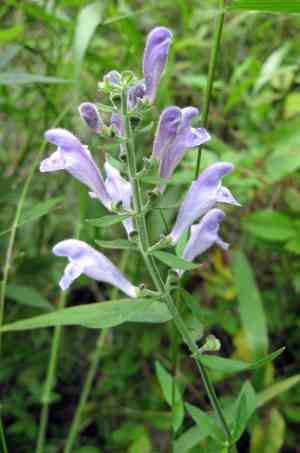
Helmet flower (Scutellaria integrifolia)
Also known as: Common Large Skullcap, Hyssop Skullcap, Entire-Leaved Skullcap, Helmet skullcap
Another name for Scutellaria integrifolia, a perennial flowering plant in the mint family, is helmet skullcap. This name perfectly suits the plant due to its uniquely curved upper petals that resemble a helmet. Native to the eastern United States, helmet skullcap thrives best in locations with partial sunlight, avoiding both direct sunlight and overly shady areas.
In This Article
Attributes of Helmet flower
Lifespan
Perennial
Plant Type
Herb
Plant Height
30 cm
Spread
20 cm to 30 cm
Leaf Color
Green
Flower Size
2.5 cm to 8 cm
Flower Color
Purple Blue White Pink Lavender Violet
Images of Helmet flower
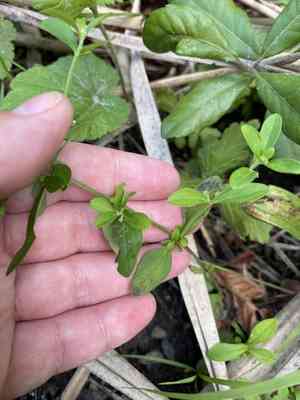
Quickly Identify Helmet flower
1
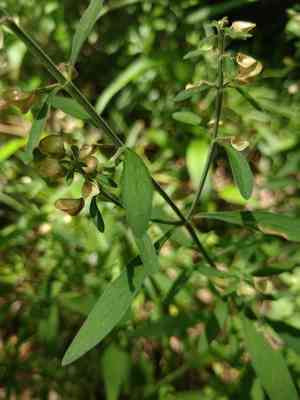
Upright growth to 1-2 feet (30-60 cm), distinctive lance-shaped leaves.
2
Vibrant blue-purple racemes with delicate two-lipped flowers, whitish lower lip, and fine hairs.
3
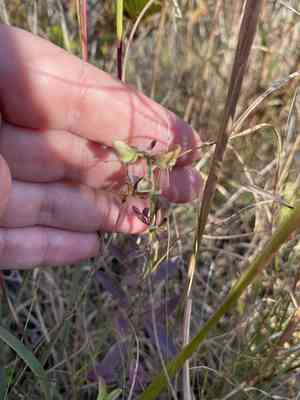
Small round nutlets < 0.2 inches (5 mm), dark brown, clustered at branch tips.
4
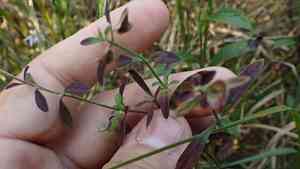
Variety in leaf shapes, pinnate veins, green color with some hair on top leaves.
5
Pubescent stem, green with reddish tinge, opposite branching pattern, 1/8 to 1/4 inch diameter.
Scientific Classification of Helmet flower
Phylum
Vascular plants
Class
Dicotyledons
Order
Lamiales
Family
Mint
Genus
Skullcap
Species
Helmet flower
Planting and Growing of Helmet flower
Care Difficulty
Easy
Watering Schedule
Every 4 days
Sunlight Requirements
Partial sun
Sunshine Duration
4-8 hours
Ideal Temperature
65-75℉
Soil Type
Potting Mix, Peat Mix
Soil pH
6.5-7.5
Fertilizer Type
Balanced
Pruning Season
Spring, Summer
Pruning Area
Branches, Leaves
Pruning Frequency
2 times a year
Repotting Season
Spring
Pot Type
Plastic, Ceramic
 How to Water Helmet flower?
Scutellaria integrifolia, like many perennial plants, appreciates a thorough watering to mimic natural rainfall. Ensure the soil is evenly moistened without becoming waterlogged. A good guideline is to water with approximately 250ml per session, sufficient to penetrate the root zone and sustain the plant’s health.
What are the symptoms of an underwatered Helmet flower?
›
What should I do if my Helmet flower is not getting enough water?
›
What are the symptoms of an overwatered Helmet flower?
›
How to save an overwatered Helmet flower?
›
 What Are the Sunlight Requirements for Helmet flower?
Best suited for partial to full sun, Scutellaria integrifolia benefits from balanced sunlight exposure that supports flowering and foliage consistency, enhancing the plant's aesthetic and health.
More About Sunlight Requirements Techniques→
What is the ideal sun exposure for Scutellaria integrifolia?
›
How can you achieve the ideal lighting conditions for this plant?
›
Why is proper lighting important for Scutellaria integrifolia?
›
 What Is the Ideal Temperature Range for Helmet flower?
Scutellaria integrifolia thrives best in temperatures ranging from 65°F to 75°F. This temperature range allows for optimal enzymatic reactions and physiological processes essential for healthy growth and development. Maintaining this range ensures that the plant can photosynthesize effectively, which is crucial for its overall health and blooming capacity.
 What Soil is Best for Helmet flower?
Scutellaria integrifolia thrives in well-draining soil which prevents waterlogging and root rot. This promotes healthy growth and nutrient uptake, ensuring the plant receives enough oxygen for its roots. Soil with moderate nutrient content supports the growth of Scutellaria integrifolia without leading to nutrient depletion or toxicity. Balanced nutrients protect the plant from deficiencies and promote vibrant foliage. While the soil should be well-draining, some moisture retention is beneficial to keep the Scutellaria integrifolia hydrated, especially during dry spells. This balance ensures continuous growth and blooming.
 How to Fertilize Helmet flower?
Scutellaria integrifolia does not require heavy feeding. A diluted solution of liquid fertilizer applied once a month should suffice. Use about half the recommended amount on the label for liquid fertilizers. For solid fertilizers, a light application in early spring and mid-summer is generally sufficient. Remember that less is often more with Scutellaria integrifolia to avoid over-fertilization.
 How to Prune Helmet flower?
Begin by inspecting the plant for any dead or damaged stems. These should be removed first to allow the plant to direct energy to healthier growth. Always make cuts just above a healthy node or set of leaves to encourage new shoots. Trim back overgrown branches to maintain the plant's shape and size. Try to make cuts at a 45-degree angle to facilitate water runoff, which helps prevent rot. Step back frequently to assess the overall appearance and symmetry of the plant. Thin out dense areas within the plant to improve air circulation and light penetration. This reduces humidity around the leaves and lowers the risk of fungal diseases, helping the plant breathe better and remain robust. Remove spent flowers to encourage further blooming. Cutting back flower stems once blooms have faded allows the plant to conserve energy and potentially prolong the flowering period.
More About Pruning Techniques→
 How to Propagate Helmet flower plant?
1
To propagate through seeds, select a high-quality seed mix and sow seeds in trays filled with well-draining soil. Gently water the seeds to prevent them from washing away, and maintain a consistent level of moisture during germination. Once seedlings develop true leaves, they can be transplanted to their final location.
2
For cutting propagation, choose healthy, non-flowering stems. Use pruning shears to cut a 4-6 inch piece right below a node. Remove the lower leaves, dip the end in rooting hormone, and plant them in a pot with moist potting soil, ensuring the soil stays damp but not waterlogged.
3
In division propagation, mature plants can be dug up and gently separated into smaller sections, each containing a viable root system. Replant these sections immediately in their new locations, ensuring they are not exposed to excessive sunlight to prevent drying out.
 How to Repot Helmet flower plant?
1
You should consider repotting Scutellaria integrifolia when you notice it's root-bound or experiencing slow growth. Signs include roots poking out from the drainage holes or the soil drying out too quickly after watering. These indicators suggest the plant is ready for a fresh start with more space.
2
Choose a pot that is 2 inches larger in diameter than the current one and has good drainage holes. A pot with ample space ensures healthy root development, providing the plant the room it needs to thrive while preventing waterlogging, which can lead to root rot.
3
Opt for a well-draining soil mix containing equal parts of garden soil, peat moss, and perlite. This mixture offers excellent aeration and drainage, essential for preventing root diseases while retaining sufficient moisture to sustain plant growth.
Learn More About Helmet flower Diseases
Anthracnose
Bacterial Leaf Spot
Bacterial Soft Rot
Bacterial Wilt
Chemical Injury
Crown Gall
Cyst Nematode
Damping-off
Downy Mildew
Drought Stress
Fusarium Wilt
Gray Mold
Leaf Curl
Leaf Spot
Mosaic
Nutrient Deficiency
Nutrient Toxicity
Powdery Mildew
Root Rot
Root-knot Nematode
Rusts
Sooty Mold
Spider Mites
Temperature Stress
Thrips Damage
White Mold



