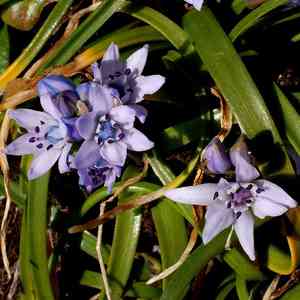
Spring squill (Scilla verna)
Also known as: Spring Squill
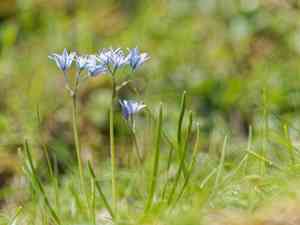
The spring squill, a petite perennial with unscented, star-like blue flowers, is native to Europe, Norway, and Ireland, frequently found close to the coast. This charming flower is recognized as the official flower of County Down in Northern Ireland.
In This Article
Attributes of Spring squill
Lifespan
Perennial
Plant Type
Herb
Plant Height
5 cm to 15 cm
Spread
0 mm to 10 cm
Leaf Color
Green
Flower Size
5 mm to 1.5 cm
Flower Color
Purple Blue
Images of Spring squill
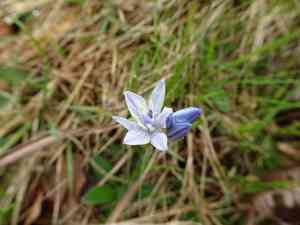
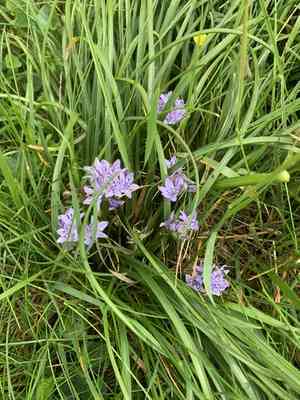
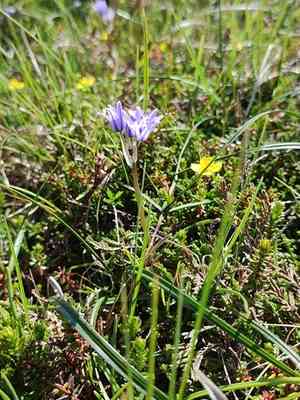
Quickly Identify Spring squill
1
Scilla verna can be identified by its narrow, grass-like leaves and clusters of star-shaped blue or violet flowers. It typically grows in coastal meadows and cliffsides.
Scientific Classification of Spring squill
Phylum
Vascular plants
Class
Monocotyledons
Order
Asparagales
Family
Asparagus
Genus
Squills
Species
Spring squill
Planting and Growing of Spring squill
Care Difficulty
Easy
Watering Schedule
Every 2 days
Sunlight Requirements
Partial sun
Sunshine Duration
4-6 hours
Ideal Temperature
50-68℉
Soil Type
Potting Mix, Peat Mix
Soil pH
6-7.5
Fertilizer Type
Balanced
Pruning Season
Spring, Summer
Pruning Area
Branches, Leaves
Pruning Frequency
2 times a year
Repotting Season
Spring
Pot Type
Plastic, Ceramic
 How to Water Spring squill?
For Scilla verna, the aim is to keep the soil evenly moist but not waterlogged. Water approximately 100 ml per session, ensuring the soil feels damp to touch. This amount is essential, allowing the soil to absorb moisture without becoming saturated and promoting healthy root growth without drowning them.
What are the symptoms of an underwatered Spring squill?
›
What should I do if my Spring squill is not getting enough water?
›
What are the symptoms of an overwatered Spring squill?
›
How to save an overwatered Spring squill?
›
 What Are the Sunlight Requirements for Spring squill?
Scilla verna thrives best with partial to full sun exposure. This environment promotes healthy growth, vibrant foliage, and enhanced flowering by ensuring the plant efficiently processes sunlight for energy and sustenance.
More About Sunlight Requirements Techniques→
Optimal Sun Exposure
›
Adjusting to Seasonal Changes
›
Balancing Shade and Light
›
 What Is the Ideal Temperature Range for Spring squill?
Scilla verna thrives best in an environment where the temperature ranges from 50 to 68 degrees Fahrenheit. This range supports optimal metabolic rates, facilitating robust growth and blooming. In this temperature zone, Scilla verna can perform its photosynthetic activities efficiently, ensuring vigorous leaf and flower development.
 What Soil is Best for Spring squill?
Scilla verna thrives in well-drained soils as it prevents root rot and ensures the plant does not sit in water. The sandy or loamy nature allows for excellent drainage and promotes healthy growth by allowing air and water to reach roots easily. Although not overly demanding, Scilla verna benefits from a soil enriched with organic matter. This provides essential nutrients for growth and supports better flowering, leading to vibrant and healthy blooms. The soil should retain enough moisture to prevent drying out but not so much that it becomes waterlogged. Achieving this balance supports sustained growth and ensures that the plant remains healthy throughout its growth cycle.
 How to Fertilize Spring squill?
Scilla verna, commonly known as the spring squill, thrives with modest fertilization. Use a balanced liquid fertilizer at half strength during the growing season. Too much fertilizer can cause more harm than a scarcity, so moderation is key.
 How to Prune Spring squill?
Start by inspecting your Scilla verna for any dead or damaged leaves. These are usually brown or yellow and should be carefully removed to allow new growth. Once the flowering period is over, carefully trim spent flowers to tidy the plant and redirect energy into bulb development for next season's blooms. For any foliage that is being pruned, make sure to cut as close to the base as possible without cutting into the bulb. This ensures the plant can efficiently use its resources.
More About Pruning Techniques→
 How to Propagate Spring squill plant?
1
Prepare a well-draining soil mix in your planting tray, incorporating organic matter to enhance the soil’s fertility and drainage, which is critical for the healthy establishment of young plants.
2
Scatter the Scilla verna seeds evenly over the soil's surface and lightly cover with a thin layer of soil. Ensure good soil contact by gently pressing the seeds into place without burying them too deep.
3
Carefully excavate the mature plant and separate the bulbs using a knife or trowel. Divide them into sections, each with attached roots, and plant them promptly at the correct depth in the prepared soil.
 How to Repot Spring squill plant?
1
Look for signs of cramped roots or reduced growth; these indicate it's time to repot. Spring is ideal as the plant is entering its growth phase, providing ample time to adapt to the new pot and soil environment.
2
Select a pot slightly larger than the current one that provides good drainage. This allows roots to expand without oversupplying space, which could lead to waterlogging. A pot that is just a couple of inches wider in diameter should suffice.
3
The soil should be a well-draining mix, composed of loam and sand, which prevents root rot by allowing excess water to escape easily, thereby maintaining the plant's health and promoting robust growth.



