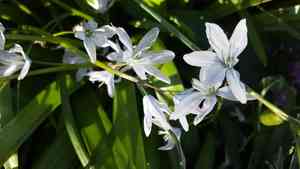
White squill (Scilla mischtschenkoana)
Also known as: Mishchenko squill, Early scilla, Persian squill
The best time to look for white squill in its native central Asia is when its pale blue-white flowers bloom in late winter and early spring. These showy flowers give it plenty of ornamental appeal. This award-winning plant has a low stature, making it well suited for underplanting and rock garden use, but this versatile performer fits well into many types of gardens.
In This Article
Attributes of White squill
Lifespan
Perennial
Plant Type
Herb
Plant Height
15 cm
Spread
20 cm
Leaf Color
Green
Flower Size
2.5 cm
Flower Color
Blue White
Images of White squill
Quickly Identify White squill
1
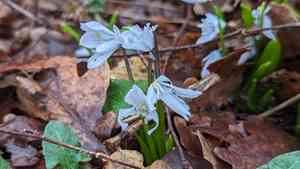
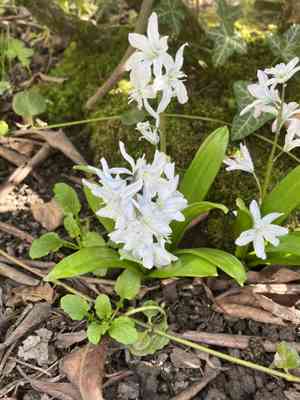
Star-shaped, pure white flowers bloom in late winter to early spring.
2
Basal, linear leaves are grass-like, 2.5-4 inches (6.5-10 cm) long.
3
Flowers are 1/2 to 1 inch (1.27 to 2.54 cm), pale blue to white.
4
Leaves have a simple vein pattern, smooth texture, and glossy appearance.
5
Each flower has six petal-like tepals with a darker blue center vein.
Scientific Classification of White squill
Phylum
Vascular plants
Class
Monocotyledons
Order
Asparagales
Family
Asparagus
Genus
Squills
Species
White squill
Planting and Growing of White squill
Care Difficulty
Easy
Watering Schedule
Every 2 days
Sunlight Requirements
Partial sun
Sunshine Duration
6-10 hours
Ideal Temperature
50-68℉
Soil Type
Potting Mix, Peat Mix
Soil pH
6.5-7.5
Fertilizer Type
Balanced
Pruning Season
Spring, Summer
Pruning Area
Branches, Leaves
Pruning Frequency
2 times a year
Repotting Season
Spring
Pot Type
Plastic, Ceramic
 How to Water White squill?
When watering Scilla mischtschenkoana, aim for about 250 ml per session. It's important to ensure that the soil is moist but not waterlogged. This measurement helps keep the bulbs hydrated without the risk of root rot, which can be detrimental to the plant's health.
What are the symptoms of an underwatered White squill?
›
What should I do if my White squill is not getting enough water?
›
What are the symptoms of an overwatered White squill?
›
How to save an overwatered White squill?
›
 What Are the Sunlight Requirements for White squill?
Scilla mischtschenkoana ideally needs partial sun, allowing it to bask in the morning light while being protected from intense afternoon heat. This ensures balanced growth and maximizes its blooming potential, leading to healthier and more prolific displays.
More About Sunlight Requirements Techniques→
What is the ideal lighting condition for Scilla mischtschenkoana?
›
How can I achieve ideal lighting conditions for Scilla mischtschenkoana?
›
What benefits does ideal lighting provide to Scilla mischtschenkoana?
›
 What Is the Ideal Temperature Range for White squill?
Scilla mischtschenkoana thrives when temperatures are consistently within 50°F to 68°F. This range provides optimal conditions for metabolic processes and photosynthesis, essential for robust growth and blooming.
 What Soil is Best for White squill?
Scilla mischtschenkoana thrives in well-drained soil. This requirement ensures that the roots do not sit in water, which can lead to rot. Well-drained soil allows for optimal moisture content and prevents root diseases. The plant prefers soil that retains moisture but doesn't become waterlogged. Such soil provides the right balance of hydration and aeration, which is crucial for the healthy growth of Scilla mischtschenkoana. A nutrient-rich soil supports the vigorous growth of Scilla mischtschenkoana. It provides essential nutrients that are necessary for the plant's blooming and overall health, making it lush and vibrant.
 How to Fertilize White squill?
When fertilizing Scilla mischtschenkoana, a balanced liquid fertilizer diluted to half strength is recommended. Typically, around 50ml of this diluted solution per plant is adequate. For solid fertilizers, a handful sprinkled around the base of the plant once a year should suffice.
 How to Prune White squill?
Once the blooming season ends, typically in late spring, you should prune back the faded flower stalks. This step prevents the plant from trying to invest energy into producing seeds. Instead, the energy will be stored in the bulbs for next year's growth, ensuring robust blossoms. Allow the foliage to die back naturally through the summer, as it continues photosynthesis to nourish the bulb. Dead foliage can be removed once it is completely yellowed. Never trim green leaves, as they are still providing vital nutrients.
More About Pruning Techniques→
 How to Propagate White squill plant?
1
After the flowering in early spring, collect seeds from the dried flower heads before they are scattered by the wind. Store them in a cool, dry place until ready to sow.
2
In autumn, carefully dig up clusters of bulbs. Separate healthy bulbs from any rotting material, ensuring each has a portion of the roots attached to it for successful replanting.
3
Plant the bulbs or seeds in well-drained soil in a sunny location. Water them moderately after planting to encourage new growth and help establish roots.
 How to Repot White squill plant?
1
Scilla mischtschenkoana shows signs of needing repotting when it becomes root-bound, evidenced by roots encircling the pot's perimeter or emerging through drainage holes. This usually occurs every two to three years. Additionally, if the plant appears stressed with stunted growth or reduced blooming, it’s likely in need of more space and fresh soil. Repot during its dormant phase in spring or autumn for best results.
2
Select a pot that is just slightly larger than the current one, ideally 2-3 inches wider. This moderate increase allows room for growth but prevents waterlogging by not holding excess soil. Opt for a pot with ample drainage holes to prevent soggy roots, promoting healthy plant development. While decorative pots can add aesthetic value, ensure they are functional with good drainage properties.
3
A well-draining gritty mix is essential for Scilla mischtschenkoana. This minimizes the risk of root rot by ensuring excess water is not retained. Combines coarse sand, perlite, and high-quality potting soil to achieve the ideal structure—offering both moisture retention and aeration. A soil enriched with organic matter supports nutrient delivery, aiding in robust growth and vibrant blooming.
Toxicity
ingestion
WARNING
The judgment on toxicity and danger is for reference only. We DO NOT GUARANTEE any accuracy of such judgment. Therefore, you SHALL NOT rely on such judgment. It is IMPORTANT TO SEEK PROFESSIONAL ADVICE in advance when necessary.
Learn More About White squill Diseases
Anthracnose
Bacterial Leaf Spot
Bacterial Soft Rot
Crown Gall
Cyst Nematode
Damping-off
Downy Mildew
Drought Stress
Fusarium Wilt
Gray Mold
Leaf Spot
Mosaic
Nutrient Deficiency
Nutrient Toxicity
Powdery Mildew
Root Rot
Root-knot Nematode
Rusts
Sooty Mold
Spider Mites
Temperature Stress
Thrips Damage
White Mold
Chemical Injury



