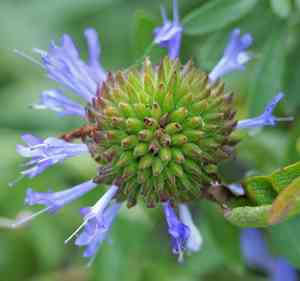
Fragrant Sage (Salvia clevelandii)
Also known as: Blue Sage
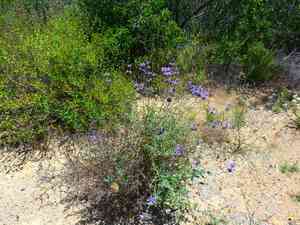
Cleveland sage (Salvia clevelandii) is actually named after the notable plant collector Daniel Cleveland, not the city of Cleveland. This plant is known for its aromatic leaves and its ability to produce purple flowers, similar to common sage (Salvia officinalis).
In This Article
Attributes of Fragrant Sage
Lifespan
Perennial
Plant Type
Shrub
Plant Height
60 cm
Spread
60 cm
Leaf Color
Green Gray
Flower Size
0.5-1 inch (1.3-2.5 cm)
Flower Color
Purple Blue White
Images of Fragrant Sage
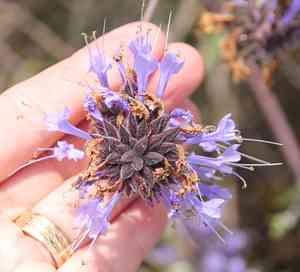
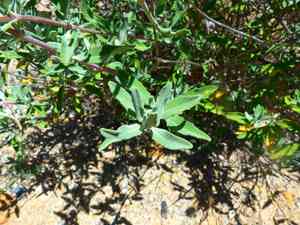
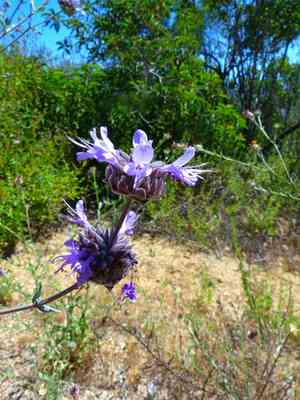
Quickly Identify Fragrant Sage
1
Look for grey-green, lance-shaped leaves that are highly aromatic when crushed. The plant produces whorls of blue to lavender flowers on square stems typically between late spring and early summer.
Scientific Classification of Fragrant Sage
Phylum
Vascular plants
Class
Dicotyledons
Order
Lamiales
Family
Mint
Genus
Sages
Species
Fragrant Sage
Planting and Growing of Fragrant Sage
Care Difficulty
Easy
Watering Schedule
Every 2 days
Sunlight Requirements
Full sun
Sunshine Duration
10-14 hours
Ideal Temperature
65-75℉
Soil Type
Potting Mix, Peat Mix
Soil pH
6.5-7.5
Fertilizer Type
Balanced
Pruning Season
Spring, Summer
Pruning Area
Branches, Leaves
Pruning Frequency
2 times a year
Repotting Season
Spring
Pot Type
Plastic, Ceramic
 How to Water Fragrant Sage?
Salvia clevelandii prefers its soil to be well-drained and not overly soggy, mimicking its natural dry landscape. When watering, aim to moisten the soil thoroughly without leaving standing water. Typically, watering about 500 ml is sufficient to achieve this. The goal is to ensure the root zone receives enough moisture without creating waterlogged conditions.
What are the symptoms of an underwatered Fragrant Sage?
›
What should I do if my Fragrant Sage is not getting enough water?
›
What are the symptoms of an overwatered Fragrant Sage?
›
How to save an overwatered Fragrant Sage?
›
 What Are the Sunlight Requirements for Fragrant Sage?
Salvia clevelandii requires full sun exposure, ideally for 6-8 hours daily. This light range optimizes photosynthesis, supports strong growth, and encourages a lush display of fragrant flowers.
More About Sunlight Requirements Techniques→
How much sunlight is needed?
›
What is the solution for ideal lighting?
›
How to achieve ideal lighting?
›
 What Is the Ideal Temperature Range for Fragrant Sage?
Salvia clevelandii flourishes best within the temperature range of 65°F to 75°F. This range provides optimal conditions for the plant's physiological processes, promoting healthy growth and vibrant foliage. Such temperatures are typically found in mild coastal regions where Salvia clevelandii is naturally endemic.
 What Soil is Best for Fragrant Sage?
Salvia clevelandii thrives in well-drained soil, preventing root rot and ensuring healthy growth. Good drainage keeps the roots from sitting in water, which can lead to fungal infections. While it can tolerate poor soils, Salvia clevelandii benefits from nutrient-rich conditions which enhance blooming and foliage vibrancy. Adding organic matter can boost these soil properties. Excessive organic material in soil should be minimized as it can retain more moisture than desired for Salvia clevelandii. This plant prefers a more mineral-based soil structure.
 How to Fertilize Fragrant Sage?
For Salvia clevelandii, it's important to provide balanced nutrition to support its vibrant growth. Use a liquid fertilizer at half strength, about 1 teaspoon per gallon of water. This will ensure the plant receives the necessary nutrients without risk of over-fertilization.
 How to Prune Fragrant Sage?
Start by examining the plant and identify dead or damaged branches. These should be removed first as they can hinder plant growth and attract pests or disease. Trim back overgrown branches to maintain a compact shape. Cut just above a leaf node or bud facing outward to encourage natural, bushy growth. Aim for an even appearance. After pruning, water the plant thoroughly and consider applying a balanced fertilizer to support recovery and spur healthy new growth. Monitor for any signs of stress.
More About Pruning Techniques→
 How to Propagate Fragrant Sage plant?
1
Start with a well-draining soil mix for seeds or a mix of peat and perlite for cuttings. Ensuring the medium is slightly moist and sterile is crucial to preventing pathogen growth and providing the seeds or cuttings with the best start.
2
For seed propagation, sow the seeds lightly and cover them with a thin layer of soil. Ensure they are spaced evenly. For cuttings, choose healthy stems and cut them just below a node, then remove the lower leaves before planting in the medium.
3
Seeds should be kept consistently moist but not waterlogged. Mist cuttings lightly to maintain humidity, as overly wet conditions can lead to rot. A small greenhouse or plastic cover can help in maintaining the required humidity.
 How to Repot Fragrant Sage plant?
1
Salvia clevelandii shows signs it's time to repot when growth appears stunted or roots protrude from drainage holes. Ideally, repot in spring or summer when the plant actively grows, ensuring sufficient time to establish before cooler temperatures arrive.
2
Select a pot that's one size larger, with ample drainage holes to avoid waterlogging. A slightly porous material like terracotta is ideal as it helps prevent root rot by allowing extra moisture to evaporate, maintaining a healthy root environment.
3
Opt for a well-draining, sandy soil mix designed for Mediterranean plants. This ensures water flows easily through the pot, mimicking the plant's natural environment, and effectively prevents root rot while providing appropriate aeration for healthy root development.
Learn More About Fragrant Sage Diseases
Anthracnose
Bacterial Leaf Spot
Bacterial Soft Rot
Bacterial Wilt
Black Spot
Chemical Injury
Crown Gall
Cyst Nematode
Damping-off
Downy Mildew
Drought Stress
Fusarium Wilt
Gray Mold
Leaf Spot
Mosaic
Nutrient Deficiency
Nutrient Toxicity
Powdery Mildew
Root Rot
Root-knot Nematode
Rusts
Sooty Mold
Spider Mites
Temperature Stress
Thrips Damage
White Mold



