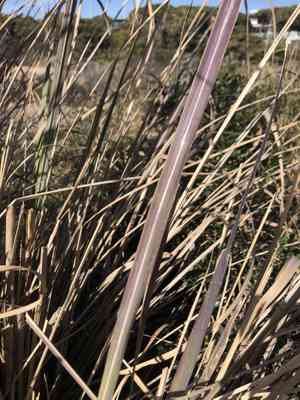
Ravennagrass (Saccharum ravennae)
Also known as: Italian sugarcane, Northern pampas grass
Giant reed (*Arundo donax*) is a tall perennial grass native to the Mediterranean region. While it is often planted for its ornamental value due to its significant height and dense growth, it can also naturalize and become a problematic invasive species in certain areas. Its robust structure makes it popular for use as a privacy hedge or screen.
In This Article
Attributes of Ravennagrass
Lifespan
Perennial
Plant Type
Grass
Plant Height
1.8 m to 6 m
Spread
1.2 m to 1.8 m
Leaf Color
Green Gray
Flower Size
15 cm
Flower Color
Purple White
Images of Ravennagrass



Quickly Identify Ravennagrass
1
This plant can be identified by its tall stature, reaching up to 3 meters in height, with large, plume-like flower heads. The leaves are long, narrow, and arching, often with a silver-grey hue. The stems are stout and can be up to 2.5 cm in diameter.
Scientific Classification of Ravennagrass
Phylum
Vascular plants
Class
Monocotyledons
Order
Poales
Family
Grass
Genus
Saccharum
Species
Ravennagrass
Planting and Growing of Ravennagrass
Care Difficulty
Easy
Watering Schedule
Every 2 days
Sunlight Requirements
Full sun
Sunshine Duration
4-6 hours
Ideal Temperature
68-77℉
Soil Type
Potting Mix, Peat Mix
Soil pH
6.5-7.5
Fertilizer Type
Balanced
Pruning Season
Spring, Summer
Pruning Area
Branches, Leaves
Pruning Frequency
2 times a year
Repotting Season
Spring
Pot Type
Plastic, Terracotta
 How to Water Ravennagrass?
Saccharum ravennae prefers a moderate watering approach. The goal is to keep the soil consistently moist but not waterlogged. Water evenly until the top soil layer is moist to a depth of 10-15 cm without letting water pool at the bottom or cause run-off.
What are the symptoms of an underwatered Ravennagrass?
›
What should I do if my Ravennagrass is not getting enough water?
›
What are the symptoms of an overwatered Ravennagrass?
›
How to save an overwatered Ravennagrass?
›
 What Are the Sunlight Requirements for Ravennagrass?
Ideal light conditions involve placing it in areas with full sun to partial sun, aiding optimal growth, robust leaf color, and increased drought resistance.
More About Sunlight Requirements Techniques→
How much direct sunlight does Saccharum ravennae need?
›
What is the solution for unideal light conditions?
›
What are the benefits of ideal light exposure for this plant?
›
 What Is the Ideal Temperature Range for Ravennagrass?
Saccharum ravennae thrives best in temperatures ranging from 68°F to 77°F. This range promotes vigorous growth, enabling the plant to efficiently perform photosynthesis while maintaining cellular stability.
 What Soil is Best for Ravennagrass?
Saccharum ravennae thrives in well-draining soil to prevent waterlogging, which can lead to root rot. This preference ensures the plant receives adequate air circulation around the roots, promoting robust growth and a strong root system. This plant prefers moderately fertile soil, which provides it with essential nutrients without causing over-fertilization. A proper nutrient balance supports healthy foliage and vigorous growth, enhancing the plant's ornamental appeal. Saccharum ravennae can tolerate a pH range from 6.5 to 7.5, favoring a neutral to slightly alkaline environment. This pH range helps maintain nutrient availability and supports optimal plant health.
 How to Fertilize Ravennagrass?
For Saccharum ravennae, a balanced application of fertilizer is crucial for healthy growth. Use a general-purpose liquid fertilizer diluted to half strength, applying about 500 ml per plant fertilization. For slow-release formulations, apply about 50 grams per square meter to avoid over-fertilization.
 How to Prune Ravennagrass?
Start by identifying and removing any dead or damaged leaves to promote new growth. Trim any overly long stalks, cutting them back to approximately two-thirds of their original length. This will not only improve the plant's appearance, but also redirect energy to producing vibrant new shoots. Dense growth can cause the plant to become matted and hinder airflow. Carefully select and remove some of the oldest and thickest stalks near the base to increase air circulation. This thinning also helps to control the shape and size of the plant.
More About Pruning Techniques→
 How to Propagate Ravennagrass plant?
1
Collect seeds from mature Saccharum ravennae plants during the autumn. Clean them to remove any debris and store them in a cool, dry place until you're ready to plant.
2
In early spring, dig up mature plants and carefully divide the root ball into sections. Each section should have healthy roots and shoots for successful propagation.
3
Plant the seeds in seed trays or the divisions directly into the garden. Ensure the soil is well-draining and keep it moist for optimal growth.
 How to Repot Ravennagrass plant?
1
Saccharum ravennae should be repotted when you notice its roots protruding from the drainage holes or its growth becomes stunted due to a lack of soil nutrients. Spring and summer are the best times for repotting as the plant can recover more easily in the growing season.
2
Select a pot that is at least 2 inches larger in diameter than the current one. This extra space allows roots to spread comfortably, supporting further growth. Ensure the pot has sufficient drainage holes to prevent waterlogging, which can be detrimental to the plant's roots.
3
Use a well-draining soil mix to prevent water from retaining in the pot and causing root rot. A combination of regular potting soil with added perlite or sand ensures good drainage, providing an optimal environment for Saccharum ravennae to thrive.
Learn More About Ravennagrass Diseases
Anthracnose
Bacterial Leaf Spot
Bacterial Soft Rot
Bacterial Wilt
Chemical Injury
Cyst Nematode
Damping-off
Downy Mildew
Drought Stress
Fusarium Wilt
Gray Mold
Leaf Spot
Mosaic
Nutrient Deficiency
Nutrient Toxicity
Powdery Mildew
Root Rot
Root-knot Nematode
Rusts
Sooty Mold
Spider Mites
Temperature Stress
Thrips Damage
White Mold



