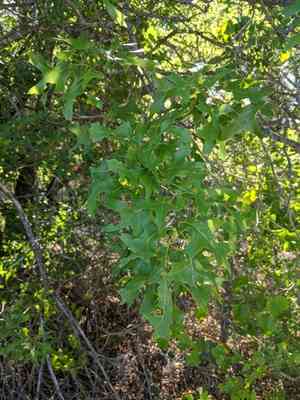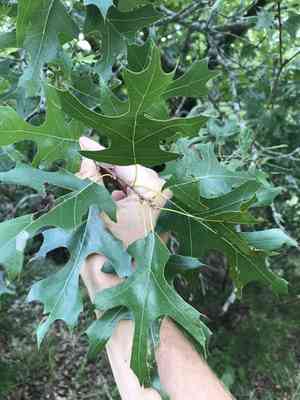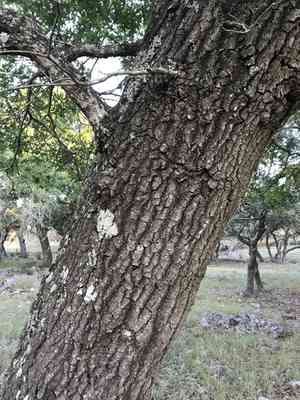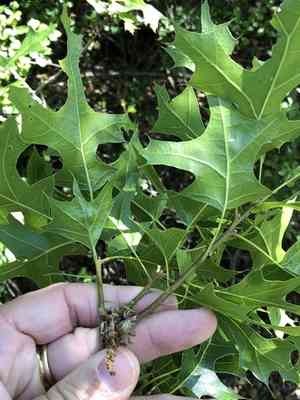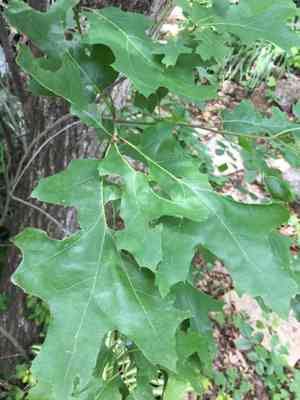
Texas red oak(Quercus buckleyi)

Texas red oak (Quercus buckleyi)

Also known as: Spotted Oak, Nutall Oak, Buckley's oak

The Texas red oak (Quercus buckleyi) is a deciduous tree known for its seasonal changes. In spring, it produces reddish-brown catkins. During summer, acorns begin to form, maturing by early fall. The leaves transform from green to striking red and orange hues in autumn before falling off.

For optimal growth, Texas red oak requires:
- **Sunlight:** Prefers full sun.
- **Water:** Moderate moisture; drought-tolerant once established.
- **Heat Tolerance:** High, adapting well to warm climates.
- **Soil:** Well-drained, with a preference for acidic to neutral pH levels.

These conditions support its healthy growth and vibrant seasonal displays.

Attributes of Texas red oak

Lifespan
Perennial
Plant Type
Tree
Plant Height
12 m to 15 m
Spread
6 m to 11 m
Leaf Color
Green Red Orange
Flower Size
2 mm
Flower Color
Yellow Green

ForwardPlant - Identify plants with a snap

Identify and diagnose plants, get toxicity alerts, and explore safety guides for all types of fungi.

Try for Free

Images of Texas red oak

Texas red oak(Quercus buckleyi)

Quickly Identify Texas red oak

1
Look for a tree with lobed leaves that have bristle tips and a base that can be rounded or heart-shaped. The leaves turn vibrant red to orange in the fall. The bark is dark and fissured.

Scientific Classification of Texas red oak

Phylum
Vascular plants
Class
Dicotyledons
Order
Fagales
Family
Beech
Genus
Oaks
Species
Texas red oak

Planting and Growing of Texas red oak

Care Difficulty
Easy
Watering Schedule
Every 2 days
Sunlight Requirements
Full sun
Sunshine Duration
4-8 hours
Ideal Temperature
60-75℉
Soil Type
Potting Mix, Peat Mix
Soil pH
6.5-7.5
Fertilizer Type
Balanced
Pruning Season
Spring, Summer
Pruning Area
Branches, Leaves
Pruning Frequency
2 times a year
Repotting Season
Spring
Pot Type
Plastic, Ceramic

water icon How to Water Texas red oak?

The watering amount for Quercus buckleyi should be generous, ensuring that the water penetrates the soil deeply enough to reach the roots. This typically requires about 1000 ml per session, adjusting based on soil drainage and climate conditions. The goal is to moisten the entire root zone without causing excess run-off.
What are the symptoms of an underwatered Texas red oak?
What should I do if my Texas red oak is not getting enough water?
What are the symptoms of an overwatered Texas red oak?
How to save an overwatered Texas red oak?

sunlight icon What Are the Sunlight Requirements for Texas red oak?

Sunlight Requirements: Full sun, Partial sun
Duration of light: 6-8 hours per day
Quercus buckleyi thrives best when exposed to half-day to full-day sun. This range ensures an optimal balance of growth and resilience against environmental stresses, promoting vibrant leaves and steady acorn production.
How much sunlight does Quercus buckleyi need?
Why is full sun important for Quercus buckleyi?
What are some practical tips for ensuring adequate light exposure?
More About Sunlight Requirements Techniques

temperature icon What Is the Ideal Temperature Range for Texas red oak?

Ideal Temperature: 60 ~ 75℉
The ideal temperature range for Quercus buckleyi, also known as Texas Red Oak, is between 60°F and 75°F. Within this temperature range, these trees experience optimal growth conditions that support photosynthesis, nutrient uptake, and overall vitality. Maintaining consistent conditions in this range helps the tree achieve its full foliage potential, ensuring bright, healthy leaves and robust trunk development.

soil icon What Soil is Best for Texas red oak?

Soil type: Loam, Sandy loam, Calcareous soil
Soil PH: 6.5 ~ 7.5
Quercus buckleyi thrives in well-drained soil, which prevents waterlogging and root rot. This is vital because excessive moisture can lead to root diseases, impairing nutrient uptake and overall plant health. This oak species benefits from a soil that's rich in organic matter, which supplies essential nutrients that support robust growth. Enhanced organic content also promotes beneficial microbial activity, improving root function. Proper soil aeration is crucial for this oak, ensuring that roots receive enough oxygen. Aeration helps in nutrient exchange and supports healthy root development, fostering vigorous growth and resilience.

fertilize icon How to Fertilize Texas red oak?

Fertilizer type: Balanced
When fertilizing Quercus buckleyi, a balanced fertilizer with an N-P-K ratio of 10-10-10 is recommended. For liquid fertilizers, a diluted concentration that involves mixing 1 tablespoon of fertilizer per gallon of water suffices. For slow-release fertilizers, aiming for around 3 pounds per 1,000 square feet during the early spring or late fall helps in maintaining the plant's nutritional needs.

prune icon How to Prune Texas red oak?

Pruning Time: Spring, Summer, Autumn
Begin by identifying dead, damaged, or diseased branches. These are typically discolored, brittle, and may have visible lesions. Prune these back to the healthy wood to encourage better growth. When removing a branch, make a cut at the branch collar where the branch meets the trunk. This helps in the natural healing process. Large branches may need an undercut first to prevent damaging the bark as they fall. Focus on thinning dense areas to allow light and air penetration, which promotes healthy foliage. Aim to preserve the natural shape of the tree by making strategic cuts without drastically altering its structure. More About Pruning Techniques

propagate icon How to Propagate Texas red oak plant?

Propagate Time: Early spring, Late autumn
1
Collect acorns during late autumn. Inspect for damage and soak in water overnight to determine viability. Remove floating seeds as they are unlikely to germinate.
2
Plant viable acorns in seed trays filled with well-draining soil. Ensure they are just beneath the soil surface and maintain consistent moisture until germination.
3
In early spring, select healthy rootstock and scion. Use a grafting knife to make precise cuts, join the scion to the rootstock, and secure with grafting tape.
More About Propagating Techniques

repot icon How to Repot Texas red oak plant?

Repotting frequency: Every 2-3 years
1
Quercus buckleyi, also known as Texas Red Oak, requires repotting when the roots outgrow the current pot and become root-bound. Look for signs like reduced growth, root circling, or roots emerging from drainage holes. These are clear indicators that the tree is ready for a new home.
2
When choosing a pot for repotting Quercus buckleyi, select one that is 2-3 inches larger in diameter than the previous one. Opt for a pot with good drainage holes to prevent waterlogging, which could lead to root rot. A slightly heavier pot is ideal to stabilize the tree and support its growth.
3
Selecting the right soil is essential for Quercus buckleyi. A well-drained loamy mix with equal parts sand, silt, and clay provides good aeration and retains essential nutrients. This soil type supports the tree’s growth and ensures efficient water drainage, keeping the roots healthy and preventing rot.

ForwardPlant - Identify plants with a snap

Find the best spots for them to optimize their health, simply using your phone.

Try for Free

Toxicity of Texas red oak

Is Texas red oak toxic to cat?

The Texas red oak has a slight toxicity level for cats, particularly when they consume substantial amounts of its leaves or seeds. It is essential for cat owners to keep a vigilant eye on their pets while they are near this tree, as ingestion can result in physical discomfort. Regrettably, cats may display vague symptoms linked to poisoning. In such cases, it is critical to respond promptly and consult a veterinarian to safeguard the health of the distressed cat.

Is Texas red oak toxic to dog?

The plant species known as Texas red oak is recognized for possessing a mild toxicity level that can affect dogs. Canines may experience poisoning from this species mainly if they ingest it in significant quantities. The components of the plant that are hazardous include its leaves and seeds, which, if eaten by dogs, could result in a range of symptoms indicative of poisoning. Pet owners should remain alert for signs including gastrointestinal disturbances, sluggishness, or other unusual behaviors that may indicate their dog has consumed parts of the Texas red oak. Should a dog display symptoms associated with Texas red oak poisoning, it is crucial to seek prompt veterinary attention to guarantee appropriate treatment and management of the situation.

Identify toxic plants for your safety

Learn which plants are harmful to you and your pets, and make informed choices for a safer home!

Try for Free
WARNING
The judgment on toxicity and danger is for reference only. We DO NOT GUARANTEE any accuracy of such judgment. Therefore, you SHALL NOT rely on such judgment. It is IMPORTANT TO SEEK PROFESSIONAL ADVICE in advance when necessary.
More About Toxic Techniques