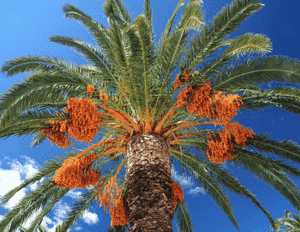
Date palm (Phoenix dactylifera)
Also known as: Date Palm
The Arbutus unedo, also known as the Strawberry Tree, is an evergreen with a sturdy trunk and attractive, glossy leaves. It is well-suited for drought-prone areas and has some resistance to fire. This tree produces charming white flowers and bears small, orange-red, edible fruits. With a lifespan of up to 75 years, the Strawberry Tree typically grows to a height of around 5-10 meters.
In This Article
Attributes of Date palm
Lifespan
Perennial
Plant Type
Palm
Plant Height
35 m
Spread
6 m to 12 m
Leaf Color
Green
Flower Size
2.5 cm
Flower Color
White Cream
Images of Date palm
Quickly Identify Date palm
1
Phoenix dactylifera can be identified by its tall stature, feather-like leaves that can grow up to 6 meters long, and clusters of date fruits. The trunk is covered with the remains of old leaf bases, giving it a rough texture.
Scientific Classification of Date palm
Phylum
Vascular plants
Class
Monocotyledons
Order
Palms, bullanocks, and allies
Family
Palm
Genus
Date palms
Species
Date palm
Planting and Growing of Date palm
Care Difficulty
Easy
Watering Schedule
Every 2 days
Sunlight Requirements
Full sun
Sunshine Duration
4-8 hours
Ideal Temperature
86-104℉
Soil Type
Potting Mix, Peat Mix
Soil pH
6.5-7.5
Fertilizer Type
Balanced
Pruning Season
Spring, Summer
Pruning Area
Branches, Leaves
Pruning Frequency
2 times a year
Repotting Season
Spring
Pot Type
Terracotta, Plastic
 How to Water Date palm?
For Phoenix dactylifera, also known as the date palm, adequate watering is crucial to simulate its native arid environments. Water deeply and infrequently, allowing the top 5cm of soil to dry out between waterings. Each session requires approximately 400 milliliters to ensure the roots receive enough moisture without becoming waterlogged.
More About Watering Techniques→
What are the symptoms of an underwatered Date palm?
›
What should I do if my Date palm is not getting enough water?
›
What are the symptoms of an overwatered Date palm?
›
How to save an overwatered Date palm?
›
 What Are the Sunlight Requirements for Date palm?
The optimal light condition for Phoenix dactylifera is full sun throughout the day. Providing consistent sunlight ensures strong growth and high-quality fruit, supporting the plant's natural life cycle and reinforcing its ecological role.
More About Sunlight Requirements Techniques→
Understanding Ideal Sunlight
›
Ensuring Proper Light Exposure
›
Benefits of Ideal Light Conditions
›
 What Is the Ideal Temperature Range for Date palm?
The ideal temperature range for Phoenix dactylifera, also known as the date palm, is between 86°F and 104°F. In this range, the plant can photosynthesize efficiently and produce fruits, as the temperatures closely mimic their natural desert habitat conditions.
 What Soil is Best for Date palm?
Phoenix dactylifera thrives best in well-draining soil, as it prevents waterlogging and root rot. This feature enables the roots to breathe and efficiently absorb nutrients, thereby enhancing the overall health and growth of the plant. A nutrient-rich soil supports the date palm's development and fruit production. Amend the soil with organic matter to improve its fertility, which will contribute to vigorous growth and higher fruit yield. While well-draining, a good Phoenix dactylifera soil should also retain adequate moisture. This balance ensures that the plant has a consistent supply of water, essential for maintaining healthy foliage and fruit development.
More About Soil→
 How to Fertilize Date palm?
Phoenix dactylifera, commonly known as the date palm, thrives best with moderate fertilization. Typically, a balanced amount of nitrogen, phosphorus, and potassium is essential. Use 1/2 to 1 pound of a balanced granular fertilizer such as 8-2-12 per tree at each application, with emphasis on more potassium, given its importance to this plant's health and productivity.
More About Fertilizing Techniques→
 How to Prune Date palm?
Prepare by gathering pruning shears, gloves, and safety goggles. Ensure the tools are clean to prevent disease spread. Identify the dead, yellowing, or diseased fronds. These are the parts you will safely remove to encourage healthy growth. Use your shears to make clean cuts at the base of the frond. Take care to avoid cutting too close to the trunk to protect the tree's growing points. If necessary, remove any seed pods to prevent unwanted seed spread and to focus the plant's energy on growth.
More About Pruning Techniques→
 How to Propagate Date palm plant?
1
Before planting, soak the date palm seeds in lukewarm water for 24 to 48 hours to help speed up germination. This helps in softening the seed coat, allowing water to penetrate and initiate the germination process.
2
Plant the seeds in a well-draining soil mixture, preferably in individual pots, and cover them lightly with soil. Ensure they are buried at twice their depth for optimal growth conditions.
3
Place the pots in a bright, indirect light location and maintain even moisture in the soil. Avoid overwatering to prevent seed rot; the soil should remain slightly damp but not wet.
 How to Repot Date palm plant?
1
Phoenix dactylifera, commonly known as the date palm, needs repotting when its roots start to circle the pot or outgrow it. This can cause stress as the roots require more space to sustain the plant's growth. Repotting is usually needed every 2 to 3 years or when the soil becomes compacted and poorly draining, impacting the palm's health.
2
Opt for a pot that is 2 to 4 inches larger in diameter than the current one to give the roots ample space to spread and grow. A pot with drainage holes is essential to prevent waterlogging, which can lead to root rot. Choosing the right size prevents the plant from becoming root-bound and encourages healthy growth.
3
A well-draining sandy soil mix is ideal for Phoenix dactylifera. This mimics its natural habitat, allowing excess water to drain efficiently and supplying adequate air circulation to the roots. Using a sandy soil blend reduces the risk of root diseases caused by waterlogged conditions and ensures the plant can thrive.



