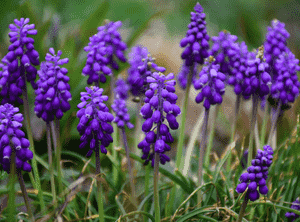
Starch grape hyacinth(Muscari neglectum)

Starch grape hyacinth (Muscari neglectum)

Also known as: Grape hyacinth

The perennial plant Muscari neglectum, native to Eurasia, is often cultivated as an ornamental houseplant in temperate regions. It's commonly called the "grape hyacinth" due to its grape-like flower clusters.

Attributes of Starch grape hyacinth

Lifespan
Perennial, Annual
Plant Type
Herb
Plant Height
15 cm to 30 cm
Spread
7 cm to 10 cm
Leaf Color
Green
Flower Size
3 mm to 3.5 mm
Flower Color
Blue Purple Black Violet

ForwardPlant - Identify plants with a snap

Identify and diagnose plants, get toxicity alerts, and explore safety guides for all types of fungi.

Try for Free

Images of Starch grape hyacinth

Starch grape hyacinth(Muscari neglectum)

Quickly Identify Starch grape hyacinth

1
To identify Muscari neglectum, look for its small, tightly packed, dark blue flowers with white rimmed edges, growing on a spike. The leaves are linear and somewhat grass-like, emerging in early spring.

Scientific Classification of Starch grape hyacinth

Phylum
Vascular plants
Class
Monocotyledons
Order
Asparagales
Family
Asparagus
Genus
Grape hyacinths
Species
Starch grape hyacinth

Planting and Growing of Starch grape hyacinth

Care Difficulty
Easy
Watering Schedule
Every 2 days
Sunlight Requirements
Full sun
Sunshine Duration
4-8 hours
Ideal Temperature
50-68℉
Soil Type
Potting Mix, Peat Mix
Soil pH
6.5-7.5
Fertilizer Type
Balanced
Pruning Season
Spring, Summer
Pruning Area
Branches, Leaves
Pruning Frequency
2 times a year
Repotting Season
Spring
Pot Type
Plastic, Ceramic

water icon How to Water Starch grape hyacinth?

Muscari neglectum should be watered thoroughly but not excessively. Ensure the soil is evenly moist but not waterlogged. Allow the top inch of soil to dry before watering again, ensuring roots have access to moisture without sitting in standing water.
What are the symptoms of an underwatered Starch grape hyacinth?
What should I do if my Starch grape hyacinth is not getting enough water?
What are the symptoms of an overwatered Starch grape hyacinth?
How to save an overwatered Starch grape hyacinth?
More About Watering Techniques

sunlight icon What Are the Sunlight Requirements for Starch grape hyacinth?

Sunlight Requirements: Full sun, Partial sun
Duration of light: 4 to 6 hours
Muscari neglectum performs best in environments with full sun to partial sun, meaning ideally it would get around 4 to 6 hours of sunlight. This range supports vigorous growth and optimal flowering conditions, contributing to its overall health.
How much sunlight is ideal for Muscari neglectum?
What are some solutions to achieve ideal lighting for Muscari neglectum?
What are the benefits of providing ideal light conditions?
More About Sunlight Requirements Techniques

temperature icon What Is the Ideal Temperature Range for Starch grape hyacinth?

Ideal Temperature: 50 ~ 68℉
The ideal temperature range for growing Muscari neglectum is between 50 and 68°F. This range provides the optimal conditions for the plant to thrive, supporting its growth and blooming process. Maintaining temperatures within this range ensures healthy foliage and vibrant blooms.

soil icon What Soil is Best for Starch grape hyacinth?

Soil type: Sandy soil, Loam, Calcareous soil
Soil PH: 6.5 ~ 7.5
The soil for Muscari neglectum must be well-drained to prevent waterlogging, as excessive moisture can cause root rot. Well-drained soil promotes healthy root growth and prevents fungal diseases. This plant thrives in soils that are rich in organic matter. Providing a nutrient-rich medium supports blooming and ensures robust growth, resulting in a profusion of vibrant flowers. A soil pH between 6.5 and 7.5 is ideal. This range ensures that nutrients are soluble and available for uptake, crucial for the plant's metabolic functions and vibrant foliage. More About Soil

fertilize icon How to Fertilize Starch grape hyacinth?

Fertilizer type: Balanced
For Muscari neglectum, it's important to use a balanced fertilizer at half the recommended strength. For liquid fertilizers, mix with water according to the instructions on the package but use only half the quantity for each watering session. More About Fertilizing Techniques

prune icon How to Prune Starch grape hyacinth?

Pruning Time: Spring, Summer
Begin by deadheading spent flowers, cutting back to the base of the flower stalk. Don't cut the leaves back until they turn yellow and wilt, as they are vital for nutrient storage in the bulbs. Prune carefully around the base without damaging new bulbs or shoots. If Muscari neglectum forms dense clumps, it may benefit from thinning. Carefully dig up the bulbs after flowering season and replant them at a moderate distance to prevent overcrowding, improving air circulation and reducing disease risk. More About Pruning Techniques

propagate icon How to Propagate Starch grape hyacinth plant?

Propagate Time: Spring, Early spring
1
Sow Muscari neglectum seeds in seed trays filled with a well-draining potting mix. Lightly cover the seeds with soil and keep the trays in a warm, bright spot. Water sparingly to avoid waterlogging.
2
To propagate through division, dig up the mature clump of Muscari neglectum in early spring. Carefully separate the bulbs, ensuring each has roots attached. Replant the divisions at the same depth they were originally growing.
3
Once seedlings appear, ensure they receive adequate light and water. When they are large enough to handle, transplant the seedlings into individual pots or their final location outdoors.
More About Propagating Techniques

repot icon How to Repot Starch grape hyacinth plant?

Repotting frequency: Every 2-3 years
1
Muscari neglectum shows signs of needing repotting when its growth becomes stunted or the bulbs begin pushing upwards out of the soil. Early spring or autumn are ideal times, allowing the plant to comfortably adjust to its new environment and encouraging healthy growth. Keep an eye on its foliage and bulb state as indicators.
2
Opt for a pot slightly larger than the current one, with ample drainage holes to prevent waterlogging. Terracotta pots are excellent as they allow the roots to breathe while providing stability. Ensuring the right size enhances nutrient availability and root expansion, crucial for this plant's vigor.
3
Use a sandy, well-draining soil mix to mimic its natural habitat and prevent root rot. Incorporate a bit of organic matter to enhance nutrient content. This soil structure supports healthy bulb development and provides sufficient drainage, essential for avoiding moisture-related issues.

ForwardPlant - Identify plants with a snap

Find the best spots for them to optimize their health, simply using your phone.

Try for Free

Toxicity of Starch grape hyacinth

Is Starch grape hyacinth toxic to humans?

The bulb of the starch grape hyacinth contains comisic acid, a toxic compound that is not safe for consumption. Ingesting this bulb can lead to gastrointestinal problems such as vomiting, diarrhea, and abdominal discomfort, with the risk amplifying with larger ingested amounts. Additionally, there is some evidence indicating that direct contact with the bulb, sap, or leaves may lead to dermatitis, producing symptoms such as red, itchy, dry, cracked, or blistered skin, along with pain in the affected region. Moreover, inflammation and discomfort can arise if the toxic substances from the starch grape hyacinth come into contact with the eyes.

Is Starch grape hyacinth toxic to cat?

The starch grape hyacinth has a moderate level of toxicity for cats, and can lead to harmful effects if the bulb is consumed. Cats might encounter this plant in gardens or as houseplants, posing a risk of poisoning. After ingestion of the bulb, a cat may show signs of physical distress, which could worsen if not treated quickly. It is crucial for cat owners to remain alert and safeguard their pets against potential exposure to starch grape hyacinth. If ingestion is suspected, it is essential to transport the cat to a veterinary clinic immediately to ensure its safety and health.

Is Starch grape hyacinth toxic to dog?

The starch grape hyacinth presents a moderate toxicity risk to dogs, especially when any part of the bulb is consumed. If dogs ingest portions of the plant, they may experience various symptoms associated with poisoning. These symptoms can range from gastrointestinal disturbances, such as vomiting and diarrhea, to lethargy, or even more severe reactions depending on the quantity ingested. It is vital for dog owners to remain alert and prevent their pets from accessing or consuming any part of the starch grape hyacinth. Should a dog consume this plant, it is imperative to seek immediate veterinary attention to guarantee appropriate treatment and management of the poisoning.

Identify toxic plants for your safety

Learn which plants are harmful to you and your pets, and make informed choices for a safer home!

Try for Free
WARNING
The judgment on toxicity and danger is for reference only. We DO NOT GUARANTEE any accuracy of such judgment. Therefore, you SHALL NOT rely on such judgment. It is IMPORTANT TO SEEK PROFESSIONAL ADVICE in advance when necessary.
More About Toxic Techniques

