Lychee (Litchi chinensis)
Also known as: Litchi
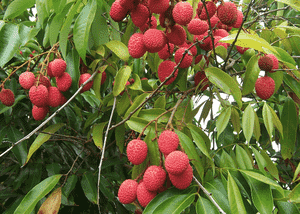
The lychee (Litchi chinensis) is an evergreen tree originating from southeastern China. It produces pink, rough-skinned fruits that are juicy and highly popular. This tree is extensively grown in various regions across Asia.
In This Article
Attributes of Lychee
Lifespan
Perennial
Plant Type
Tree
Plant Height
6 m to 9 m
Spread
8 m
Leaf Color
Green
Flower Size
2.5 cm
Flower Color
Yellow Green White
Images of Lychee
Quickly Identify Lychee
1
Litchi trees are recognized by their dense, rounded crown and pinnate leaves with an even number of leaflets. The fruit is round to oval, approximately 3-4 cm in diameter, and has a rough, red rind that is easily peeled to reveal a translucent, juicy flesh with a single seed.
Scientific Classification of Lychee
Phylum
Vascular plants
Class
Dicotyledons
Order
Maples, mangos, mahogany, citrus, and allies
Family
Soapberry
Genus
lychee
Species
Lychee
Planting and Growing of Lychee
Care Difficulty
Hard
Watering Schedule
Every 8 days
Sunlight Requirements
Full sun
Sunshine Duration
4-8 hours
Ideal Temperature
59-77℉
Soil Type
Potting Mix, Peat Mix
Soil pH
6-7.5
Fertilizer Type
Balanced
Pruning Season
Spring, Summer
Pruning Area
Branches, Leaves
Pruning Frequency
2 times a year
Repotting Season
Spring
Pot Type
Plastic, Ceramic
 How to Water Lychee?
Litchi chinensis requires moderate watering, ensuring the soil is moist but not waterlogged. Aim for about 500 ml of water per session, allowing the water to soak the soil evenly. Be cautious to avoid standing water, as this can lead to root rot.
More About Watering Techniques→
What are the symptoms of an underwatered Lychee?
›
What should I do if my Lychee is not getting enough water?
›
What are the symptoms of an overwatered Lychee?
›
How to save an overwatered Lychee?
›
 What Are the Sunlight Requirements for Lychee?
Litchi chinensis thrives in full sun, benefiting from 6-10 hours of daily exposure, leading to optimal leaf and fruit development. Sufficient sunlight ensures vigorous plant growth and maximizes productivity.
More About Sunlight Requirements Techniques→
Ideal Light Exposure
›
Optimizing For Growth
›
Preventing Light Stress
›
 What Is the Ideal Temperature Range for Lychee?
Litchi chinensis thrives ideally in temperatures ranging from 59°F to 77°F. Temperatures within this range ensure optimal growth, flowering, and fruit development. This range mimics the subtropical climates of its native regions, supporting physiological processes effectively.
 What Soil is Best for Lychee?
Litchi chinensis prefers well-drained soil to prevent root rot, ensuring healthy growth and fruit production by avoiding waterlogging conditions. The presence of rich organic matter provides essential nutrients and improves soil structure, promoting robust root development and enhancing the plant’s vigor. While drainage is crucial, moisture retention is also important to keep the roots hydrated, particularly in regions with less frequent rainfall.
More About Soil→
 How to Fertilize Lychee?
For Litchi chinensis, apply approximately 2 ounces of balanced granular fertilizer per year for young trees, increasing to 1-2 pounds for mature trees. Use a 2-1-1 or 3-1-1 NPK ratio to ensure balanced growth and fruit development.
More About Fertilizing Techniques→
 How to Prune Lychee?
When pruning Litchi chinensis, prioritize creating a balanced and open canopy. Trim back overgrown branches to allow sunlight to penetrate through the foliage, aiding in fruit development and air circulation. For optimal results, use sharp, clean pruning shears or saws. Using the right tool for the appropriate branch size ensures clean cuts and less trauma to the tree, promoting quicker healing.
More About Pruning Techniques→
 How to Propagate Lychee plant?
1
Before sowing, litchi seeds should be soaked in water for 24 hours to enhance germination rates. Ensure that seeds are fresh as their viability diminishes quickly once dried.
2
Plant the soaked seeds in a nutrient-rich seed-starting mix at a depth of 1-2 inches. Keep the medium consistently moist and warm, ideally between 24-30°C, to encourage sprouting.
3
For grafting, select healthy scion and rootstock of similar diameter. Make clean, even cuts and align the cambium layers carefully to ensure a successful union, then secure with grafting tape or a rubber band.
 How to Repot Lychee plant?
1
Repot Litchi chinensis when you notice roots creeping out of the pot drainage holes, indicating it's outgrown its current home. Spring and summer are ideal due to active growth, ensuring swift adaptation.
2
Opt for a pot that's one size larger than the current one, offering ample room for root expansion without excess space. This supports efficient moisture management, minimizing the risk of root rot.
3
Use well-drained loam soil, enriched with organic matter; it provides excellent aeration and nutrient availability—crucial for healthy litchi tree growth. Avoid overly dense soils to prevent waterlogging.
Learn More About Lychee Diseases
Anthracnose
Bacterial Leaf Spot
Bacterial Soft Rot
Bacterial Wilt
Crown Gall
Cyst Nematode
Damping-off
Downy Mildew
Drought Stress
Fusarium Wilt
Gray Mold
Leaf Curl
Leaf Spot
Mosaic
Nutrient Deficiency
Nutrient Toxicity
Powdery Mildew
Root Rot
Root-knot Nematode
Sooty Mold
Spider Mites
Temperature Stress
Thrips Damage
White Mold



