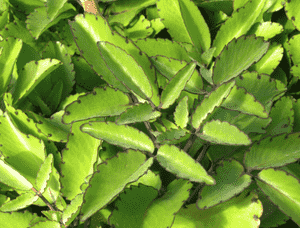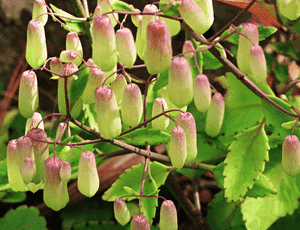
Life plant(Kalanchoe pinnata)

Life plant (Kalanchoe pinnata)

Also known as: Air plant, Miracle plant

The Mother of Thousands, a succulent plant native to Madagascar, is notable for producing tiny plantlets along the edges of its flattened shoots, which resemble leaves. These plantlets can easily fall off and grow into new plants. This resilient plant is popular for indoor potting or as a hanging plant due to its ease of cultivation.

Attributes of Life plant

Lifespan
Perennial
Plant Type
Succulent, Herb
Plant Height
30 cm to 2 m
Spread
35 cm
Leaf Color
Green Red
Flower Size
1 cm to 2 cm
Flower Color
Yellow Pink Green Purple

ForwardPlant - Identify plants with a snap

Identify and diagnose plants, get toxicity alerts, and explore safety guides for all types of fungi.

Try for Free

Images of Life plant

Life plant(Kalanchoe pinnata)

Quickly Identify Life plant

1
Kalanchoe pinnata can be identified by its fleshy, green leaves that have scalloped edges and can grow small plantlets along the margins.

Scientific Classification of Life plant

Phylum
Vascular plants
Class
Dicotyledons
Order
Saxifrages, stonecrops and allies
Family
Stonecrop
Genus
kalanchoe
Species
Life plant

Planting and Growing of Life plant

Care Difficulty
Easy
Watering Schedule
Every 4 days
Sunlight Requirements
Full sun
Sunshine Duration
4-6 hours
Ideal Temperature
65-75℉
Soil Type
Potting Mix, Peat Mix
Soil pH
6.5-7.5
Fertilizer Type
Balanced
Pruning Season
Spring, Summer
Pruning Area
Branches, Leaves
Pruning Frequency
2 times a year
Repotting Season
Spring
Pot Type
Plastic, Ceramic

water icon How to Water Life plant?

When watering Kalanchoe pinnata, aim to provide around 200 ml each time. Ensure that the water saturates the soil until it drains, indicating that the roots are sufficiently hydrated but not waterlogged.
What are the symptoms of an underwatered Life plant?
What should I do if my Life plant is not getting enough water?
What are the symptoms of an overwatered Life plant?
How to save an overwatered Life plant?
More About Watering Techniques

sunlight icon What Are the Sunlight Requirements for Life plant?

Sunlight Requirements: Full sun, Partial sun
Duration of light: 4-6 hours
Kalanchoe pinnata prospers in partial to full sun but requires at least 4-6 hours of light exposure to maintain healthy foliage and ensure adequate energy for blooming. Ideal lighting encourages sturdy, lush growth and prolific flowering.
What is the optimal environment?
How can I achieve these conditions?
What benefits will be observed?
More About Sunlight Requirements Techniques

temperature icon What Is the Ideal Temperature Range for Life plant?

Ideal Temperature: 65 ~ 75℉
The ideal temperature range for Kalanchoe pinnata is between 65°F and 75°F. This range provides the most conducive environment for growth, ensuring that the plant can photosynthesize efficiently and grow without stress. Maintaining this temperature helps in promoting healthy foliage and vibrant flowering.

soil icon What Soil is Best for Life plant?

Soil type: Sandy loam, Loam
Soil PH: 6.5 ~ 7.5
Kalanchoe pinnata thrives in well-drained soil, which prevents water from accumulating around its roots. This condition reduces the risk of root rot and allows the plant to absorb oxygen effectively, promoting healthy growth. A nutrient-rich soil ensures that Kalanchoe pinnata receives adequate minerals and nutrients essential for its growth. Enriching the soil with organic matter boosts fertility and supports the plant’s vibrant foliage and flower development. A light and aerated soil texture assists in maintaining appropriate air circulation within the root zone. This factor is crucial for Kalanchoe pinnata as it enhances root health and the overall vigor of the plant. More About Soil

fertilize icon How to Fertilize Life plant?

Fertilizer type: Balanced
The Kalanchoe pinnata requires a modest amount of fertilizer. A diluted solution of liquid fertilizer, around half strength, is ideal to avoid root burn. Each application should provide enough nutrients to support its growth without overwhelming the plant. For solid fertilizers, a handful of granules is sufficient, ensuring even distribution.

prune icon How to Prune Life plant?

Pruning Time: Spring, Summer, Autumn
Begin pruning Kalanchoe pinnata from the top of the plant, cutting back overgrown stems just above a node. Nodes are the tiny bumps where leaves or stems intersect, and cutting here encourages new growth to thrive. While it's tempting to trim extensively, remember that Kalanchoe pinnata also needs leaves for photosynthesis. Only remove about a quarter of the plant's foliage at one time to avoid stressing the plant. After pruning, collect and discard all cut leaves and stems. Leaving them around the base of the plant can invite pests and diseases. Proper disposal helps maintain the plant's health and surrounding environment.

propagate icon How to Propagate Life plant plant?

Propagate Time: Spring, Summer, Early spring, Late spring
1
Select healthy, mature leaves or stems for cutting propagation. Use sterile shears to make an angled cut, allowing for maximum surface area for rooting. This step ensures cuttings have a good chance to develop roots quickly.
2
When propagating by seeds, scatter them on the surface of well-draining soil. Slightly press down without covering them with too much soil. Maintain moisture with gentle watering, ensuring seeds are not washed away.
3
For division propagation, carefully uproot the parent plant and separate the root clumps. Each division should have a viable shoot. Replant immediately to prevent drying and ensure successful establishment.
More About Propagating Techniques

repot icon How to Repot Life plant plant?

Repotting frequency: Every two years
1
Look for signs such as roots growing through the drainage holes, soil drying out too quickly, or the plant appearing top-heavy. These are indicators that Kalanchoe pinnata requires repotting. Spring and summer are ideal seasons as the plant is in its active growth phase, which helps it adapt better to its new pot environment.
2
Opt for a pot that is one size larger than the current pot, with drainage holes at the bottom. A slightly larger pot prevents overwatering while providing room for root expansion. Terra cotta pots are beneficial because they breathe, promoting better moisture regulation and healthy root growth.
3
Choose a well-draining cactus mix enriched with perlite or sand. This soil mixture ensures adequate drainage, which is crucial for preventing root rot in Kalanchoe pinnata. Moreover, a light soil structure promotes quick nutrient uptake and aeration, fostering healthier growth.
More About Repotting Techniques

ForwardPlant - Identify plants with a snap

Find the best spots for them to optimize their health, simply using your phone.

Try for Free

Toxicity of Life plant

Is Life plant toxic to cat?

The life plant poses a low level of toxicity risk to cats. Poisoning generally happens when felines ingest considerable amounts of the plant, impacting every part including leaves, stems, and blooms. Cats that come into contact with life plant may display common symptoms of distress, such as digestive issues or alterations in behavior. Pet owners should be attentive for any negative reactions in their animals, especially if they can reach the life plant. If poisoning is suspected, prompt veterinary intervention is essential to safeguard the health of the affected cat.

Is Life plant toxic to dog?

The life plant presents a mild toxicity hazard to dogs. If they consume significant quantities of this plant, it can lead to poisoning. All components of the life plant are deemed toxic and may result in negative health effects for canines. Symptoms such as vomiting, diarrhea, or lethargy may appear if a dog ingests any portion of the life plant. It is essential for dog owners to keep a vigilant eye on their pets and restrict their access to the life plant to mitigate any risk of poisoning. Should a dog consume life plant, seeking immediate veterinary assistance is crucial to ensure appropriate treatment and management of any symptoms.

Identify toxic plants for your safety

Learn which plants are harmful to you and your pets, and make informed choices for a safer home!

Try for Free
WARNING
The judgment on toxicity and danger is for reference only. We DO NOT GUARANTEE any accuracy of such judgment. Therefore, you SHALL NOT rely on such judgment. It is IMPORTANT TO SEEK PROFESSIONAL ADVICE in advance when necessary.
More About Toxic Techniques