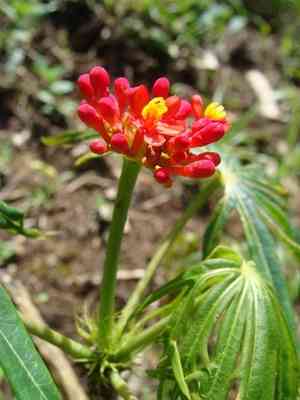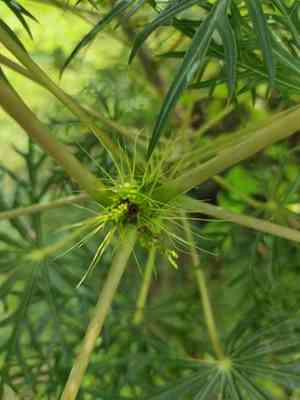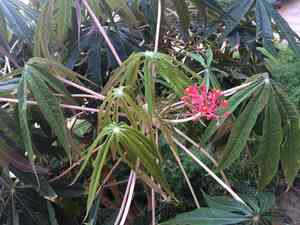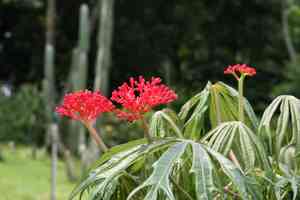
Coral plant(Jatropha multifida)

Coral plant (Jatropha multifida)

Also known as: Physic nut

Milkweed (*Asclepias spp.*) is a resilient plant commonly found in gardens. It features striking clusters of red-pink flowers that tower above its foliage. This plant is especially valued for attracting butterflies, including monarchs. However, caution is advised when handling milkweed, as it contains mild toxins and should not be ingested.

Attributes of Coral plant

Lifespan
Perennial
Plant Type
Tree, Shrub
Plant Height
1.8 m to 3 m
Spread
4 m
Leaf Color
Green
Flower Size
2 cm
Flower Color
Red

ForwardPlant - Identify plants with a snap

Identify and diagnose plants, get toxicity alerts, and explore safety guides for all types of fungi.

Try for Free

Images of Coral plant

Coral plant(Jatropha multifida)

Quickly Identify Coral plant

1
This plant can be identified by its deeply lobed, palmate leaves which resemble outspread fingers, its bright red or orange tubular flowers, and its smooth grayish-brown stems.

Scientific Classification of Coral plant

Phylum
Vascular plants
Class
Dicotyledons
Order
Malpighiales
Family
Spurge
Genus
Physic nuts
Species
Coral plant

Planting and Growing of Coral plant

Care Difficulty
Easy
Watering Schedule
Every 2 days
Sunlight Requirements
Full sun
Sunshine Duration
4-8 hours
Ideal Temperature
65-80℉
Soil Type
Potting Mix, Peat Mix
Soil pH
6.5-7.5
Fertilizer Type
Balanced
Pruning Season
Spring, Summer
Pruning Area
Branches, Leaves
Pruning Frequency
2 times a year
Repotting Season
Spring
Pot Type
Plastic, Ceramic

water icon How to Water Coral plant?

The ideal amount of water for Jatropha multifida is around 250 milliliters per watering session. Ensure the water seeps through the soil but avoid waterlogging, as this plant prefers well-drained soil. The key principle is to allow the top inch of the soil to dry out between waterings.
What are the symptoms of an underwatered Coral plant?
What should I do if my Coral plant is not getting enough water?
What are the symptoms of an overwatered Coral plant?
How to save an overwatered Coral plant?

sunlight icon What Are the Sunlight Requirements for Coral plant?

Sunlight Requirements: Full sun, Partial sun
Duration of light: 6 to 8 hours
Jatropha multifida benefits from full sun to partial sun, receiving 6 to 8 hours of light daily. Adequate lighting is essential for sustaining its growth and ensuring vibrant foliage and blooms.
What type of light does Jatropha multifida prefer?
How can you provide the ideal light conditions?
What are the benefits of ideal lighting for Jatropha multifida?
More About Sunlight Requirements Techniques

temperature icon What Is the Ideal Temperature Range for Coral plant?

Ideal Temperature: 65 ~ 80℉
The ideal temperature range for Jatropha multifida is between 65°F and 80°F. This range provides optimal conditions for growth, as the plant thrives in warmth and requires consistent temperatures to flourish. Ensuring the environment remains within this range can help maximize health and productivity.

soil icon What Soil is Best for Coral plant?

Soil type: Sandy soil, Loam
Soil PH: 6.5 ~ 7.5
Jatropha multifida excels in well-draining soil, preventing root rot by allowing excess water to escape. This promotes healthy root systems and ensures the plant receives adequate aeration, crucial for its growth and flowering. A soil with moderate nutrient levels is ideal for Jatropha multifida, providing essential nutrients without overwhelming its system. This balance supports robust leaf growth and optimal flowering, enhancing the plant's aesthetic appeal. Though well-draining, the soil should retain enough moisture to sustain the plant during dry spells. This helps maintain consistent growth and prevents stress-induced leaf drop or wilting, crucial for maintaining its lush appearance.

fertilize icon How to Fertilize Coral plant?

Fertilizer type: Balanced
Jatropha multifida benefits from a balanced fertilizer. When using liquid fertilizers, apply a diluted solution with an N-P-K ratio around 10-10-10. For slow-release fertilizers, use sparingly as too much can lead to root burn. Start with smaller amounts and increase based on the plant's response.

prune icon How to Prune Coral plant?

Pruning Time: Spring, Summer, Autumn
Start by examining the plant for any dead or diseased branches. Removing these helps prevent the spread of disease and encourages new growth. Cut the branch back to healthy tissue, leaving a clean and smooth cut to facilitate swift healing. Jatropha multifida can be pruned to achieve a certain shape or size. Trim back overgrown or unruly branches, cutting just above a node to encourage branching. This practice not only maintains aesthetics but also improves air circulation within the plant. Pruning to stimulate blooming involves removing some of the older branches and spent flower clusters. This allows more light and air to reach the interior branches, thus promoting the growth of new flowers. More About Pruning Techniques

propagate icon How to Propagate Coral plant plant?

Propagate Time: Early spring, Late spring, Early summer
1
Choose mature seeds from healthy Jatropha multifida plants. Soak them in water for 24 hours to soften the seed coat and improve germination rates.
2
Select a healthy branch. Cut below a leaf node using sterilized shears. Ensure the cutting is at least six inches long for optimal growth potential.
3
Place seeds or cuttings in a prepared container with a suitable growing medium. Water gently and keep in a warm, bright area but out of direct sunlight.
More About Propagating Techniques

repot icon How to Repot Coral plant plant?

Repotting frequency: Every 2-3 years
1
Repotting Jatropha multifida, also known as coral plant, is best done when you notice its roots becoming bound or protruding through drainage holes. This indicates the plant has outgrown its current pot, which often happens every 2 to 3 years, preferably in the warmer months of spring or summer when the plant is actively growing.
2
Select a pot that is slightly larger than the current one, allowing room for growth, but not too large as to avoid overpotting. The pot should have drainage holes to prevent water retention, which is critical in avoiding root rot and ensuring healthy growth of your Jatropha multifida.
3
Jatropha multifida thrives in well-draining soil, making a cactus mix ideal due to its ability to prevent waterlogging and provide good aeration. This helps the roots to breathe and absorb nutrients efficiently, keeping the plant healthy and vibrant.

ForwardPlant - Identify plants with a snap

Find the best spots for them to optimize their health, simply using your phone.

Try for Free

Toxicity of Coral plant

Is Coral plant toxic to humans?

The coral plant exhibits a moderate degree of toxicity to humans, with every part of the plant posing a danger if ingested. The harmful effects stem from the presence of ricin, a highly potent toxin. Even when consumed in minimal amounts, ricin can lead to severe reactions, including abdominal pain, vomiting, diarrhea, and in some instances, it might result in more serious complications such as organ damage. Given the plant's universal toxicity, accidental ingestion is a notable concern, and individuals should take care to prevent any contact with the mouth. The intensity of symptoms can differ depending on the quantity taken, but the risk of poisoning remains present irrespective of the amount consumed.

Is Coral plant toxic to cat?

The coral plant is moderately toxic and presents a significant health hazard to felines. If a cat consumes any portion of the plant, which is toxic as a whole, it can result in poisoning. Symptoms of toxicity in cats may include, but are not limited to, signs of physical distress such as gastrointestinal disturbances or skin irritations. The harmful impacts of the plant are exacerbated by the presence of ricin, a highly toxic compound. It is crucial to seek immediate veterinary care if a cat has ingested any part of the coral plant to facilitate timely and effective treatment.

Is Coral plant toxic to dog?

The coral plant presents a moderate level of toxicity risk to dogs. Canines may unintentionally consume various parts of the coral plant, resulting in toxic reactions. Every part of the plant is harmful, and if a dog ingests any portion of it, they might show symptoms like vomiting, diarrhea, lethargy, or more serious reactions depending on the quantity consumed. The toxic agent in the coral plant that causes these effects is ricin. If you suspect your dog has eaten any part of the coral plant, it is crucial to seek prompt veterinary assistance to ensure the best possible outcome for your furry friend.

Identify toxic plants for your safety

Learn which plants are harmful to you and your pets, and make informed choices for a safer home!

Try for Free
WARNING
The judgment on toxicity and danger is for reference only. We DO NOT GUARANTEE any accuracy of such judgment. Therefore, you SHALL NOT rely on such judgment. It is IMPORTANT TO SEEK PROFESSIONAL ADVICE in advance when necessary.
More About Toxic Techniques