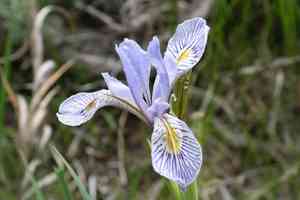
Rocky mountain iris (Iris missouriensis)
Also known as: Missouri flag
The Rocky Mountain iris (Iris missouriensis) is a perennial native to the western and central regions of North America. This plant typically blooms from late spring to early summer, showcasing striking purple flowers with yellow accents, which stand out on tall, leafless stems. The blooms can appear individually or in clusters of two to four. For optimal growth, this iris prefers full sun and well-drained, moist soil. It's adaptable to various soil types and is quite hardy, making it an excellent choice for gardens in its native range.
In This Article
Attributes of Rocky mountain iris
Lifespan
Perennial
Plant Type
Herb
Plant Height
20 cm to 40 cm
Spread
1 m
Leaf Color
Green Blue
Flower Size
6 cm to 7 cm
Flower Color
Blue Purple
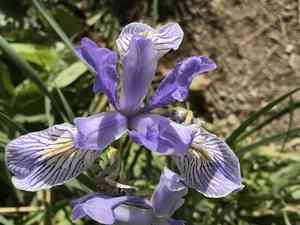
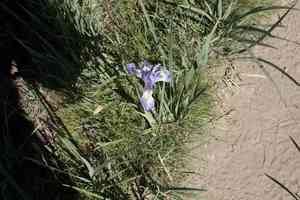
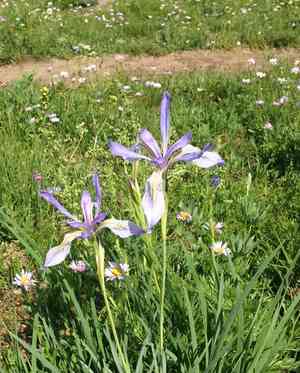
Images of Rocky mountain iris
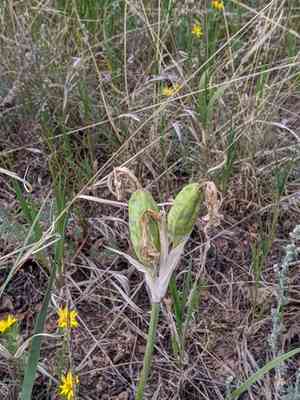
Quickly Identify Rocky mountain iris
1
Iris missouriensis can be identified by its sword-like leaves and its distinctive blue-violet flowers with three large outer petals (falls) and three smaller inner petals (standards). The flowers usually have a yellow or white stripe on the falls. The plant grows in clumps and has a rhizomatous growth habit.
Scientific Classification of Rocky mountain iris
Phylum
Vascular plants
Class
Monocotyledons
Order
Asparagales
Family
Iris
Genus
Irises
Species
Rocky mountain iris
Planting and Growing of Rocky mountain iris
Care Difficulty
Easy
Watering Schedule
Every 4 days
Sunlight Requirements
Full sun
Sunshine Duration
6-10 hours
Ideal Temperature
60-75℉
Soil Type
Potting Mix, Peat Mix
Soil pH
6.5-7.5
Fertilizer Type
Balanced
Pruning Season
Spring, Summer
Pruning Area
Branches, Leaves
Pruning Frequency
2 times a year
Repotting Season
Spring
Pot Type
Plastic, Ceramic
 How to Water Rocky mountain iris?
When watering Iris missouriensis, ensure the soil is thoroughly moist but not waterlogged. The goal is to let the water soak deeply to reach the root zone, but avoid letting the plant stand in water. This usually means about 500ml of water per session, allowing time for absorption before adding more if needed.
What are the symptoms of an underwatered Rocky mountain iris?
›
What should I do if my Rocky mountain iris is not getting enough water?
›
What are the symptoms of an overwatered Rocky mountain iris?
›
How to save an overwatered Rocky mountain iris?
›
 What Are the Sunlight Requirements for Rocky mountain iris?
Partial sun to full sun exposure is optimal for Iris missouriensis, as it fuels photosynthesis and encourages abundant flowering, maintaining the plant's health and vibrancy.
More About Sunlight Requirements Techniques→
Optimal Sunlight Exposure
›
Balancing Shade
›
Enhancing Growth with Proper Lighting
›
 What Is the Ideal Temperature Range for Rocky mountain iris?
The ideal temperature range for cultivating Iris missouriensis is between 60°F and 75°F. This temperature range supports optimal growth by facilitating effective photosynthesis and nutrient absorption. Maintaining this range allows the plant to thrive, especially during its active growing phase, leading to healthy foliage and vibrant blooms.
 What Soil is Best for Rocky mountain iris?
The Iris missouriensis prefers a well-drained soil that prevents waterlogging, ensuring essential air circulation around the roots. This prevents root rot and supports healthy plant growth. This iris thrives in nutrient-rich soil, offering essential minerals and organic matter. Rich soil enhances blooming and contributes to vibrant and lush foliage. A soil that retains moderate moisture ensures that the plant has a consistent water supply while avoiding excessive saturation. This balance helps in maintaining optimal plant health.
 How to Fertilize Rocky mountain iris?
Iris missouriensis, commonly known as the Western Blue Flag, requires a balanced and moderate approach to fertilization. Generally, about one tablespoon of a balanced 10-10-10 liquid fertilizer diluted per gallon of water is suitable when applied every two weeks. Over-fertilizing can harm the plant, while under-fertilization leads to poor growth.
 How to Prune Rocky mountain iris?
Start by removing any old or faded flower stalks at the base. This process not only tidies up the plant but also directs energy to new growth and future blooms, enhancing the plant’s aesthetic appeal. Look for and remove any leaves that are yellow, brown, or damaged. Cutting these leaves at their base helps prevent further disease spread, ensuring the plant remains vibrant and healthy throughout the seasons. If your Iris missouriensis is growing too closely, thin out the clumps to allow for better air circulation. This helps reduce the risk of fungal diseases and promotes robust growth, making sure that all parts of the plant have access to sunlight and nutrients.
More About Pruning Techniques→
 How to Propagate Rocky mountain iris plant?
1
Collect seeds from mature Iris missouriensis pods in late summer or early autumn. Clean them gently and let them dry before storage or immediate planting. This ensures the seeds are free from fungal spores and ready for germination.
2
In early spring or late summer, carefully dig up plant clumps. Divide the rhizomes into sections with healthy shoots and roots. Replant them immediately in well-prepared soil for best results. This allows the plant to establish before extreme weather sets in.
3
Sow the prepared seeds in a seedling tray or directly in the garden. Cover them lightly with soil and ensure consistent moisture throughout the germination period, which can take several weeks. Regular moisture is crucial for successful seed germination.
 How to Repot Rocky mountain iris plant?
1
It’s ideal to repot Iris missouriensis during early spring or fall when the plant is not in its blooming period. Signs that it's time to repot include bound roots, reduced growth, and when the soil degrades.
2
Select a pot that is slightly larger than the previous one to allow room for growth. Ensure it has adequate drainage holes to prevent waterlogging, which can lead to root rot.
3
Opt for a well-draining potting mix with a nutrient-rich composition. This promotes healthy root growth and prevents over-retention of water, ensuring the plant thrives.
Toxicity
Ingestion, contact with sap
WARNING
The judgment on toxicity and danger is for reference only. We DO NOT GUARANTEE any accuracy of such judgment. Therefore, you SHALL NOT rely on such judgment. It is IMPORTANT TO SEEK PROFESSIONAL ADVICE in advance when necessary.
Learn More About Rocky mountain iris Diseases
Anthracnose
Bacterial Leaf Spot
Bacterial Soft Rot
Bacterial Wilt
Crown Gall
Cyst Nematode
Damping-off
Downy Mildew
Drought Stress
Fusarium Wilt
Gray Mold
Leaf Spot
Mosaic
Nutrient Deficiency
Nutrient Toxicity
Powdery Mildew
Root Rot
Root-knot Nematode
Rusts
Sooty Mold
Spider Mites
Temperature Stress
Thrips Damage
White Mold



