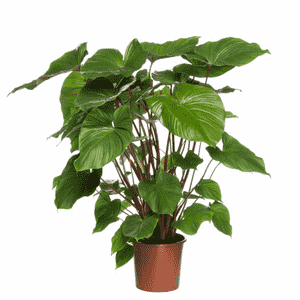
Queen of hearts(Homalomena rubescens)

Queen of hearts (Homalomena rubescens)

Also known as: Queen of Hearts, Emerald Gem

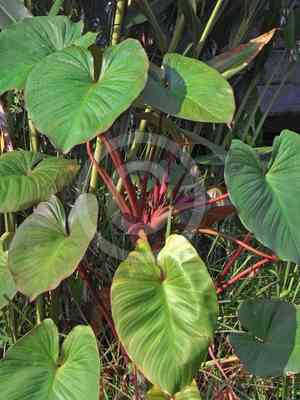
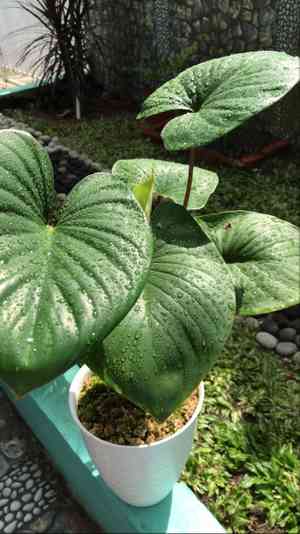
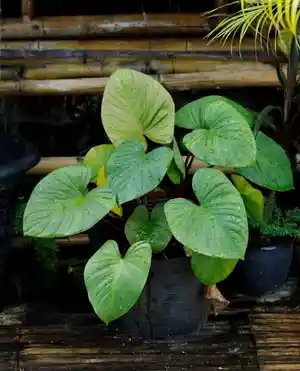
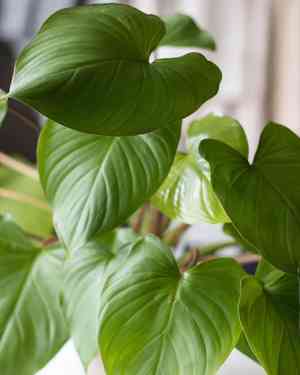
The Queen of Hearts plant, often recognized for its distinctive heart-shaped leaves, features glossy foliage and red stems that catch the eye. This tropical evergreen is well-suited for container growth, making it a favorite among houseplant enthusiasts. Adapted to thrive under the forest canopy, it flourishes in the indirect sunlight commonly found in homes. However, caution is advised as its sap can cause skin irritation.

Attributes of Queen of hearts

Lifespan
Perennial
Plant Type
Herb
Plant Height
1 m
Spread
75 cm
Leaf Color
Green, with red or burgundy undersides
Flower Size
1-2 cm
Flower Color
Pale yellow to white

ForwardPlant - Identify plants with a snap

Identify and diagnose plants, get toxicity alerts, and explore safety guides for all types of fungi.

Try for Free

Images of Queen of hearts

Queen of hearts(Homalomena rubescens)

Quickly Identify Queen of hearts

1
Identify Homalomena rubescens by its heart-shaped, glossy green leaves with red or burgundy undersides and stems. The plant also has a distinct, almost spicy aroma when the leaves are crushed.

Scientific Classification of Queen of hearts

Phylum
Vascular plants
Class
Monocotyledons
Order
Alismatales
Family
Arum
Genus
Emerald Gem Plant
Species
Queen of hearts

Planting and Growing of Queen of hearts

Care Difficulty
Easy
Watering Schedule
Every 2 days
Sunlight Requirements
Partial sun
Sunshine Duration
6-10 hours
Ideal Temperature
65-75℉
Soil Type
Potting Mix, Peat Mix
Soil pH
6.5-7.5
Fertilizer Type
Balanced
Pruning Season
Spring, Summer
Pruning Area
Branches, Leaves
Pruning Frequency
2 times a year
Repotting Season
Spring
Pot Type
Plastic, Terracotta

water icon How to Water Queen of hearts?

Homalomena rubescens appreciates a consistent moisture level in its soil. It's crucial to water until you notice the water starting to drain from the bottom of the pot. This usually equates to approximately 500 milliliters per watering, ensuring the soil is thoroughly moist but not waterlogged.
What are the symptoms of an underwatered Queen of hearts?
What should I do if my Queen of hearts is not getting enough water?
What are the symptoms of an overwatered Queen of hearts?
How to save an overwatered Queen of hearts?

sunlight icon What Are the Sunlight Requirements for Queen of hearts?

Sunlight Requirements: Partial sun, Full shade
Duration of light: 2 to 4 hours
Partial sun or full shade is ideal for Homalomena rubescens. The best light encourages healthier, vibrant foliage without the risk of burn, ensuring robust growth and resilience over time.
What type of light is best for Homalomena rubescens?
Where should I position my Homalomena rubescens in my home or garden?
How can I ensure my Homalomena rubescens gets the ideal amount of light?
More About Sunlight Requirements Techniques

temperature icon What Is the Ideal Temperature Range for Queen of hearts?

Ideal Temperature: 65 ~ 75℉
The ideal temperature range for growing Homalomena rubescens is between 65°F and 75°F. In this environment, the plant can maintain optimal physiological processes such as photosynthesis and respiration, promoting healthy growth and foliage development.

soil icon What Soil is Best for Queen of hearts?

Soil type: Loam, Sandy loam, Peat soil
Soil PH: 6.5 ~ 7.5
Homalomena rubescens thrives in well-drained soil which allows water to pass through swiftly, avoiding waterlogging. This is crucial as it prevents root rot and ensures healthy root development. Soil rich in organic matter provides essential nutrients that support the plant's growth and vibrant foliage. This enriches the plant's overall vigor, promoting lush, healthy leaves. The soil should retain some moisture but not stay soggy. Consistent moisture levels are vital to prevent wilting and ensure the plant maintains its humidity needs, mimicking its natural rainforest habitat.

fertilize icon How to Fertilize Queen of hearts?

Fertilizer type: Balanced
Homalomena rubescens should receive a balanced fertilizer with equal parts nitrogen, phosphorus, and potassium. For liquid fertilizers, use about 1/4 of the labeled strength mixed with water during watering. For slow-release fertilizers, apply one tablespoon per six-inch pot every four months, ensuring even distribution around the root zone.

prune icon How to Prune Queen of hearts?

Pruning Time: Spring, Summer
Homalomena rubescens typically has a bush-like growth pattern. It develops broad, attractive leaves that need periodic trimming to maintain shape. Start by examining the plant to understand its natural structure; this will guide your pruning to enhance its aesthetic appearance. Prior to pruning, gather essential tools: sharp pruning shears and sanitized wipes. Sharp shears ensure clean cuts, reducing the risk of disease. Sanitizing tools between cuts is crucial to prevent transferring potential pathogens. Begin pruning Homalomena rubescens by removing any dead or yellowing leaves at the base without cutting into the main stem. Next, trim overgrown stems to desired length, cutting just above a leaf node to encourage new growth direction on this tropical plant. More About Pruning Techniques

propagate icon How to Propagate Queen of hearts plant?

Propagate Time: Spring, Early Summer
1
Choose a healthy plant without signs of disease or pest infestation. This lays a strong foundation for your new plant, ensuring that the propagated sections are likely to thrive.
2
Make a clean cut of 4-6 inches in length, preferably below a node. It's crucial to remove any lower leaves to prevent them from rotting when planted in the soil or medium.
3
Place the cutting in a well-draining potting mix and water it thoroughly. Ensure the cuttings are upright and stable; this promotes optimal contact with the soil and subsequent root growth.
More About Propagating Techniques

repot icon How to Repot Queen of hearts plant?

Repotting frequency: Every 1-2 years
1
Homalomena rubescens should be repotted when you notice roots extending from the drainage holes or when the growth noticeably slows down. Spring and summer are ideal seasons as the plant is actively growing during these times, making it resilient to the transplant shock.
2
Opt for a pot that is 1-2 inches larger in diameter than the current one. This offers sufficient space for growth without causing excess soil moisture retention. A pot with proper drainage holes is essential to prevent root rot, ensuring your Homalomena stays healthy and vibrant.
3
Use a well-draining potting mix tailored for tropical houseplants. Incorporate materials like perlite or orchid bark to enhance aeration and drainage, which prevents water-logging issues that could lead to root decay, providing a robust environment for roots.

ForwardPlant - Identify plants with a snap

Find the best spots for them to optimize their health, simply using your phone.

Try for Free

Toxicity of Queen of hearts

Is Queen of hearts toxic to humans?

The Queen of Hearts plant possesses a mild toxicity to humans, primarily when ingested. This entire plant has calcium oxalate, which is responsible for its toxic characteristics. Consuming any part of the Queen of Hearts can lead to various symptoms due to the calcium oxalate. These symptoms may encompass a burning sensation in the mouth and throat, swelling of the lips, tongue, and throat, and difficulties in swallowing, with potential respiratory issues arising if swelling blocks the airway. Furthermore, ingestion may cause gastrointestinal disturbances, including nausea, vomiting, and diarrhea. It is essential for individuals to understand these dangers to mitigate the risk of accidental poisoning, particularly since the entire plant could be mistakenly consumed despite its toxicity.

Is Queen of hearts toxic to cat?

The Queen of Hearts plant poses a moderate risk of toxicity to cats. If a cat accidentally consumes any portion of this plant, it can result in poisoning. The entire plant is comprised of calcium oxalate, which may cause physical discomfort in cats. This discomfort typically arises from the interaction of calcium oxalate with the tissues it encounters. Should such an event occur, it is essential to quickly obtain veterinary assistance to safeguard the cat's health and well-being.

Is Queen of hearts toxic to dog?

The Queen of Hearts plant is recognized for having a mild toxicity level that can impact dogs. When dogs inadvertently consume any part of the Queen of Hearts, they may face the risk of poisoning due to the presence of calcium oxalate within the plant. All sections of the plant, including leaves, stems, and roots, contain these harmful compounds. Signs that may manifest following a dog’s consumption of Queen of Hearts include oral irritation, excessive salivation, vomiting, and challenges with swallowing. It is essential for dog owners to keep a vigilant eye on their pets and restrict their access to Queen of Hearts. Should a dog ingest any portion of this plant, it is vital to seek prompt veterinary assistance to ensure appropriate treatment and management of symptoms.

Identify toxic plants for your safety

Learn which plants are harmful to you and your pets, and make informed choices for a safer home!

Try for Free
WARNING
The judgment on toxicity and danger is for reference only. We DO NOT GUARANTEE any accuracy of such judgment. Therefore, you SHALL NOT rely on such judgment. It is IMPORTANT TO SEEK PROFESSIONAL ADVICE in advance when necessary.
More About Toxic Techniques