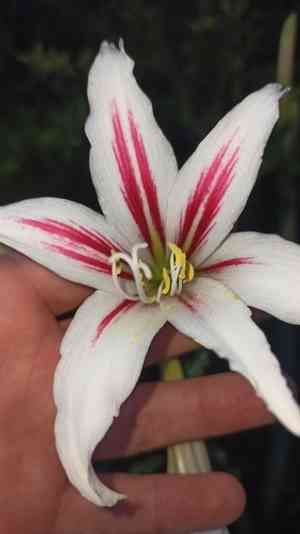
Barbados lily (Hippeastrum vittatum)
Also known as: Amaryllis, Knight's Star Lily
The plant you're referring to is likely the Amaryllis. This stunning flower has trumpet-shaped blooms with red petals and distinctive white stripes, resembling a star. It's commonly used as a festive decoration during Christmas.
In This Article
Attributes of Barbados lily
Lifespan
Perennial
Plant Type
Herb
Plant Height
30 cm to 46 cm
Spread
23 cm to 30 cm
Leaf Color
Green
Flower Size
13 cm to 15 cm
Flower Color
Red White
Images of Barbados lily
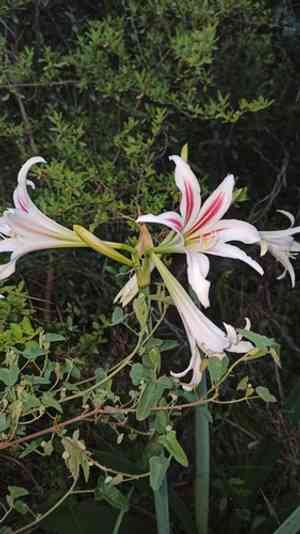
Quickly Identify Barbados lily
1
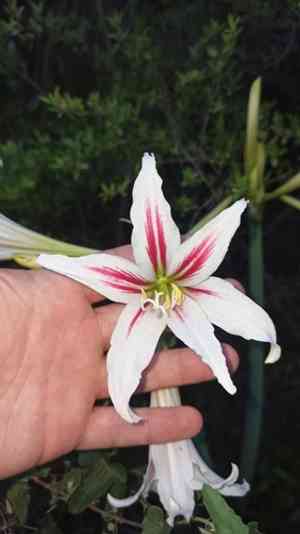
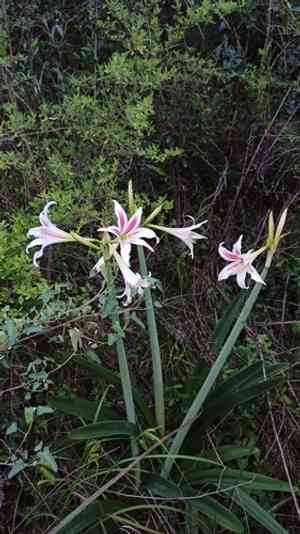
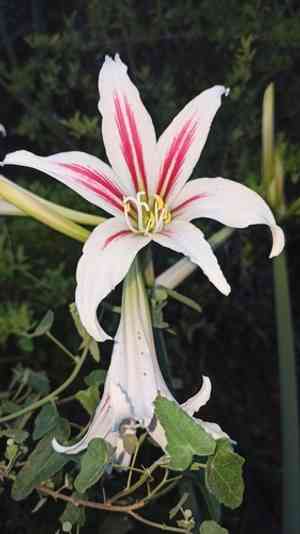
Hippeastrum vittatum can be identified by its large, trumpet-shaped flowers which often have a striking red and white pattern. Its leaves are long, strap-shaped, and glossy green. The plant typically blooms in late winter to early spring.
Scientific Classification of Barbados lily
Phylum
Vascular plants
Class
Monocotyledons
Order
Asparagales
Family
Amaryllis
Genus
Amaryllis
Species
Barbados lily
Planting and Growing of Barbados lily
Care Difficulty
Easy
Watering Schedule
Every 3 days
Sunlight Requirements
Partial sun
Sunshine Duration
4-8 hours
Ideal Temperature
65-75℉
Soil Type
Potting Mix, Peat Mix
Soil pH
6.5-7.5
Fertilizer Type
Balanced
Pruning Season
Spring, Summer
Pruning Area
Branches, Leaves
Pruning Frequency
2 times a year
Repotting Season
Spring
Pot Type
Plastic, Ceramic
 How to Water Barbados lily?
When watering Hippeastrum vittatum, you should aim to thoroughly soak the soil until water begins to drain from the bottom of the pot. This ensures that the moisture reaches the roots efficiently without causing waterlogging.
What are the symptoms of an underwatered Barbados lily?
›
What should I do if my Barbados lily is not getting enough water?
›
What are the symptoms of an overwatered Barbados lily?
›
How to save an overwatered Barbados lily?
›
 What Are the Sunlight Requirements for Barbados lily?
Partial sun, receiving 4-6 hours of sunlight, ensures Hippeastrum vittatum gets enough light for photosynthesis and flowering. It will reward you with vibrant blooms and lush foliage.
More About Sunlight Requirements Techniques→
What are the best light conditions for Hippeastrum vittatum?
›
How can I achieve ideal lighting for Hippeastrum vittatum?
›
What benefits does Hippeastrum vittatum get from ideal lighting?
›
 What Is the Ideal Temperature Range for Barbados lily?
The ideal temperature range of 65°F to 75°F is crucial for the proper growth and blooming of Hippeastrum vittatum. These temperatures mimic the natural tropical conditions of the plant's native habitat, ensuring optimal photosynthesis and metabolic processes. This range helps to maintain healthy foliage and vibrant flowers, preventing stress that can lead to poor growth or disease.
 What Soil is Best for Barbados lily?
Hippeastrum vittatum thrives in well-drained soil to prevent root rot. Ensuring proper drainage facilitates healthy root development and promotes vigorous plant growth. This plant benefits from soil enriched with organic matter, like compost, which supplies the necessary nutrients for robust foliage and vibrant blooms. Maintaining a moderately moist soil environment is essential for Hippeastrum vittatum. It prevents dehydration while avoiding waterlogging, ensuring plant cells remain turgid and healthy.
 How to Fertilize Barbados lily?
Hippeastrum vittatum prefers a balanced and consistent fertility regime. Typically, during the active growing season, a 20-20-20 NPK liquid fertilizer diluted to half the recommended strength is ideal, ensuring not to saturate the bulb when feeding.
 How to Prune Barbados lily?
Begin by sterilizing your pruning shears to prevent the spread of disease. Carefully inspect the plant and remove any dead, damaged, or diseased leaves. This improves air circulation and light penetration. Trim back spent flower stalks to just above the bulb, encouraging new growth. Be gentle to avoid damaging the bulb, as it stores important nutrients for future flowering.
More About Pruning Techniques→
 How to Propagate Barbados lily plant?
1
Harvest seeds from healthy Hippeastrum vittatum flowers after the seed pods dry, ensuring high viability. Carefully store them in a dry, cool location until ready for planting.
2
Carefully dig up the bulbs in early spring, and gently separate the offsets from the parent bulb, ensuring that both parts have roots attached. Replant each bulb at the same depth it was growing before.
3
Before sowing Hippeastrum vittatum seeds, ensure that the seedbed is well-drained and rich in organic matter, enhancing moisture retention and nutrient availability vital to seedling health.
 How to Repot Barbados lily plant?
1
Hippeastrum vittatum should be repotted when its roots start to crowd the pot, usually indicated by reduced blooming or roots protruding outside drainage holes. Ideally, repot in early spring after flowering.
2
Select a pot that's only slightly bigger than the bulb, with adequate drainage holes. A tight fit encourages blooms because the roots are slightly restricted, mimicking their natural habitat where nutrients are scarce.
3
Opt for a well-draining potting mix with added perlite or sand to prevent waterlogging. This mix allows excess water to escape, reducing the risk of bulb rot and ensuring that the roots have access to oxygen.
Toxicity
Ingestion
WARNING
The judgment on toxicity and danger is for reference only. We DO NOT GUARANTEE any accuracy of such judgment. Therefore, you SHALL NOT rely on such judgment. It is IMPORTANT TO SEEK PROFESSIONAL ADVICE in advance when necessary.



