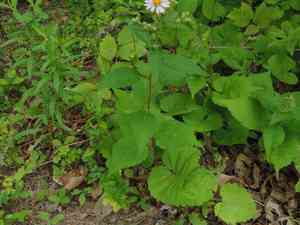
Large-leaved aster (Eurybia macrophylla)
Also known as: Large-leaved wood aster, Large-leaf Wood-aster, Bigleaf wood aster
The Large-leaved Aster (Eurybia macrophylla) is a perennial plant akin to the daisy. This species thrives in forested areas at moderate to high elevations and is native to North America. It produces flowers from late summer into early autumn.
In This Article
Attributes of Large-leaved aster
Lifespan
Perennial
Plant Type
Herb
Plant Height
15 cm to 91 cm
Spread
30 cm
Leaf Color
Green
Flower Size
2.5 cm
Flower Color
White Purple Yellow Blue
Images of Large-leaved aster
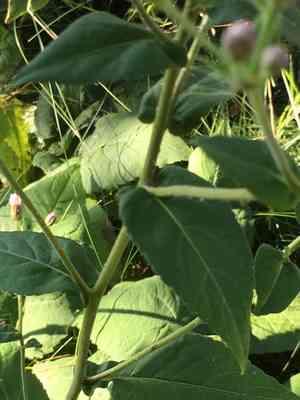
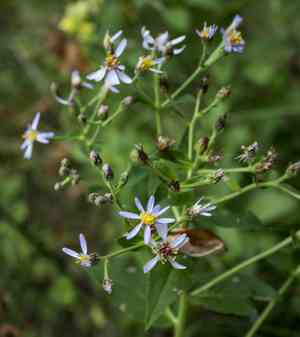
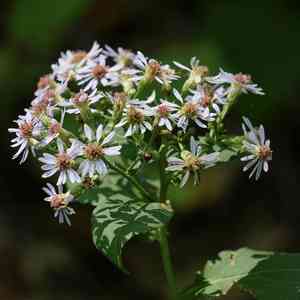
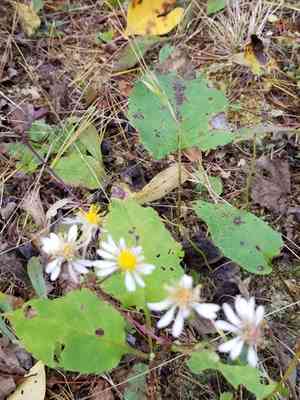
Quickly Identify Large-leaved aster
1
Large heart-shaped leaves up to 8 inches (20 cm) across.
2
Clusters of lavender or bluish flowers with yellow centers, 1-1.5 inches (2.5-4 cm) in diameter.
3
Sturdy stems with a slightly hairy texture.
4
Daisy-like star-shaped flowers, 1-2 inches (2.5-5 cm) wide, with yellow disc florets.
5
Dry indehiscent seeds (achenes) with fluffy pappus, 0.08-0.12 inches (2-3 mm) in size.
Scientific Classification of Large-leaved aster
Phylum
Vascular plants
Class
Dicotyledons
Order
Asterales
Family
Daisy
Genus
Eurybia
Species
Large-leaved aster
Planting and Growing of Large-leaved aster
Care Difficulty
Easy
Watering Schedule
Every 3 days
Sunlight Requirements
Partial sun
Sunshine Duration
6-10 hours
Ideal Temperature
60-75℉
Soil Type
Potting Mix, Peat Mix
Soil pH
6.5-7.5
Fertilizer Type
Balanced
Pruning Season
Spring, Summer
Pruning Area
Branches, Leaves
Pruning Frequency
2 times a year
Repotting Season
Spring
Pot Type
Plastic, Ceramic
 How to Water Large-leaved aster?
Eurybia macrophylla prefers consistent moisture. Each watering session should ensure that the soil is thoroughly soaked, approximately 200 milliliters of water per session, to maintain adequate hydration without waterlogging the roots. The soil surface should appear visibly damp but not waterlogged.
What are the symptoms of an underwatered Large-leaved aster?
›
What should I do if my Large-leaved aster is not getting enough water?
›
What are the symptoms of an overwatered Large-leaved aster?
›
How to save an overwatered Large-leaved aster?
›
 What Are the Sunlight Requirements for Large-leaved aster?
Eurybia macrophylla thrives under partial sun to full shade conditions. Ideal light balances ensure vibrant blooms and robust foliage, promoting its natural woodland aesthetic.
More About Sunlight Requirements Techniques→
What type of light does Eurybia macrophylla prefer?
›
How can I achieve the ideal lighting conditions for this plant?
›
What are the benefits of Eurybia macrophylla receiving ideal lighting?
›
 What Is the Ideal Temperature Range for Large-leaved aster?
Eurybia macrophylla thrives best in temperate environments where temperatures are maintained between 60°F and 75°F. This range supports optimal photosynthesis and nutrient uptake, promoting healthy growth and vibrant blooms. Consistently maintaining this temperature avoids stress that could lead to stunted growth.
 What Soil is Best for Large-leaved aster?
Eurybia macrophylla flourishes in well-drained soils, preventing waterlogging that can lead to root rot. Such conditions enhance nutrient availability and root behavior, promoting robust growth and vibrant blooms. This plant prefers soils of moderate fertility, which provide sufficient nutrients without overwhelming it. Balancing nutrient levels ensures steady growth and the development of healthy foliage and flowers. Eurybia macrophylla thrives in soils with consistent moisture, which supports its growth cycle and flowering. Maintaining moisture helps the plant stay resilient against drought stress, ensuring lush, vibrant foliage.
 How to Fertilize Large-leaved aster?
Eurybia macrophylla, commonly known as bigleaf aster, requires a careful balance in fertilization to thrive. When using liquid fertilizers, a dilution rate of one tablespoon per gallon is recommended. For solid, slow-release fertilizers, applying a quarter cup per plant annually suffices.
 How to Prune Large-leaved aster?
Begin by examining the plant for any visibly dead or damaged stems. Removing these first helps prevent disease spread and opens up the plant to sunlight and air. Always use sharp, clean pruning shears to make precise cuts. This reduces the chance of crushing the stem and minimizes the risk of infection. Disinfect tools before and after use to maintain plant health. Make each cut at a 45-degree angle about 1/4 inch above a bud or node. This technique helps promote water runoff and stimulates new growth from the correct location on the stem.
More About Pruning Techniques→
 How to Propagate Large-leaved aster plant?
1
Collect seeds from mature Eurybia macrophylla plants in autumn. Clean the seeds to remove any pulp, and store them in a cool, dry place over winter. Prior to planting, gently scarify seeds to break dormancy and soak them overnight to encourage germination.
2
In spring or early summer, dig up mature plants using a shovel. Use a sharp knife or spade to divide the root clump into smaller sections, ensuring each section has a healthy root system and shoots. Replant divisions immediately at the same depth they were originally growing.
3
Fill seed trays with a well-draining seed-starting mix. Sow the seeds on the surface of the soil and lightly cover them with additional mix. Water thoroughly to ensure even moisture but avoid waterlogging. Place trays in an area with ample sunlight and consistent warmth.
 How to Repot Large-leaved aster plant?
1
Repot Eurybia macrophylla when you notice the roots becoming crowded or poking out of the drainage holes. Another sign is if the plant slows down its growth markedly, indicating that it's becoming root-bound.
2
Select a pot that is 1-2 inches larger than the current one, with good drainage holes. A slightly larger pot encourages root expansion without overwhelming the plant with too much soil, which can lead to root rot.
3
Opt for a well-drained, rich soil mix to ensure proper aeration and nutrient availability. This kind of soil helps retain moisture while allowing excess water to drain, preventing waterlogging and root issues.
Learn More About Large-leaved aster Diseases
Anthracnose
Bacterial Leaf Spot
Bacterial Soft Rot
Bacterial Wilt
Black Spot
Chemical Injury
Crown Gall
Damping-off
Downy Mildew
Drought Stress
Fusarium Wilt
Gray Mold
Leaf Spot
Mosaic
Nutrient Deficiency
Nutrient Toxicity
Powdery Mildew
Root Rot
Root-knot Nematode
Rusts
Sooty Mold
Spider Mites
Temperature Stress
Thrips Damage
White Mold



