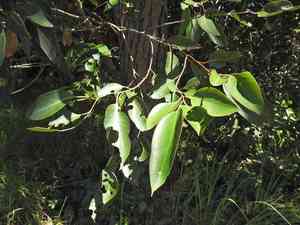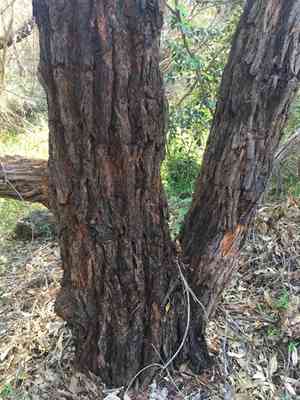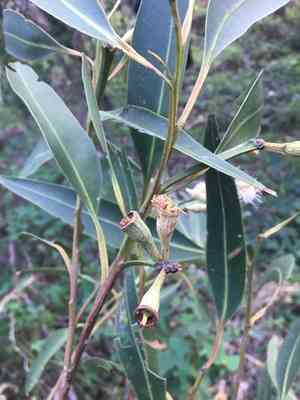
Swamp mahogany(Eucalyptus robusta)

Swamp mahogany (Eucalyptus robusta)

Also known as: Brown gum, Robusta eucalyptus, White mahogany

The tree you're referring to is likely the Swamp Mahogany (Eucalyptus robusta). This evergreen tree, native to Australia, typically reaches heights of 20 to 30 meters. It produces creamy white flowers during the spring and summer months. Known for its thick, sponge-like bark, it's often found in swampy or waterlogged areas. The broad leaves of the Swamp Mahogany are also an essential food source for koalas. Its timber is commonly used for firewood and construction purposes.

Attributes of Swamp mahogany

Lifespan
Perennial
Plant Type
Tree
Plant Height
20 m to 30 m
Spread
20 m
Leaf Color
Green
Flower Size
1.5 cm to 2 cm
Flower Color
White Yellow Pink

ForwardPlant - Identify plants with a snap

Identify and diagnose plants, get toxicity alerts, and explore safety guides for all types of fungi.

Try for Free

Images of Swamp mahogany

Swamp mahogany(Eucalyptus robusta)

Quickly Identify Swamp mahogany

1
Eucalyptus robusta can be identified by its rough, fibrous bark that covers the whole trunk and larger branches, lance-shaped leaves, and clusters of white to cream-colored flowers. Its leaves are glossy green on top and paler underneath.

Scientific Classification of Swamp mahogany

Phylum
Vascular plants
Class
Dicotyledons
Order
Myrtales
Family
Myrtle
Genus
Eucalypts
Species
Swamp mahogany

Planting and Growing of Swamp mahogany

Care Difficulty
Easy
Watering Schedule
Every 3 days
Sunlight Requirements
Full sun
Sunshine Duration
4-8 hours
Ideal Temperature
60-75℉
Soil Type
Potting Mix, Peat Mix
Soil pH
5.5-6.5
Fertilizer Type
Balanced
Pruning Season
Spring, Summer
Pruning Area
Branches, Leaves
Pruning Frequency
2 times a year
Repotting Season
Spring
Pot Type
Plastic, Ceramic

water icon How to Water Swamp mahogany?

Eucalyptus robusta thrives when watered thoroughly. It's important to ensure the soil is evenly moist but not waterlogged. Ideally, the top inch of soil should be moist, reflecting a balance that avoids both drought and swamp-like conditions.
What are the symptoms of an underwatered Swamp mahogany?
What should I do if my Swamp mahogany is not getting enough water?
What are the symptoms of an overwatered Swamp mahogany?
How to save an overwatered Swamp mahogany?

sunlight icon What Are the Sunlight Requirements for Swamp mahogany?

Sunlight Requirements: Full sun
Duration of light: 6 to 8 hours daily
Eucalyptus robusta requires full sun exposure for optimum growth, ideally between six to eight hours of daily sunlight. This light range ensures vibrant foliage and robust plant health.
How much light does Eucalyptus robusta need?
What are the solutions to achieve ideal lighting for Eucalyptus robusta?
What benefits can Eucalyptus robusta gain from ideal light conditions?
More About Sunlight Requirements Techniques

temperature icon What Is the Ideal Temperature Range for Swamp mahogany?

Ideal Temperature: 60 ~ 75℉
The ideal temperature range for Eucalyptus robusta is between 60°F to 75°F. Within this temperature window, the plant can carry out photosynthesis efficiently, which is crucial for its growth. Warmer temperatures near 75°F may promote more vigorous growth, while temperatures at the lower end of the range may slow down physiological processes slightly but still allow the plant to thrive.

soil icon What Soil is Best for Swamp mahogany?

Soil type: Loam, Clay soil, Sandy loam
Soil PH: 5.5 ~ 6.5
Eucalyptus robusta thrives in soil that offers excellent drainage. This prevents waterlogging and root rot, ensuring robust growth and healthy foliage throughout varying climates. A soil enriched with organic matter supports the nutrient demand of Eucalyptus robusta, contributing to its tall growth and lush canopy. Regular addition of compost can enhance soil fertility. While drainage is critical, the soil should still retain some moisture to support continuous root access to water, ensuring that the plant remains hydrated without suffering from drought stress.

fertilize icon How to Fertilize Swamp mahogany?

Fertilizer type: Balanced
For Eucalyptus robusta, use half-strength balanced liquid fertilizer for young trees and increase gradually as the tree matures. Mature trees can benefit from a full dosage of organic slow-release fertilizers twice annually.

prune icon How to Prune Swamp mahogany?

Pruning Time: Spring, Summer, Autumn
Begin by removing any dead, diseased, or damaged branches to prevent infection spread. Next, focus on thinning dense areas to allow light and air circulation. Use clean, sharp tools to make clean cuts, ensuring the cuts are above a bud or branch junction to promote healthy new growth. Aim to create an even, balanced canopy by selectively pruning branches that disrupt the natural shape of the Eucalyptus robusta. This process involves trimming back branches that extend beyond the desired width, which enhances the aesthetic look and structural integrity of the tree. More About Pruning Techniques

propagate icon How to Propagate Swamp mahogany plant?

Propagate Time: Spring,Early summer
1
Fill seed trays with a well-draining seed-starting mix. Moisten the soil lightly before distributing the eucalyptus seeds evenly, covering them with a thin layer of vermiculite to aid germination.
2
Select semi-hardwood cuttings in late spring or early summer. Use secateurs to cut a section about 10-15 cm long, ensuring a few leaves are left on top while removing the lower ones.
3
Place cuttings in a suitable rooting medium such as sand or perlite mix. Maintain a high humidity environment using a misting system or a plastic cover until roots develop.
More About Propagating Techniques

repot icon How to Repot Swamp mahogany plant?

Repotting frequency: Every 2-3 years
1
Eucalyptus robusta needs repotting when its roots start protruding from the drainage holes, or the growth appears stunted despite regular care. Another signal for repotting includes when the pot becomes top-heavy, indicating the plant has outgrown its current container.
2
Select a pot that is one size up from the current pot. Ensure it has drainage holes to prevent waterlogging. A slightly larger pot allows ample space for root growth, which supports the plant's natural benching and reduces transplant shock.
3
Opt for a well-draining potting mix with good aeration capabilities. This type of soil prevents root rot by ensuring excess water can escape, while also allowing the roots to access the necessary oxygen for robust growth.

ForwardPlant - Identify plants with a snap

Find the best spots for them to optimize their health, simply using your phone.

Try for Free

Toxicity of Swamp mahogany

Is Swamp mahogany toxic to cat?

Swamp mahogany is considered to have a low level of toxicity for cats. Poisoning in cats is most likely to occur if they ingest significant amounts of its leaves. If poisoning occurs, a cat may display signs of physical distress or illness, indicating that urgent veterinary care is necessary. It is crucial to respond swiftly and obtain treatment at a veterinary clinic to guarantee the cat's safety and health.

Is Swamp mahogany toxic to dog?

The plant species known as swamp mahogany carries a moderate toxicity risk for dogs. If consumed in excessive amounts, particularly the leaves which harbor toxic compounds, canines may suffer poisoning from this plant. Following the ingestion of swamp mahogany parts, dogs may show symptoms such as vomiting, diarrhea, lethargy, or other forms of distress. It is essential for dog owners to keep a close watch on their pets and discourage them from eating large quantities of this plant. Should a dog ingest swamp mahogany and display negative health effects, it is crucial to seek immediate care at a veterinary clinic to protect the animal's health and well-being.

Identify toxic plants for your safety

Learn which plants are harmful to you and your pets, and make informed choices for a safer home!

Try for Free
WARNING
The judgment on toxicity and danger is for reference only. We DO NOT GUARANTEE any accuracy of such judgment. Therefore, you SHALL NOT rely on such judgment. It is IMPORTANT TO SEEK PROFESSIONAL ADVICE in advance when necessary.
More About Toxic Techniques