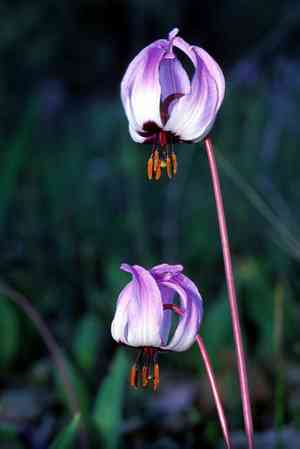
Henderson's fawn lily (Erythronium hendersonii)
Also known as: Henderson's Fawn Lily
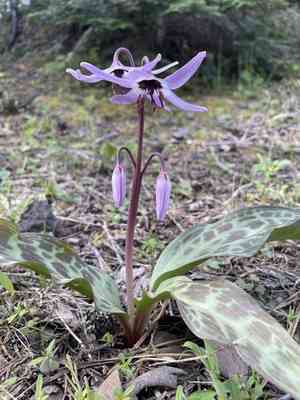
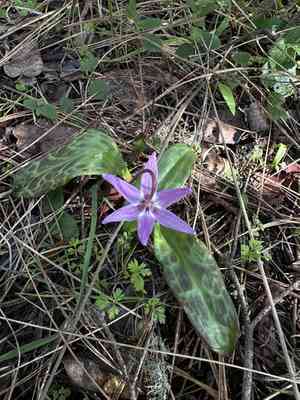
Henderson's fawn lily (Erythronium hendersonii) is notable for its elegant, lance-shaped leaves, which are often speckled with brown or purple. Its flowers are nodding and bell-shaped, displaying a distinctive pink to purple color with a yellow center. This spring ephemeral flourishes in open woodlands, grasslands, and rocky areas, favoring well-drained soils and partial to full sunlight. It capitalizes on the early spring light before the forest canopy becomes dense, making its brief but vivid appearance a beautiful and strategic adaptation to its native Pacific Northwest habitat.
In This Article
Attributes of Henderson's fawn lily
Lifespan
Perennial
Plant Type
Herb
Plant Height
13 cm to 30 cm
Spread
10 cm
Leaf Color
Green Brown
Flower Size
2-4 cm
Flower Color
Purple
Images of Henderson's fawn lily
Quickly Identify Henderson's fawn lily
1
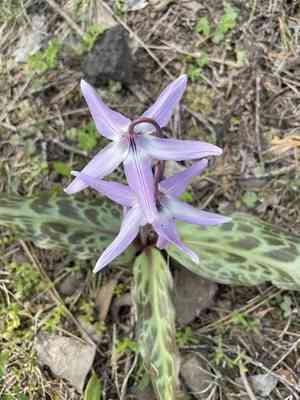
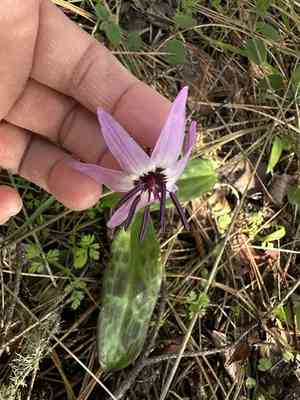
Identifying Erythronium hendersonii involves looking for its distinctively mottled or marbled leaves, which are often reddish-brown and green. The flowers are typically pink to lavender with a yellow center, and they hang downward on slender stems.
Scientific Classification of Henderson's fawn lily
Phylum
Vascular plants
Class
Monocotyledons
Order
Liliales
Family
Lily
Genus
Fawn lilies
Species
Henderson's fawn lily
Planting and Growing of Henderson's fawn lily
Care Difficulty
Moderate
Watering Schedule
Every 2 days
Sunlight Requirements
Partial sun
Sunshine Duration
6-12 hours
Ideal Temperature
60-70℉
Soil Type
Potting Mix, Peat Mix
Soil pH
6.5-7.5
Fertilizer Type
Balanced
Pruning Season
Spring, Summer
Pruning Area
Branches, Leaves
Pruning Frequency
4 times a year
Repotting Season
Spring
Pot Type
Terracotta, Plastic
 How to Water Henderson's fawn lily?
When watering Erythronium hendersonii, aim to provide about 250 milliliters of water per session. This amount should be sufficient to moisten the root zone without waterlogging the soil. Proper drainage is key, so ensure the pot or ground allows excess water to drain away. Your goal is to mimic natural rainfall and ensure the soil is damp but not soggy.
What are the symptoms of an underwatered Henderson's fawn lily?
›
What should I do if my Henderson's fawn lily is not getting enough water?
›
What are the symptoms of an overwatered Henderson's fawn lily?
›
How to save an overwatered Henderson's fawn lily?
›
 What Are the Sunlight Requirements for Henderson's fawn lily?
Erythronium hendersonii's ideal light range is partial sun, which supports optimal growth and blooming while protecting the plant from extreme sunlight damage. Partial sun exposure ensures a balanced light intake, crucial for its health.
What is the ideal lighting for Erythronium hendersonii?
›
How can one achieve ideal lighting?
›
What benefits does ideal lighting provide?
›
 What Is the Ideal Temperature Range for Henderson's fawn lily?
For the optimal growth of Erythronium hendersonii, it is best to maintain an ambient temperature range between 60°F and 70°F. This range supports robust growth by providing the warmth needed for physiological processes while avoiding excessive heat stress.
 What Soil is Best for Henderson's fawn lily?
Erythronium hendersonii thrives in well-draining soil conditions, which prevent waterlogging and reduce the risk of root rot. Ensuring the soil has ample drainage properties helps the plant maintain healthy root systems, essential for its growth and flowering. While drainage is crucial, the soil should also retain enough moisture for consistent nourishment. This balance helps the plant access water during dry spells while avoiding water scarcity stress. A loamy soil enriched with organic matter presents an excellent environment for Erythronium hendersonii, furnishing the plant with necessary nutrients. This nutrient availability boosts vigorous growth and enhances the overall vitality of the plant.
 How to Fertilize Henderson's fawn lily?
When fertilizing Erythronium hendersonii, it is essential to use a balanced fertilizer. For liquid fertilizers, dilute to one-quarter of the recommended strength, ensuring the mixture is gentle enough for these delicate plants. Use approximately 250 ml of the diluted solution per application.
 How to Prune Henderson's fawn lily?
Examine the plant for any dead, brown, or damaged leaves. These should be the first to be removed as they can harbor pests and diseases. Carefully trim back any leaves that are overshadowing others, allowing sunlight to penetrate and nourish hidden sections, fostering even and vigorous growth. Once pruning is complete, dispose of all removed plant materials appropriately. Leaving debris around can invite pests and diseases to your Erythronium hendersonii.
More About Pruning Techniques→
 How to Propagate Henderson's fawn lily plant?
1
Allow the Erythronium hendersonii flowers to mature on the plant and form seed pods. Once the pods dry on the plant, collect them and extract the seeds for planting. Store seeds in a cool, dry place if not planting immediately.
2
Use well-draining soil with a slightly acidic to neutral pH. Mixing garden soil with sand or perlite improves drainage. Before planting seeds or bulbs, till the soil to aerate it, facilitating root growth and nutrient uptake.
3
Plant the seeds 1/4 inch deep in the soil and cover them lightly. Water thoroughly after planting but avoid oversaturation. For bulb division, plant each bulb 4-6 inches apart and water adequately to help them settle in the soil.
 How to Repot Henderson's fawn lily plant?
1
Repot Erythronium hendersonii when you notice the bulbs becoming crowded, typically every two to three years. The best time is in early spring when new growth starts to appear. This timing ensures that the plant has sufficient resources to establish in its new pot before the growth season is in full swing.
2
Choose a pot that is wide but not too deep, with good drainage holes. The extra width provides room for bulb offsets, which helps in natural multiplying and prevents overcrowding. Clay pots are ideal as they allow air exchange and good drainage, which prevents root rot.
3
Select a well-draining loam mix enriched with organic matter. The soil should maintain slight moisture while providing excellent drainage. This mix mimics the plant's natural habitat, supporting healthy root and bulb development and preventing water logging.
Learn More About Henderson's fawn lily Diseases
Anthracnose
Bacterial Leaf Spot
Bacterial Soft Rot
Bacterial Wilt
Chemical Injury
Crown Gall
Cyst Nematode
Damping-off
Downy Mildew
Drought Stress
Fusarium Wilt
Gray Mold
Leaf Curl
Leaf Spot
Mosaic
Nutrient Deficiency
Nutrient Toxicity
Powdery Mildew
Root Rot
Root-knot Nematode
Rusts
Sooty Mold
Spider Mites
Temperature Stress
Thrips Damage
White Mold



