How to Propagate Henderson's fawn lily?
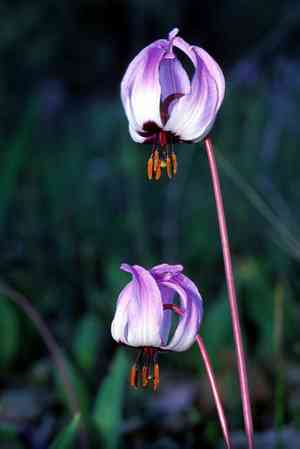
Erythronium hendersonii is a perennial species recognized for its appealing, pendulous blossoms and uniquely patterned foliage. To achieve effective propagation, meticulously separate the corms, making certain that each segment possesses viable growth points. Embed these corms in soil that drains efficiently and is abundant in organic matter, positioning them with sufficient distance to prevent excessive density. Moderate irrigation is essential for their establishment, and applying mulch can aid in moisture retention. Refrain from burying them too deeply; confirm that their uppermost parts are situated just beneath the ground level.
Optimal Time for Henderson's Fawn Lily Propagation
Propagation Type
UtilizeTubers
Propagation Season
Spring
Tools Required for Henderson's Fawn Lily Propagation
Garden Spade
A garden spade is crucial for carefully extracting henderson's fawn lily tubers without harm. Its flat, sharp edge enables precise digging around the plant base to lift tubers whole, vital for successful propagation.
Hand Trowel
A hand trowel is employed for re-planting the divided tubers into the ground. This implement aids in creating appropriately sized and deep holes for tubers, fostering proper root growth and minimizing transplant shock.
Sharp Knife or Garden Scissors
A sharp knife or garden scissors are necessary for cleanly separating tubers. These instruments ensure precise cuts, reducing damage and the risk of rot or disease, ultimately aiding in successful division and propagation.
Bulb Planter
A bulb planter assists in placing tubers at the correct depth, which is crucial for henderson's fawn lily's development. This tool creates uniform planting holes, ensuring tubers are positioned ideally for nutrient absorption and root expansion.
Rooting Hormone
Rooting hormone can be applied to the cut surfaces of tubers to stimulate quicker and stronger root development. This product helps increase the likelihood of successful propagation by alleviating stress and promoting healthy root growth.
Watering Can with Fine Rose
A watering can with a fine rose is perfect for gently irrigating newly planted tubers without disturbing the soil or dislodging them. Consistent moisture levels are essential for the successful establishment of henderson's fawn lily.
Labeling Stakes
Labeling stakes are vital for tracking different tubers and their planting spots. This assists in monitoring growth progress and ensures appropriate care tailored to specific tubers, enhancing overall propagation success.
Sterilizing Solution
A sterilizing solution is important for sanitizing tools between uses to prevent the spread of diseases and pathogens. This practice is crucial for maintaining the health of henderson's fawn lily during the propagation process.
How to Propagate Henderson's Fawn Lily?
Propagation Type
Simple
Caring for Your Newly Propagated Henderson's Fawn Lily
Caring for Your Newly Propagated Henderson's Fawn Lily
Post-propagation, provide henderson's fawn lily with filtered light to mimic its natural forest habitat. Keep the soil consistently moist but well-draining, especially during active spring growth. Apply mulch around plants to retain moisture and regulate soil temperature. As foliage recedes in late spring to early summer, gradually reduce watering. Avoid disturbing tubers during dormancy (summer to early fall) to ensure robust regrowth next season.
Common Errors to Avoid When Propagating Henderson's Fawn Lily
Incorrect Soil Type
Using unsuitable soil can hinder root development and lead to poor growth. Henderson's fawn lily requires well-drained, humus-rich soil to flourish.
Overwatering
Excessive watering can cause tuber rot and fungal infections. Henderson's fawn lily prefers moderate irrigation, allowing the soil to dry slightly between waterings.
Planting Depth
Planting tubers either too shallow or too deep can impact their sprouting and growth. Proper planting depth ensures timely and healthy emergence.
Crowded Planting
Planting tubers too close together can lead to competition for nutrients and reduced flowering. Adequate spacing is essential for optimal growth.
Tips For Propagating Henderson's Fawn Lily
Use Well-Draining Soil
Ensure the soil drains well and is rich in organic matter. This promotes healthy root development and prevents waterlogging issues.
Moderate Watering
Water the tubers moderately, ensuring the soil is moist but not waterlogged. Allow the top layer of the soil to dry out between waterings.
Correct Planting Depth
Plant tubers at a depth of approximately 2-3 times their height. This ensures proper insulation and optimal growth.
Adequate Spacing
Plant the tubers at least 6-8 inches apart to allow sufficient space for growth and to reduce competition for resources.
Mulching
Apply a layer of mulch to help retain soil moisture, regulate temperature, and reduce weed competition. Use organic mulch for best results.



