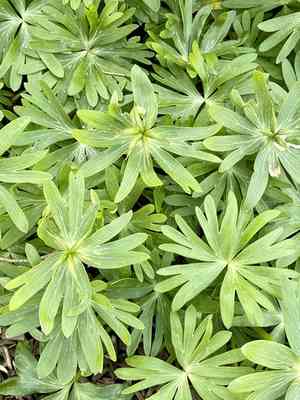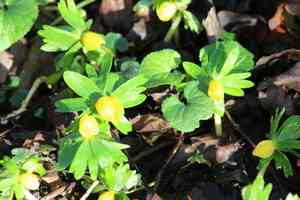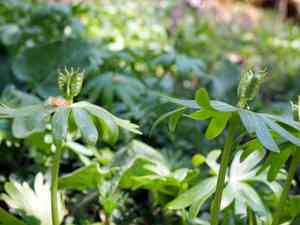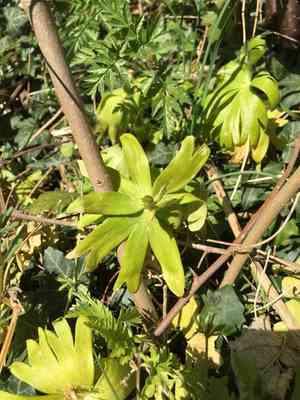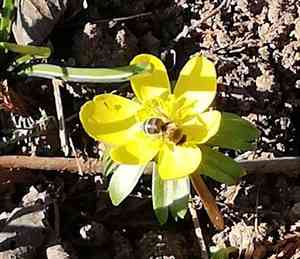
Winter aconite(Eranthis hyemalis)

Winter aconite (Eranthis hyemalis)

Also known as: Winter wolf's bane

The **wood anemone** (Anemone nemorosa) is a flowering plant belonging to the buttercup family, commonly found in European woodlands. This early spring bloomer is a spring ephemeral, lying dormant for much of the year. All parts of the wood anemone are poisonous to humans and animals.

Attributes of Winter aconite

Lifespan
Perennial
Plant Type
Herb
Plant Height
8 cm to 13 cm
Spread
8 cm to 13 cm
Leaf Color
Green
Flower Size
2.5 cm
Flower Color
Yellow

ForwardPlant - Identify plants with a snap

Identify and diagnose plants, get toxicity alerts, and explore safety guides for all types of fungi.

Try for Free

Images of Winter aconite

Winter aconite(Eranthis hyemalis)

Quickly Identify Winter aconite

1
Vibrant yellow cup-shaped flowers, 3-6 inches (7.5-15 cm) tall and 6 inches (15 cm) wide.
2
Distinctive palmate or pinnate dark green basal leaves with several deep lobes.
3
Stout, rhizomatous stem with a reddish-brown color, lacking significant branching.
4
Bright yellow flowers with six showy petals measuring about 1 inch (2.5 cm) in diameter.
5
Green fruit capsules with elongated beaks and encircling sepals, small in size.

Scientific Classification of Winter aconite

Phylum
Vascular plants
Class
Dicotyledons
Order
Ranunculales
Family
Buttercup
Genus
Winter aconites
Species
Winter aconite

Planting and Growing of Winter aconite

Care Difficulty
Easy
Watering Schedule
Every 3 days
Sunlight Requirements
Full sun
Sunshine Duration
6-10 hours
Ideal Temperature
40-50℉
Soil Type
Potting Mix, Peat Mix
Soil pH
6.5-7.5
Fertilizer Type
Balanced
Pruning Season
Spring, Summer
Pruning Area
Branches, Leaves
Pruning Frequency
2 times a year
Repotting Season
Spring
Pot Type
Plastic, Ceramic

water icon How to Water Winter aconite?

Water Eranthis hyemalis with about 250 ml each time, ensuring the soil is moist but not waterlogged. This plant appreciates consistent moisture, especially during its active growing period in early spring. However, be cautious to avoid water stagnation.
What are the symptoms of an underwatered Winter aconite?
What should I do if my Winter aconite is not getting enough water?
What are the symptoms of an overwatered Winter aconite?
How to save an overwatered Winter aconite?

sunlight icon What Are the Sunlight Requirements for Winter aconite?

Sunlight Requirements: Full sun, Partial sun
Duration of light: 4 to 6 hours
Eranthis hyemalis is best suited to environments with partial to full sun, where it experiences 4 to 6 hours of light. Adequate exposure is essential for optimal flowering and plant vigor.
How much light does Eranthis hyemalis need?
How to ensure proper lighting for Eranthis hyemalis?
What are the benefits of proper lighting for Eranthis hyemalis?
More About Sunlight Requirements Techniques

temperature icon What Is the Ideal Temperature Range for Winter aconite?

Ideal Temperature: 40 ~ 50℉
Eranthis hyemalis thrives best when the temperature ranges from 40°F to 50°F. This range helps support healthy growth and flowering. Maintaining stable temperatures within this band aids in proper plant metabolism and reduces stress that could hinder development.

soil icon What Soil is Best for Winter aconite?

Soil type: Loam, Clay soil, Sandy loam
Soil PH: 6.5 ~ 7.5
Eranthis hyemalis thrives in soil with good drainage to prevent waterlogging, which can lead to root rot. This ensures the plant's roots are adequately aerated, promoting healthy growth and vibrant flowers. The plant prefers moderately fertile soils that provide the right balance of nutrients without over-fertilizing, which can cause weak growth and fewer blooms. Ensuring balanced fertility supports robust plant development. Eranthis hyemalis appreciates soil that retains moisture while not becoming overly wet. This balance ensures that the plant remains hydrated, particularly during its growing season, without suffocating the roots.

fertilize icon How to Fertilize Winter aconite?

Fertilizer type: Balanced
For Winter Aconite (Eranthis hyemalis), apply a balanced, all-purpose liquid fertilizer diluted to half strength. Use about 10ml of diluted liquid fertilizer for a plant in a 15cm pot. In terms of slow-release fertilizer, use one teaspoon per plant annually, ensuring even distribution around the base.

prune icon How to Prune Winter aconite?

Pruning Time: Spring
Start by examining your plant for any dead or damaged foliage. Remove these parts to improve the plant's general health and aesthetics. Cutting at the base of the stem prevents unnecessary stress and potential pathways for diseases. To optimize flowering, trim back any spent flower stalks close to the base. Removing the faded flowers redirects the plant's energy to strengthen its roots and foliage, preparing it for a robust bloom in the next year. More About Pruning Techniques

propagate icon How to Propagate Winter aconite plant?

Propagate Time: Early spring, Late winter
1
Ensure the soil is well-draining and enriched with organic matter. This is crucial as Eranthis hyemalis thrives in nutrient-rich conditions, mimicking its natural habitat in deciduous woodlands.
2
Plant the seeds in a seed tray filled with a seed-starting mix. Cover with a thin layer of soil and keep them moist. This step ensures seeds have the right conditions to break dormancy and initiate germination.
3
Gently lift the plant, divide the tubers using a sharp tool, and replant them immediately. This should be done during dormancy to reduce stress on the plant and encourage successful re-establishment.
More About Propagating Techniques

repot icon How to Repot Winter aconite plant?

Repotting frequency: Every 2-3 years
1
Eranthis hyemalis usually signals it's time for repotting when you observe a decline in flower production or if the bulbs are overcrowded, creating bulges at the soil surface. Ideally, repot just after the plant has gone dormant, typically in spring or autumn.
2
Choose a pot that's slightly larger than the previous one, with adequate drainage holes. The material should be either clay or plastic, with clay promoting air flow around the roots, which is beneficial in humid conditions, while plastic retains moisture longer, suitable for drier climates.
3
Opt for well-draining loamy soil that mimics the natural forest floor habitat of Eranthis hyemalis. Such soil retains necessary moisture while its structure promotes adequate air flow around the roots, preventing rot and encouraging healthy growth.

ForwardPlant - Identify plants with a snap

Find the best spots for them to optimize their health, simply using your phone.

Try for Free

Toxicity of Winter aconite

Is Winter aconite toxic to cat?

Winter aconite presents a moderate level of toxic risk to felines. If cats consume any section of this plant, they could suffer from poisoning. Upon ingestion of winter aconite, cats might display symptoms of physical distress or sickness. It is essential to recognize this danger and ensure winter aconite is stored out of reach of cats to avoid accidental consumption. Should a cat ingest any part of winter aconite, it is vital to obtain prompt veterinary assistance to secure the best possible outcome for the animal's well-being.

Is Winter aconite toxic to dog?

Winter aconite presents a moderate risk of toxicity to dogs. All parts of the plant are toxic, and canines can become poisoned through the ingestion of any portion. If a dog consumes winter aconite, it may display symptoms such as vomiting, diarrhea, abdominal discomfort, and lethargy. In more severe cases, poisoning can result in dire health complications. Therefore, it is essential for dog owners to keep their pets away from winter aconite and to closely observe them if they are in proximity to where the plant grows. If a dog does consume winter aconite, seeking immediate veterinary care is vital to effectively manage the poisoning.

Identify toxic plants for your safety

Learn which plants are harmful to you and your pets, and make informed choices for a safer home!

Try for Free
WARNING
The judgment on toxicity and danger is for reference only. We DO NOT GUARANTEE any accuracy of such judgment. Therefore, you SHALL NOT rely on such judgment. It is IMPORTANT TO SEEK PROFESSIONAL ADVICE in advance when necessary.
More About Toxic Techniques