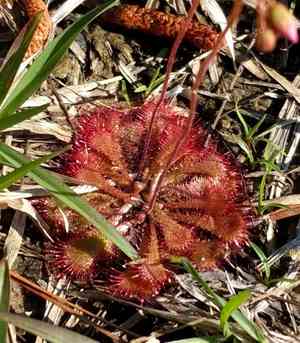
Dwarf sundew (Drosera brevifolia)
Also known as: Dwarf Sundew
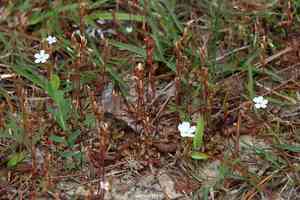
The dwarf sundew (Drosera brevifolia) is a petite carnivorous plant native to the southeastern United States. It features numerous sticky, dew-tipped appendages that capture insects. Unlike many other sundews, it thrives in drier habitats and tends to die back during the peak of summer, with fresh seedlings emerging in the fall.
In This Article
Attributes of Dwarf sundew
Lifespan
Annual, Perennial
Plant Type
Herb
Plant Height
5 cm
Spread
5 cm
Leaf Color
Green Blue
Flower Size
2 cm
Flower Color
White
Images of Dwarf sundew
Quickly Identify Dwarf sundew
1
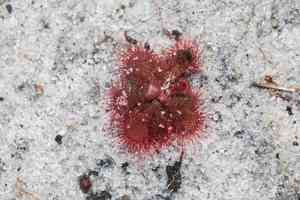
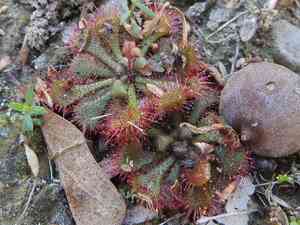
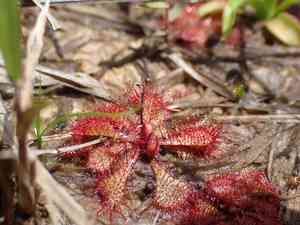
Drosera brevifolia can be identified by its small size, rosette form, and bright red glandular hairs on its leaves. These hairs exude a sticky substance to trap insects. The plant often has small round to oval leaves and blooms with small white or pink flowers.
Scientific Classification of Dwarf sundew
Phylum
Vascular plants
Class
Dicotyledons
Order
Caryophyllales
Family
Sundew
Genus
Sundews
Species
Dwarf sundew
Planting and Growing of Dwarf sundew
Care Difficulty
Easy
Watering Schedule
Every 8 days
Sunlight Requirements
Full sun
Sunshine Duration
6-8 hours
Ideal Temperature
65-80℉
Soil Type
Potting Mix, Peat Mix
Soil pH
4-5.5
Fertilizer Type
Balanced
Pruning Season
Spring, Summer
Pruning Area
Branches, Leaves
Pruning Frequency
2 times a year
Repotting Season
Spring
Pot Type
Plastic, Ceramic
 How to Water Dwarf sundew?
Drosera brevifolia, like many sundews, prefers consistently moist but not waterlogged conditions. Watering should be done sparingly, ensuring the soil is damp but not drowning in water. Ideally, you should saturate until it feels wet to the touch but doesn't produce runoff.
What are the symptoms of an underwatered Dwarf sundew?
›
What should I do if my Dwarf sundew is not getting enough water?
›
What are the symptoms of an overwatered Dwarf sundew?
›
How to save an overwatered Dwarf sundew?
›
 What Are the Sunlight Requirements for Dwarf sundew?
Drosera brevifolia thrives under full sun, benefiting from increased photosynthesis and vivid coloration. Ideal lighting conditions improve its ability to capture prey and maintain overall health.
More About Sunlight Requirements Techniques→
Is full sun best?
›
How to achieve full sun?
›
Benefits of full sun?
›
 What Is the Ideal Temperature Range for Dwarf sundew?
The ideal temperature range for Drosera brevifolia is between 65°F and 80°F. These temperatures closely mimic the plant's natural habitat, allowing it to thrive. Maintaining this range ensures optimum growth and encourages vibrant and healthy foliage. Providing consistent temperatures within this range is crucial for the plant's photosynthesis and overall vitality.
 What Soil is Best for Dwarf sundew?
Drosera brevifolia thrives in free-draining substrates that prevent waterlogging, which can cause root rot. This type of soil mimics its natural habitat, typically nutrient-poor sandy and acidic soils where it excels at its carnivorous activities. The presence of high organic matter in the soil helps retain enough moisture and provides a stable environment for Drosera brevifolia to trap and digest insects, its primary source of nutrients. Drosera brevifolia requires low-nutrient soils. High nutrient content can actually harm this plant as it is adapted to nutrient-poor conditions where it captures insects to obtain necessary nutrients.
 How to Fertilize Dwarf sundew?
Drosera brevifolia, like many carnivorous plants, requires minimal fertilization. It is crucial to avoid over-fertilizing, as this can harm the plant. When using liquid fertilizers, they should be heavily diluted to a quarter of the recommended strength for typical houseplants.
 How to Prune Dwarf sundew?
To prune Drosera brevifolia, begin by using sterilized scissors or garden shears to avoid disease transmission. Focus on removing any dead or brown leaves, cutting them as close to the base as possible without damaging the healthy parts. This not only improves the plant's appearance but also redirects energy towards new growth. Be gentle to avoid disturbing the plant's sensitive structure, and never remove more than one-third of the plant at a time to prevent shock.
More About Pruning Techniques→
 How to Propagate Dwarf sundew plant?
1
Begin by spreading Drosera brevifolia seeds evenly on the surface of a nutrient-poor, acidic soil mix. Since these are carnivorous plants, they thrive in a mix like peat and sand. Do not cover the seeds, as they require light for germination. Mist the surface lightly with water to keep it moist, but avoid waterlogging.
2
To propagate through division, carefully remove the plant from its container once it has matured. Gently separate the sections of the plant, ensuring each new section has roots attached. Immediately replant each division into individual pots with a suitable growing medium, and water thoroughly.
3
Maintain a high humidity level and keep the environment warm, ideally around 21°C to 29°C (70°F to 85°F). Use a humidity dome or similar setup to maintain the ideal conditions. Ensure the plants receive adequate direct sunlight, at least 12 hours a day, or use grow lights if necessary.
 How to Repot Dwarf sundew plant?
1
Drosera brevifolia should be repotted when you notice its roots growing through drainage holes or when the soil has become compacted. Additionally, if you observe the plant's growth slowing despite optimal conditions, it might be time for a larger pot. Spring and autumn are the best seasons, as the plant is less stressed from extreme temperatures.
2
Select a pot that is 1-2 inches larger in diameter than the current one to allow room for growth without overwhelming the plant's root system. Ensure it has adequate drainage holes to prevent waterlogging, as Drosera brevifolia prefers a moist but not overly saturated environment.
3
Opt for an acidic, well-draining soil mix, such as a combination of peat moss and perlite. This mix mimics its natural habitat, ensuring the roots remain healthy by avoiding excess moisture, which can lead to root rot. Avoid nutrient-rich soils, as they can harm the plant.



