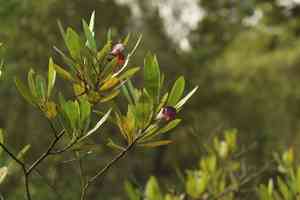
Hopbush (Dodonaea viscosa)
Also known as: Switch sorrel, Soapwood, Sticky hop-bush, Varnish leaf, Florida hopbush, Native hops, Hopseed bush
The Hopbush (*Dodonaea viscosa*) is a rapidly growing shrub that blooms greenish flowers from winter to spring. Its seeds mature from fall to winter, offering a food source for various birds. The flowers supply pollen to moths, butterflies, and other insects, while the foliage is grazed by kangaroos and wallabies.
In This Article
Attributes of Hopbush
Lifespan
Perennial
Plant Type
Shrub
Plant Height
2.5 m
Spread
2.5 m
Leaf Color
Green Purple
Flower Size
Small, around 0.5 cm
Flower Color
Yellow Green
Images of Hopbush
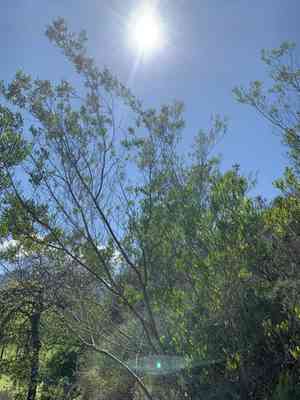
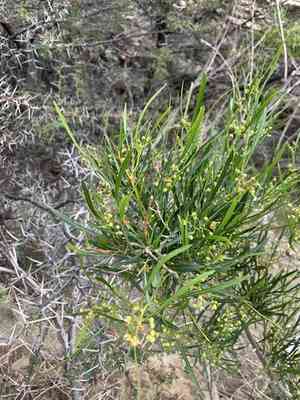
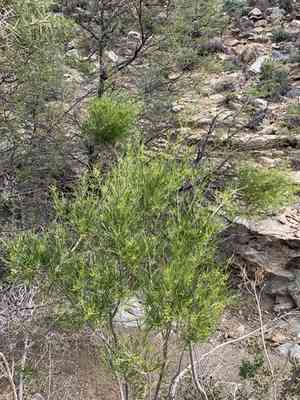
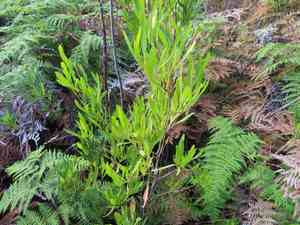
Quickly Identify Hopbush
1
Identify Dodonaea viscosa by its oblong, sticky leaves, typically 5-10 cm long, and its distinctive capsule-like fruit which turns from green to pink or red as it matures.
Scientific Classification of Hopbush
Phylum
Vascular plants
Class
Dicotyledons
Order
Sapindales
Family
Soapberry
Genus
Hop-bushes
Species
Hopbush
Planting and Growing of Hopbush
Care Difficulty
Easy
Watering Schedule
Every 4 days
Sunlight Requirements
Full sun
Sunshine Duration
6-10 hours
Ideal Temperature
59-77℉
Soil Type
Potting Mix, Peat Mix
Soil pH
6-7.5
Fertilizer Type
Balanced
Pruning Season
Spring, Summer
Pruning Area
Branches, Leaves
Pruning Frequency
2 times a year
Repotting Season
Spring
Pot Type
Plastic, Ceramic
 How to Water Hopbush?
For Dodonaea viscosa, watering should adhere to a deep and thorough drench. This means saturating the soil until water drains from the bottom of the pot, ensuring all roots receive adequate moisture without waterlogging the base. The total amount should be around 500 ml per session, depending on pot size and climate conditions.
More About Watering Techniques→
What are the symptoms of an underwatered Hopbush?
›
What should I do if my Hopbush is not getting enough water?
›
What are the symptoms of an overwatered Hopbush?
›
How to save an overwatered Hopbush?
›
 What Are the Sunlight Requirements for Hopbush?
Dodonaea viscosa prefers full sun to partial sun, flourishing with 6 to 8 hours of natural sunlight. This exposure ensures robust growth, vibrant leaf color, and boosts its natural pest resistance, promoting strong and resilient development.
More About Sunlight Requirements Techniques→
How much sunlight does Dodonaea viscosa need?
›
Solutions for Providing Ideal Lighting
›
Benefits of Ideal Sunlight
›
 What Is the Ideal Temperature Range for Hopbush?
Dodonaea viscosa thrives best in a temperature range of 59°F to 77°F. At these temperatures, the plant can optimally photosynthesize and grow healthily. Maintaining this range encourages robust growth, vibrant foliage, and can aid in flowering. It is important that daily temperature fluctuations stay within this range to maximize growth benefits.
 What Soil is Best for Hopbush?
Dodonaea viscosa thrives in well-drained soils, which prevent root rot by allowing excess water to move away quickly. This feature is crucial in maintaining healthy root systems and promoting vigorous growth. This plant prefers soils with moderate fertility. It performs well without excessive nutrients, which means it doesn't require constant fertilization, making it cost-effective and hassle-free for gardeners. Although Dodonaea viscosa can tolerate some drought once established, it generally prefers moisture-retentive soil to support its growth, especially during early development stages.
More About Soil→
 How to Fertilize Hopbush?
For Dodonaea viscosa, using a balanced liquid fertilizer with an N-P-K ratio of 10-10-10 is ideal. Apply approximately 1 tablespoon of the liquid fertilizer mixed in 1 gallon of water per plant. Ensure the plant is well-watered before and after application to avoid root burn.
More About Fertilizing Techniques→
 How to Prune Hopbush?
Begin by sterilizing your pruning tools to prevent disease transmission. Start by removing any dead or damaged branches. Trim back overly long stems to maintain a compact shape, cutting just above a set of healthy leaves. Aim to create an open structure to improve airflow. Dodonaea viscosa can be pruned into various shapes depending on your garden design goals. Use sharp shears to trim it into a formal hedge or allow it to retain a natural look by selectively thinning out straggly growth to enhance its innate form.
 How to Propagate Hopbush plant?
1
Gather ripe seeds from the plant pods during late spring when they have fully matured. Ensure that seeds are dry and free from pests before storage or planting.
2
Select healthy stems and cut at a 45-degree angle just below a node. Stripping the leaves from the lower third of the cutting helps minimize water loss during rooting.
3
Plant seeds in a seed tray with well-draining soil or insert cuttings into a potting mix. Keep them in a warm and humid environment to encourage growth.
 How to Repot Hopbush plant?
1
Repot Dodonaea viscosa when you see roots coming out of the drainage holes or the growth becomes stunted. These are clear signals that the plant needs more room to expand and grow healthily.
2
Select a pot that is 2 inches larger in diameter than the previous one. This allows the roots to expand without any issues, promoting better growth and development for your Dodonaea viscosa.
3
It's crucial to choose a well-draining sandy loam that retains some moisture but doesn't become waterlogged. This soil type ensures that the roots have sufficient aeration and prevents root rot.



