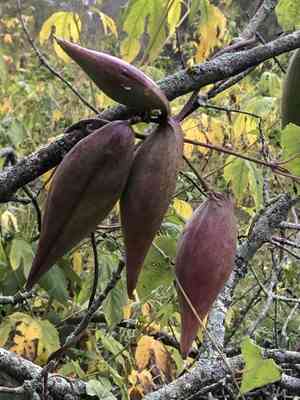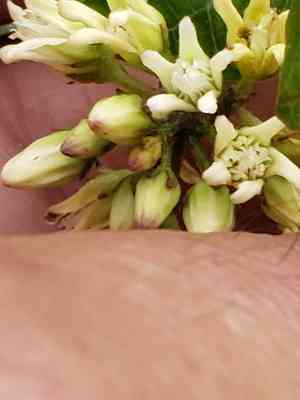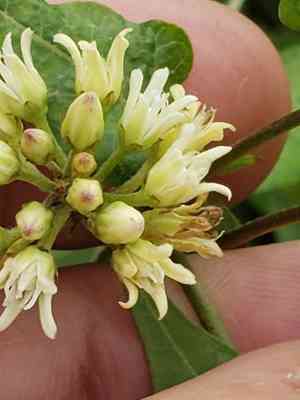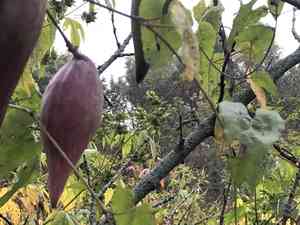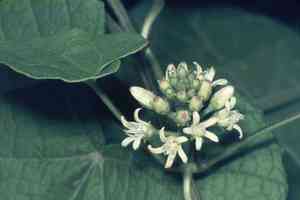
Honeyvine(Cynanchum laeve)

Honeyvine (Cynanchum laeve)

Also known as: Climbing milkweed, Smooth swallow-wort

Honeyvine, recognized as an invasive weed, is notably hard to eliminate due to its swift reproduction, with each plant producing up to 50 seed pods. It features a central taproot that can extend up to 1.8 meters deep, enabling it to regenerate even if the above-ground parts are removed. Its white, vase-shaped flowers contribute to its rapid spread. This combination of deep roots and prolific seed production makes honeyvine particularly challenging to control.

Attributes of Honeyvine

Lifespan
Perennial
Plant Type
Vine, Herb
Plant Height
2 m to 10 m
Spread
90 cm
Leaf Color
Green Blue
Flower Size
2.5 cm
Flower Color
White Yellow Green Purple

ForwardPlant - Identify plants with a snap

Identify and diagnose plants, get toxicity alerts, and explore safety guides for all types of fungi.

Try for Free

Images of Honeyvine

Honeyvine(Cynanchum laeve)

Quickly Identify Honeyvine

1
To identify Cynanchum laeve, look for its twining stems that can reach up to 10 feet in length. The leaves are opposite, heart-shaped, and have a smooth margin. During flowering, it produces clusters of small, white, star-shaped flowers. The plant also produces slender, elongated seed pods.

Scientific Classification of Honeyvine

Phylum
Vascular plants
Class
Dicotyledons
Order
Gentianales
Family
Dogbane
Genus
Swallow-wort
Species
Honeyvine

Planting and Growing of Honeyvine

Care Difficulty
Easy
Watering Schedule
Every 2 days
Sunlight Requirements
Full sun
Sunshine Duration
4-8 hours
Ideal Temperature
65-75℉
Soil Type
Potting Mix, Peat Mix
Soil pH
6.5-7.5
Fertilizer Type
Balanced
Pruning Season
Spring, Summer
Pruning Area
Branches, Leaves
Pruning Frequency
2 times a year
Repotting Season
Spring
Pot Type
Plastic, Terracotta

water icon How to Water Honeyvine?

When watering Cynanchum laeve, aim to provide around 250 milliliters per plant. Ensure the soil is evenly moist but not waterlogged. Adequate watering helps maintain the plant's natural lushness and supports healthy growth.
What are the symptoms of an underwatered Honeyvine?
What should I do if my Honeyvine is not getting enough water?
What are the symptoms of an overwatered Honeyvine?
How to save an overwatered Honeyvine?

sunlight icon What Are the Sunlight Requirements for Honeyvine?

Sunlight Requirements: Full sun, Partial sun
Duration of light: 6 to 8 hours daily
Cynanchum laeve thrives in full to partial sun, benefiting from a balanced light exposure that promotes strong growth and vibrant foliage.
What is the optimal position for Cynanchum laeve?
How to ensure it receives consistent light?
Why is ideal sunlight crucial for this plant?

temperature icon What Is the Ideal Temperature Range for Honeyvine?

Ideal Temperature: 65 ~ 75℉
Cynanchum laeve thrives best in temperature ranges between 65°F and 75°F. These temperatures mimic the natural conditions of its native habitats, providing the warmth necessary for optimal photosynthesis and growth. Within this range, the plant experiences balanced metabolic rates and healthy growth patterns.

soil icon What Soil is Best for Honeyvine?

Soil type: Loam, Sandy soil, Sandy loam
Soil PH: 6.5 ~ 7.5
Cynanchum laeve thrives in well-drained soils that prevent water from stagnating around the roots. This ensures the plant can access oxygen and reduces the risk of root rot, fostering healthier growth. The plant benefits from soils rich in organic matter, which provide essential nutrients. This supports vigorous growth and lush foliage, enabling the plant to develop robustly. A moderate moisture level in the soil is key for Cynanchum laeve. Consistent moisture without extreme wetness helps maintain steady growth and contributes to the plant's overall health.

fertilize icon How to Fertilize Honeyvine?

Fertilizer type: Balanced
Cynanchum laeve, commonly known as honeyvine milkweed, requires a balanced approach to fertilization. Use a diluted liquid fertilizer at half the recommended strength for flowering plants. This should be applied once every two weeks during the growing season to maintain optimal nutrient levels.

prune icon How to Prune Honeyvine?

Pruning Time: Spring, Summer, Autumn
Start by inspecting the plant for any dead or diseased stems, removing them completely. Use sharp, clean pruning shears to make cuts at a 45-degree angle to avoid water accumulation and promote healing. Cut back excessive growth to maintain a neat shape, ensuring you do not remove more than one-third of the plant at a time, as this can cause stress.

propagate icon How to Propagate Honeyvine plant?

Propagate Time: Spring, Early summer
1
Begin by collecting seeds from mature Cynanchum laeve pods. Clean the seeds to remove any plant material, then soak them in lukewarm water for 24 hours to enhance germination rates.
2
During early spring, select healthy, non-flowering stems for cuttings. Cut sections of about 4-6 inches in length and remove the lower leaves to prepare for rooting.
3
Prepare a rooting medium with a mix of perlite and peat moss. This combination allows for excellent drainage and aeration, providing an optimal environment for root development.

repot icon How to Repot Honeyvine plant?

Repotting frequency: Every 2-3 years
1
Cynanchum laeve should be repotted when you observe roots coming out of the drainage holes or when the plant looks too large for its current pot. This typically happens every two to three years. Spring or early summer is the ideal time, as the plant is in a growth phase and can recover quickly from the disturbance.
2
Select a pot that is 2-3 inches larger in diameter than the current one. Ensure it has adequate drainage holes. A slightly bigger pot helps in accommodating root growth and prevents waterlogging. Clay pots are preferable as they allow excess moisture to evaporate, reducing the risk of root rot.
3
Opt for a loamy, well-draining soil mix to ensure proper aeration and drainage. This type of soil prevents water retention around the roots, significantly reducing the risk of root diseases. Adding perlite or sand to the mix further enhances drainage capabilities.

ForwardPlant - Identify plants with a snap

Find the best spots for them to optimize their health, simply using your phone.

Try for Free

Toxicity of Honeyvine

Is Honeyvine toxic to humans?

Honeyvine is recognized as a toxic species due to its high concentration of cardenolide alkaloids. Direct contact with any part of the plant can lead to skin irritation, and exposure to its particularly toxic sap can result in lasting damage if it gets into the eyes. It is advisable to wear protective gear, such as gloves, while handling honeyvine or to thoroughly wash the skin immediately after contact. Additionally, all sections of the plant pose a toxicity risk when consumed in significant amounts. Fortunately, the unpleasant flavor of honeyvine limits the number of reported cases of human poisoning through ingestion.

Is Honeyvine toxic to cat?

Honeyvine, commonly referred to as Honeyvine, possesses a mild level of toxicity for felines. Cats may experience poisoning if they consume substantial quantities of any part of the honeyvine plant. When ingested, cats may display symptoms of physical discomfort or illness; these signs may not specifically indicate unique reactions but should nonetheless prompt concern. While there is no detailed information available regarding the toxic compounds present in honeyvine, the focus should remain on acknowledging the possibility of the plant causing adverse health effects in cats. It is essential for cat owners to observe their pets and promptly seek professional veterinary assistance at the nearest animal clinic if their cat consumes honeyvine and exhibits any signs of distress.

Is Honeyvine toxic to dog?

The plant species known as honeyvine is recognized for exhibiting a mild level of toxicity in dogs. If consumed in substantial quantities, dogs may suffer from poisoning due to this plant. Every part of honeyvine, including leaves, stems, flowers, and seeds, is considered toxic; therefore, ingestion of any of these components could potentially result in poisoning. The symptoms of poisoning can vary but commonly include gastrointestinal disturbances such as vomiting and diarrhea. It is vital for dog owners to carefully supervise their pets and restrict their access to honeyvine, particularly if the dog has a habit of nibbling on plants. Should a dog ingest honeyvine, it is imperative to seek immediate veterinary assistance to ensure effective treatment and management of any symptoms.

Identify toxic plants for your safety

Learn which plants are harmful to you and your pets, and make informed choices for a safer home!

Try for Free
WARNING
The judgment on toxicity and danger is for reference only. We DO NOT GUARANTEE any accuracy of such judgment. Therefore, you SHALL NOT rely on such judgment. It is IMPORTANT TO SEEK PROFESSIONAL ADVICE in advance when necessary.
More About Toxic Techniques