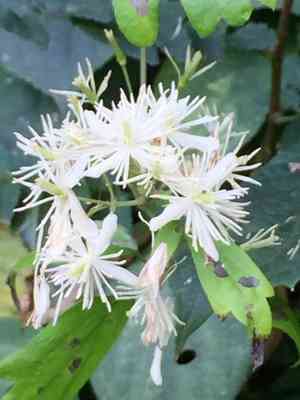
Virgin’s bower (Clematis apiifolia)
Also known as: Clematis, Chinese Clematis
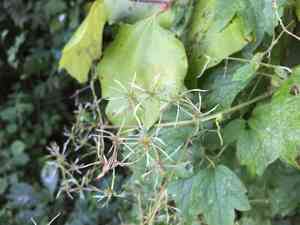
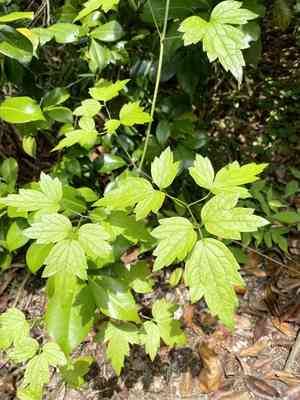
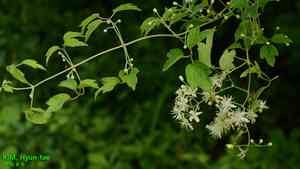
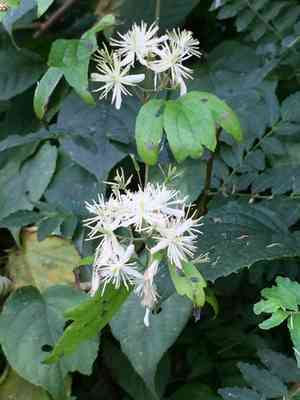
The vine typically grows to a length of 2 to 4 meters, with its stem base becoming woody over time. Its leaves are arranged in groups of three, featuring long petioles. Each leaflet measures between 3 to 6 cm in length, is oval-shaped with pointed tips, and has irregularly serrated edges. Blooming occurs from summer to fall, producing clusters of white flowers, each about 1.5 to 2 cm in diameter. These flowers lack true petals; instead, what appear to be petals are actually sepals, which are oblong and bear short hairs on their exterior. After flowering, the style elongates and resembles a feather. The vine produces egg-shaped fruits.
In This Article
Attributes of Virgin’s bower
Lifespan
Perennial
Plant Type
Vine
Plant Height
5 m
Spread
5 m
Leaf Color
Green
Flower Size
1.5 cm
Flower Color
White Cream
Images of Virgin’s bower
Quickly Identify Virgin’s bower
1
Clematis apiifolia can be identified by its pinnate leaves, which resemble parsley (hence the species name apiifolia) and small, star-shaped white flowers that bloom in clusters.
Scientific Classification of Virgin’s bower
Phylum
Vascular plants
Class
Dicotyledons
Order
Ranunculales
Family
Buttercup
Genus
Clematis
Species
Virgin’s bower
Planting and Growing of Virgin’s bower
Care Difficulty
Easy
Watering Schedule
Every 8 days
Sunlight Requirements
Full sun
Sunshine Duration
6-10 hours
Ideal Temperature
64-77℉
Soil Type
Potting Mix, Peat Mix
Soil pH
6-7.5
Fertilizer Type
Balanced
Pruning Season
Spring, Summer
Pruning Area
Branches, Leaves
Pruning Frequency
2 times a year
Repotting Season
Spring
Pot Type
Plastic, Ceramic
 How to Water Virgin’s bower?
Clematis apiifolia thrives with watering that mimics gentle rain. You should aim for about 500 ml per session, enough to keep the soil moist but not waterlogged. Think of it like quenching a thirst, not drowning. Ensure water thoroughly penetrates the root ball and seeps out of the drainage holes, indicating proper saturation.
What are the symptoms of an underwatered Virgin’s bower?
›
What should I do if my Virgin’s bower is not getting enough water?
›
What are the symptoms of an overwatered Virgin’s bower?
›
How to save an overwatered Virgin’s bower?
›
 What Are the Sunlight Requirements for Virgin’s bower?
Clematis apiifolia thrives in an environment with full sun and partial sun exposure. Ideal lighting contributes to increased blooming potential and ensures rich, vibrant leaf coloration.
More About Sunlight Requirements Techniques→
What is the best location outdoors for Clematis apiifolia?
›
How can indirect sunlight benefit Clematis apiifolia?
›
What role does climate play in positioning Clematis apiifolia for optimal light?
›
 What Is the Ideal Temperature Range for Virgin’s bower?
Clematis apiifolia thrives best within a temperature range of 64 to 77 degrees Fahrenheit. This ideal range supports robust growth and flowering, ensuring that the plant remains healthy and aesthetically pleasing. Maintaining this range helps maximize photosynthesis and nutrient uptake, promoting strong stem development and abundant blooms.
 What Soil is Best for Virgin’s bower?
Clematis apiifolia thrives in well-draining soils that prevent waterlogging, which can lead to root rot. Proper drainage ensures that the roots get the right amount of moisture and air, providing a healthier environment for growth. This plant prefers soils with moderate fertility. A moderate level of nutrients supports robust growth and abundant flowering, without promoting excessive leafy development at the expense of blooms. While well-draining, the soil should also retain moderate moisture to keep the Clematis hydrated between watering sessions. This balance helps maintain the plant's vigor and flowering capabilities.
 How to Fertilize Virgin’s bower?
For Clematis apiifolia, it is important to apply the right amount of fertilizer to avoid stressing the plant. When using liquid fertilizer, dilute it to half the recommended strength on the product label for houseplants. For solid fertilizer, apply about 2 ounces (approximately 56 grams) around the base, ensuring it is evenly spread.
 How to Prune Virgin’s bower?
Start by removing dead or damaged stems to promote healthy growth. Using clean, sharp pruners, trim back weak or overcrowded shoots to encourage branching and fuller growth. Aim for a pleasing, balanced shape by selectively pruning stems to the desired height and encouraging an open structure that allows light and air penetration. Ensure your cuts are just above a pair of strong, healthy buds.
 How to Propagate Virgin’s bower plant?
1
Clematis apiifolia seeds should be collected and stored in a cool, dry place before planting. To increase germination rates, consider stratifying seeds by placing them in the refrigerator for 4-6 weeks before sowing.
2
Select healthy, non-flowering stems. Cut sections of about 6 inches long, ensuring nodes are present. Dip the base of the cutting into rooting hormone to promote root growth before placing it into a pot with a well-draining medium.
3
Choose a flexible branch on the mother plant and bend it towards the ground. Make a slight wound on the branch where it touches the soil, then secure it with a peg or stone. Cover the wounded area with soil and keep it moist to encourage rooting.
 How to Repot Virgin’s bower plant?
1
Repot Clematis apiifolia when you notice roots protruding from the drainage holes or the plant seeming stunted. Typically, these signs indicate that the plant is root-bound. Spring or early autumn, when the plant is not actively flowering, is the ideal time for repotting, ensuring a stress-free transition.
2
Select a pot that is one to two sizes larger than the current one with ample drainage holes. A larger pot provides additional space for the roots to expand, promoting healthier growth. Terra cotta or ceramic pots enhance drainage and temperature regulation, making them excellent choices.
3
Opt for a well-draining loamy soil to prevent waterlogging, which can harm the plant’s roots. Incorporate organic matter, like compost, to improve soil fertility. This provides the Clematis with essential nutrients, ensuring vibrant growth and prolific flowering.
Toxicity
None
WARNING
The judgment on toxicity and danger is for reference only. We DO NOT GUARANTEE any accuracy of such judgment. Therefore, you SHALL NOT rely on such judgment. It is IMPORTANT TO SEEK PROFESSIONAL ADVICE in advance when necessary.
Learn More About Virgin’s bower Diseases
Anthracnose
Bacterial Leaf Spot
Bacterial Wilt
Black Spot
Chemical Injury
Crown Gall
Damping-off
Downy Mildew
Drought Stress
Fusarium Wilt
Gray Mold
Leaf Curl
Leaf Spot
Mosaic
Nutrient Deficiency
Nutrient Toxicity
Powdery Mildew
Root Rot
Root-knot Nematode
Rusts
Sooty Mold
Spider Mites
Temperature Stress
Thrips Damage
White Mold



