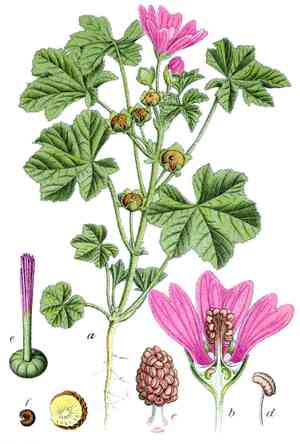
Purple poppy mallow (Callirhoe involucrata)
Also known as: Finger poppy mallow, Buffalo rose, Prairie poppy mallow
The plant you're referring to is likely the Purple Poppy Mallow (*Callirhoe involucrata*), also known as "Winecup." This plant thrives in direct sunlight and prefers dry to moderately dry soil conditions. It is popular in flower gardens due to its striking magenta flowers. Additionally, its taproot can be eaten by humans and is sometimes used as emergency food by those who are lost in the wilderness.
In This Article
Attributes of Purple poppy mallow
Lifespan
Perennial
Plant Type
Herb
Plant Height
15 cm to 30 cm
Spread
15 cm to 90 cm
Leaf Color
Green
Flower Size
2.5 cm to 8 cm
Flower Color
Pink Purple Red
Images of Purple poppy mallow
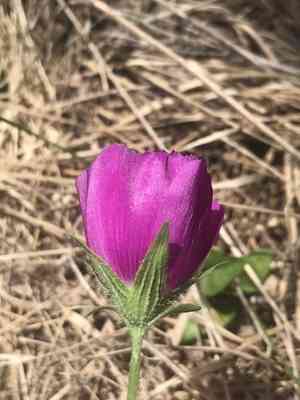
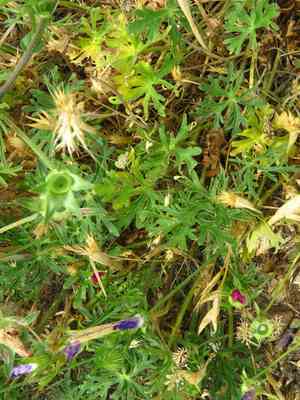
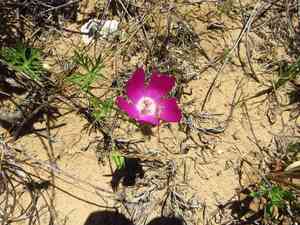
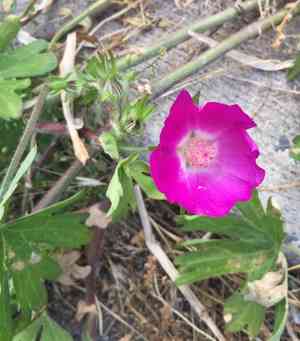
Quickly Identify Purple poppy mallow
1
Low-growing habit, spreading to form mats
2
Deeply lobed leaves; vibrant purple cup-shaped flowers
3
Distinctive reniform, flattened schizocarp fruit with short, hairy beaks
4
Orbicular leaves with palmate lobes and coarse teeth
5
Light green to reddish-purple angular stem with spreading white hairs
Scientific Classification of Purple poppy mallow
Phylum
Vascular plants
Class
Dicotyledons
Order
Mallows, rock-roses, and allies
Family
Mallow
Genus
Poppy mallows
Species
Purple poppy mallow
Planting and Growing of Purple poppy mallow
Care Difficulty
Easy
Watering Schedule
Every 2 days
Sunlight Requirements
Full sun
Sunshine Duration
6-10 hours
Ideal Temperature
60-75℉
Soil Type
Potting Mix, Peat Mix
Soil pH
6.5-7.5
Fertilizer Type
Balanced
Pruning Season
Spring, Summer
Pruning Area
Branches, Leaves
Pruning Frequency
2 times a year
Repotting Season
Spring
Pot Type
Plastic, Ceramic
 How to Water Purple poppy mallow?
The ideal watering amount for Callirhoe involucrata is around 500 milliliters per session. It is important to water until the soil is moist, but not waterlogged. The goal is to reach the plant's roots without leaving standing water.
What are the symptoms of an underwatered Purple poppy mallow?
›
What should I do if my Purple poppy mallow is not getting enough water?
›
What are the symptoms of an overwatered Purple poppy mallow?
›
How to save an overwatered Purple poppy mallow?
›
 What Are the Sunlight Requirements for Purple poppy mallow?
Callirhoe involucrata thrives in conditions with full sun to partial sun exposure. Ideal light conditions support vigorous growth, ample flowering, and strong plant health, essential for its ornamental appeal.
More About Sunlight Requirements Techniques→
How much sunlight does Callirhoe involucrata need?
›
What are the best strategies to achieve ideal sunlight for this plant?
›
What benefits does Callirhoe involucrata gain from ideal sunlight?
›
 What Is the Ideal Temperature Range for Purple poppy mallow?
The ideal temperature range for Callirhoe involucrata is between 60°F and 75°F. This range provides the plant with adequate warmth while avoiding excessive heat, which can stress the plant. This temperature range encourages healthy growth, vibrant blooms, and overall vitality.
 What Soil is Best for Purple poppy mallow?
Callirhoe involucrata thrives in well-drained soils that prevent water retention and promote root health. Such soils reduce the risks of root rot and provide a stable foundation for growth by ensuring that excess water does not suffocate the roots. This plant prefers soils with moderate nutrient amounts, sufficient to support its growth without promoting excessive foliage that may overshadow flowers. Balanced nutrients aid in developing vibrant blooms and robust stems. Optimal growth occurs in slightly acidic to neutral pH levels (6.5 to 7.5), which facilitate nutrient absorption. This pH range encourages the health of soil microbes and enhances nutrient availability, crucial for the plant’s vitality.
 How to Fertilize Purple poppy mallow?
Callirhoe involucrata, commonly known as purple poppy mallow, thrives with a moderate amount of nutrients. For liquid fertilizers, apply at a half-strength solution, around half a teaspoon per gallon of water, monthly during the growing season. Solid fertilizers, such as a balanced slow-release formula, can be applied at a rate of one tablespoon per square foot. Follow these guidelines to avoid under or over-nourishing your plant.
 How to Prune Purple poppy mallow?
After the initial bloom, remove spent flowers to encourage new blooms. Cut back individual flower stems to the main stem; this supports continuous flowering and prevents seed formation. Prune back any overgrown or leggy parts to maintain the plant’s shape. This practice encourages denser growth and helps the plant to expand healthily without overtaking nearby plants.
More About Pruning Techniques→
 How to Propagate Purple poppy mallow plant?
1
Sow the seeds into a prepared seed tray filled with well-draining soil. Ensure the seeds are evenly spaced to prevent overcrowding. Lightly cover them with soil and mist gently with water.
2
Select healthy stems from the donor plant and use sharp pruners to cut 3-4 inch long segments. Remove any leaves near the base to reduce moisture loss before planting in a moist medium.
3
Carefully unearth a section of plant roots. Cut them into 2-3 inch sections and place them horizontally in a tray with well-draining soil, ensuring good soil contact.
 How to Repot Purple poppy mallow plant?
1
Callirhoe involucrata usually signals its need for repotting when it becomes root-bound, showing roots through drainage holes or stunted growth. The best time is either spring or summer when the plant is actively growing, allowing it to establish in its new pot quickly.
2
Select a pot that is one size larger than the current one. Ensure it has drainage holes, which help prevent waterlogging and root rot. A slightly bigger pot allows space for root expansion, supporting healthier growth.
3
Use a well-draining sandy loam that retains some moisture but prevents water from collecting at the roots. This type of soil promotes healthy root development, allowing the plant to access nutrients efficiently while preventing root rot.
Learn More About Purple poppy mallow Diseases
Anthracnose
Bacterial Leaf Spot
Bacterial Wilt
Chemical Injury
Crown Gall
Cyst Nematode
Damping-off
Downy Mildew
Drought Stress
Fusarium Wilt
Gray Mold
Leaf Spot
Mosaic
Nutrient Deficiency
Nutrient Toxicity
Powdery Mildew
Root Rot
Root-knot Nematode
Rusts
Sooty Mold
Spider Mites
Temperature Stress
Thrips Damage
White Mold



