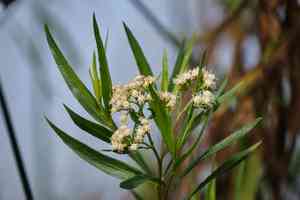
Mule fat(Baccharis salicifolia)

Mule fat (Baccharis salicifolia)

Also known as: Mule's fat, Seepwillow baccharis, Seep-willow

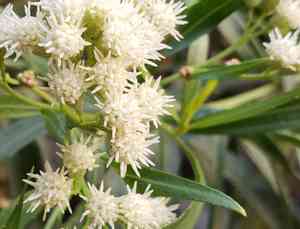
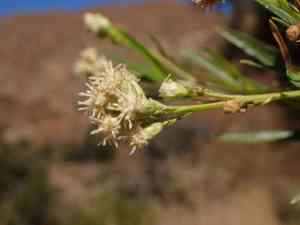
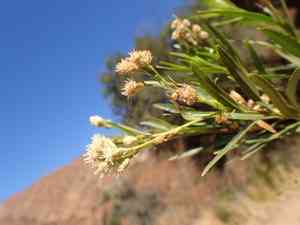
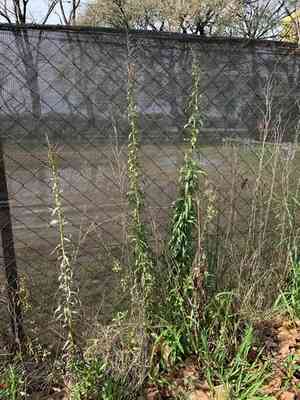
Mule fat (Baccharis salicifolia) is a perennial shrub indigenous to the southwestern United States and northern Mexico. It typically reaches heights of 3 to 10 feet and features narrow, lance-shaped leaves that can be sticky. The plant is known for its clusters of small, white to yellowish flowers, which bloom from spring through fall.

**Characteristics:**
- **Leaves:** Narrow, lance-shaped, and often resinous.
- **Flowers:** Small, white to yellowish, grouped in clusters.
- **Growth Form:** Multi-stemmed shrub, typically 3-10 feet tall.

**Habitat Requirements:**
- **Soil:** Prefers well-drained sandy or loamy soils.
- **Water:** Commonly found near rivers, streams, and wetlands; requires a consistent moisture source.
- **Light:** Grows best in full sun to partial shade.
- **Climate:** Adaptable to both drought and seasonal flooding, suitable for Mediterranean and desert environments.

Mule fat is frequently utilized in ecological restoration efforts due to its soil-stabilizing properties and its role in providing habitat for various wildlife species.

Attributes of Mule fat

Lifespan
Perennial
Plant Type
Shrub
Plant Height
30 cm to 4 m
Spread
1.2 m to 2.5 m
Leaf Color
Green
Flower Size
2.5 cm
Flower Color
White Pink Yellow Green Red

ForwardPlant - Identify plants with a snap

Identify and diagnose plants, get toxicity alerts, and explore safety guides for all types of fungi.

Try for Free

Images of Mule fat

Mule fat(Baccharis salicifolia)

Quickly Identify Mule fat

1
Baccharis salicifolia can be identified by its sticky, lance-shaped leaves and small white to yellow flowers clustered at the branch ends. The leaves are typically narrow and resemble those of willow trees.

Scientific Classification of Mule fat

Phylum
Vascular plants
Class
Dicotyledons
Order
Asterales
Family
Daisy
Genus
Baccharises
Species
Mule fat

Planting and Growing of Mule fat

Care Difficulty
Easy
Watering Schedule
Every 3 days
Sunlight Requirements
Full sun
Sunshine Duration
4-8 hours
Ideal Temperature
68-77℉
Soil Type
Potting Mix, Peat Mix
Soil pH
6.5-7.5
Fertilizer Type
Balanced
Pruning Season
Spring, Summer
Pruning Area
Branches, Leaves
Pruning Frequency
2 times a year
Repotting Season
Spring
Pot Type
Plastic, Terracotta

water icon How to Water Mule fat?

For Baccharis salicifolia, the goal is to keep the soil moist but not soggy. Water approximately 250 ml until the water begins to show at the bottom of the container, signaling thorough saturation without waterlogging.
What are the symptoms of an underwatered Mule fat?
What should I do if my Mule fat is not getting enough water?
What are the symptoms of an overwatered Mule fat?
How to save an overwatered Mule fat?

sunlight icon What Are the Sunlight Requirements for Mule fat?

Sunlight Requirements: Full sun, Partial sun
Duration of light: Six to eight hours
Baccharis salicifolia flourishes under full to partial sun. Ideal lighting fosters healthy leaf color and vigor, maximizing photosynthesis required for overall growth and resilience.
Optimal Duration
Morning Sun Preference
Filtered Afternoon Sunlight
More About Sunlight Requirements Techniques

temperature icon What Is the Ideal Temperature Range for Mule fat?

Ideal Temperature: 68 ~ 77℉
For optimal growth, Baccharis salicifolia thrives in temperatures ranging from 68°F to 77°F. Maintaining this temperature range will ensure that the plant can photosynthesize efficiently and grow robustly. This range is conducive to the plant's metabolic processes and prevents the risk of thermal stress, promoting lush foliage and healthy development.

soil icon What Soil is Best for Mule fat?

Soil type: Sandy loam, Loam, Sandy soil
Soil PH: 6.5 ~ 7.5
Baccharis salicifolia thrives in soil with excellent drainage. It helps prevent root rot and maintains the necessary oxygen levels for the plant roots, promoting healthy growth and vibrant foliage. This plant prefers soils of moderate fertility, which ensures it gets enough nutrients without overwhelming its system. Balanced nutrient availability supports its flowering and resilience to pests. Ensuring the soil is well-aerated prevents compaction, allowing roots to grow and expand effectively. Aeration also facilitates proper moisture absorption and gas exchange.

fertilize icon How to Fertilize Mule fat?

Fertilizer type: Balanced
For Baccharis salicifolia, use a balanced fertilizer with an N-P-K ratio such as 10-10-10. Apply 1 tablespoon of liquid fertilizer per gallon of water or 2 tablespoons of slow-release granules around the base of the plant.

prune icon How to Prune Mule fat?

Pruning Time: Spring, Summer, Autumn
Begin by identifying dead, diseased, or crossing branches that need removal. Holding the shears at a slight angle, make clean cuts just above a node or branch junction. Prune selectively to shape the plant and encourage denser growth. Focus on trimming back longer branches to balance the overall appearance, aiming for a natural shape that complements your landscape. More About Pruning Techniques

propagate icon How to Propagate Mule fat plant?

Propagate Time: Spring,Early spring,Late spring
1
Start with a high-quality potting mix with good drainage. A mix specifically for seed starting is ideal, as it is lightweight and allows proper air circulation. Fill the seed tray or pots with the prepared soil.
2
Gently place the seeds on the soil surface, ensuring they have enough space between them to grow. Cover with a thin layer of soil or vermiculite, just enough to protect the seeds while allowing light to reach them for germination.
3
Select a healthy stem from the parent plant and make a clean cut at an angle. Remove any leaves from the lower part of the cutting. Dip the cut end in rooting hormone to increase the success rate of root development.
More About Propagating Techniques

repot icon How to Repot Mule fat plant?

Repotting frequency: Every 1-2 years
1
Keep an eye on Baccharis salicifolia as it outgrows its pot when roots start poking through drainage holes. This robust signal tells you it's time to repot, typically every 1-2 years, particularly in spring or summer when growth is active.
2
Choose a pot that's one size bigger than the current one, with drainage holes. A larger size provides ample space for root growth and ensures good drainage, preventing root rot, which is crucial for maintaining a healthy Baccharis salicifolia.
3
Opt for a well-draining soil mix, like cactus mix or a sandy loam. This allows excess water to drain away, reducing the risk of waterlogging and root rot. The airy texture also aids in providing oxygen to the roots, promoting vigorous growth.

ForwardPlant - Identify plants with a snap

Find the best spots for them to optimize their health, simply using your phone.

Try for Free