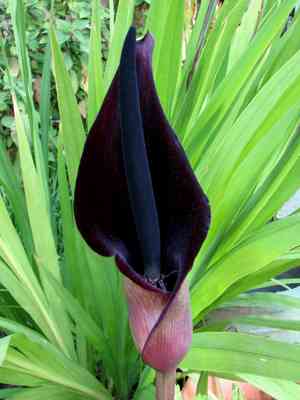
Arum lilies (Arum) (Arum)
Also known as: Jack-in-the-pulpit, Lords-and-ladies, Cuckoo-pint
Calla lilies (Zantedeschia spp.) are herbaceous perennials celebrated for their elaborate flower shapes, making them a favored choice for garden ornamentation. Interestingly, male flowers can trap insects temporarily to facilitate pollen transfer. It's important to note that all parts of these plants are toxic due to the presence of calcium oxalate crystals.
In This Article
Attributes of Arum lilies (Arum)
Lifespan
Perennial
Plant Height
30-60 cm
Spread
Not applicable (herbaceous plant)
Leaf Color
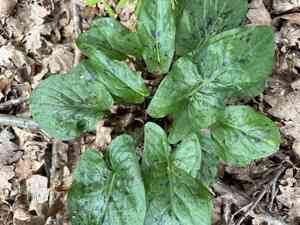
Green with possible patterns of dark spots or markings
Flower Size
5-10 cm (spathe)
Flower Color
Green, white, purple, or yellow (spathe)
Images of Arum lilies (Arum)
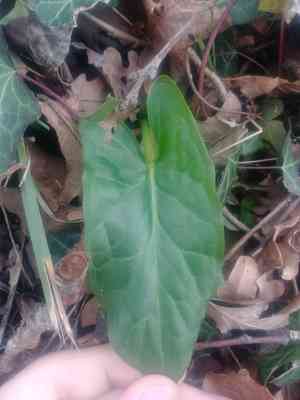
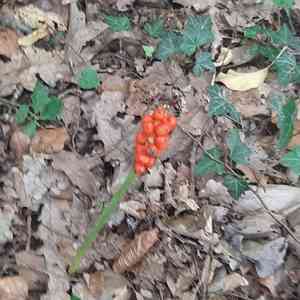
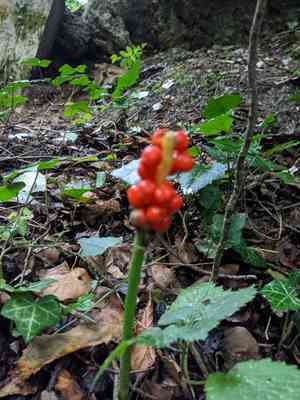
Quickly Identify Arum lilies (Arum)
1
Arum plants can be identified by their unique inflorescence, which consists of a spadix surrounded by a spathe. The leaves are usually arrow-shaped with varying patterns of spots or markings.
Scientific Classification of Arum lilies (Arum)
Phylum
Magnoliophyta
Class
Liliopsida
Order
Alismatales
Family
Araceae
Genus
Arum
Planting and Growing of Arum lilies (Arum)
Care Difficulty
Moderate
Watering Schedule
Every 2 days
Sunlight Requirements
Partial sun
Sunshine Duration
4-6 hours
Ideal Temperature
65-75℉
Soil Type
Potting Mix, Peat Mix
Soil pH
6.5-7.5
Fertilizer Type
Balanced
Pruning Season
Spring, Summer
Pruning Area
Branches, Leaves
Pruning Frequency
2 times a year
Repotting Season
Spring
Pot Type
Plastic, Ceramic
 How to Water Arum lilies (Arum)?
The Arum plant loves moderately moist conditions, so be sure that each watering saturates the soil without causing water to pool on the surface. Aim for about 250ml per watering session, ensuring the water soaks through thoroughly but does not drench the entire pot.
What are the symptoms of an underwatered Arum lilies (Arum)?
›
What should I do if my Arum lilies (Arum) is not getting enough water?
›
What are the symptoms of an overwatered Arum lilies (Arum)?
›
How to save an overwatered Arum lilies (Arum)?
›
 What Are the Sunlight Requirements for Arum lilies (Arum)?
Arum thrives in environments that provide partial sun or full shade. Ideal light ensures healthy leaf growth and minimizes the risk of dehydration or sunburn.
What is the best location for Arum?
›
How can I simulate ideal light indoors?
›
Why is achieving ideal light important for Arum?
›
 What Is the Ideal Temperature Range for Arum lilies (Arum)?
Arum plants thrive best in a temperature range of 65°F to 75°F. This range ensures optimal metabolic and physiological processes, promoting healthy growth and vibrant foliage.
 What Soil is Best for Arum lilies (Arum)?
Arum thrives in well-drained soil that prevents waterlogging, which can be detrimental to its roots. This requirement ensures sufficient aeration and promotes healthy root development, preventing root rot. While Arum prefers well-drained conditions, it also requires soils that can retain moisture. This balanced moisture retention helps in sustaining the plant during dry spells and ensures consistent growth. Arum needs soil rich in organic matter to provide essential nutrients for its growth. The presence of organic matter enhances soil fertility and supports robust foliage and flower production.
 How to Fertilize Arum lilies (Arum)?
For Arum plants, the fertilizer amount should be modest. When using liquid fertilizers, mix approximately 10-15 ml per liter of water. For slow-release fertilizers, apply according to the package instructions, typically around 20 grams per plant for granules. The goal is to provide a balanced diet without overwhelming the plant.
 How to Prune Arum lilies (Arum)?
Begin by sanitizing your pruning shears to prevent the spread of disease. Start pruning at the base of the plant, removing any dead or damaged leaves. Cut back any overly long stems to promote a bushier appearance. Aim to trim just above the node to encourage new growth. Always take a step back to assess the plant's shape and maintain symmetry as you prune. It's best to prune these plants in well-ventilated areas to avoid the buildup of any strong sap odors.
 How to Propagate Arum lilies (Arum) plant?
1
Start by soaking Arum seeds in warm water for 24 hours to soften their outer coating, enhancing germination rates. Once soaked, place them in a well-draining seed starting mix.
2
Plant the seeds at a shallow depth in a seed germination tray and cover lightly with soil. Maintain a warm and humid environment to encourage germination.
3
Carefully lift the plant from the ground using a garden trowel, ensuring minimal root damage. Divide the tubers with a sharp knife, ensuring each segment has a portion of the root and a growing point.
 How to Repot Arum lilies (Arum) plant?
1
Arum generally needs repotting when roots start emerging out of the drainage holes or when growth seems stunted. Spring and summer are ideal seasons to repot, allowing the plant to settle in and develop roots in the warm growing seasons.
2
Select a pot that is one size larger than the current one, with sufficient drainage holes to prevent waterlogging. Using a pot that's slightly bigger promotes better growth without overwhelming the roots, helping maintain adequate moisture levels.
3
Use a well-draining potting mix enriched with organic matter. Such soil accommodates the Arum's need for moisture while preventing root rot, providing an ideal balance that fosters robust growth.
Toxicity
Ingestion, Contact with sap
WARNING
The judgment on toxicity and danger is for reference only. We DO NOT GUARANTEE any accuracy of such judgment. Therefore, you SHALL NOT rely on such judgment. It is IMPORTANT TO SEEK PROFESSIONAL ADVICE in advance when necessary.
Learn More About Arum lilies (Arum) Diseases
Anthracnose
Bacterial Leaf Spot
Bacterial Soft Rot
Bacterial Wilt
Chemical Injury
Damping-off
Downy Mildew
Drought Stress
Fusarium Wilt
Gray Mold
Leaf Spot
Mosaic
Nutrient Deficiency
Nutrient Toxicity
Powdery Mildew
Root Rot
Root-knot Nematode
Sooty Mold
Spider Mites
Temperature Stress
Thrips Damage
White Mold

