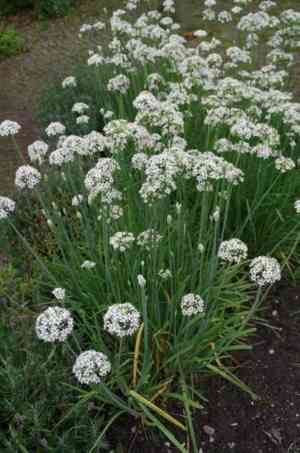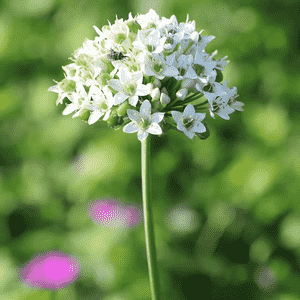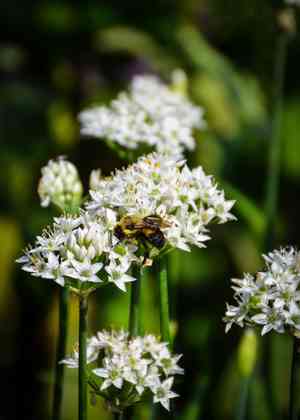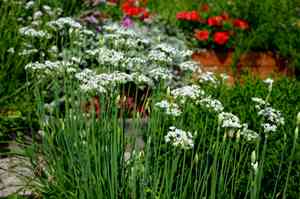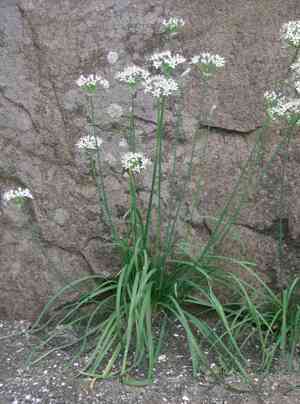
Garlic chives(Allium tuberosum)

Garlic chives (Allium tuberosum)

Also known as: Wild Leek, Oriental garlic, Chinese leek

Garlic chives are versatile plants that serve both ornamental and culinary purposes. They can be grown for their attractive appearance or harvested for use in cooking, either fresh or dried. In recipes, garlic chives often replace garlic or onion to enhance flavor.

Attributes of Garlic chives

Lifespan
Perennial
Plant Type
Herb
Plant Height
40 cm
Spread
30 cm
Leaf Color
Green
Flower Size
2.5 cm
Flower Color
White

ForwardPlant - Identify plants with a snap

Identify and diagnose plants, get toxicity alerts, and explore safety guides for all types of fungi.

Try for Free

Images of Garlic chives

Garlic chives(Allium tuberosum)

Quickly Identify Garlic chives

1
Cream-colored flowers in umbels atop slender stalks, reaching 12-18 inches (30-45 cm).
2
Star-shaped white flowers with delicate petals clustered in 2-3 inch (5-7 cm) umbels.
3
Onion-like fragrance, flat lance-shaped green leaves forming tight basal rosette up to 12 inches (30 cm) long.
4
Capsule fruit shifts from dark green to beige, housing ovate black seeds (0.16 x 0.12 inches or 4 x 3 mm).
5
Round, hollow, smooth stem, 1-2 feet (30-60 cm) tall, vibrant green color, unbranched with tubular structure.

Scientific Classification of Garlic chives

Phylum
Vascular plants
Class
Monocotyledons
Order
Asparagus and allies
Family
Amaryllis
Genus
Onions
Species
Garlic chives

Planting and Growing of Garlic chives

Care Difficulty
Easy
Watering Schedule
Every 4 days
Sunlight Requirements
Full sun
Sunshine Duration
4-8 hours
Ideal Temperature
60-77℉
Soil Type
Potting Mix, Peat Mix
Soil pH
6.5-7.5
Fertilizer Type
Balanced
Pruning Season
Spring, Summer
Pruning Area
Branches, Leaves
Pruning Frequency
2 times a year
Repotting Season
Spring
Pot Type
Plastic, Ceramic

water icon How to Water Garlic chives?

Allium tuberosum prefers well-draining soil that retains some moisture without becoming waterlogged. Aim to water the soil so it is consistently moist but not soggy. A good rule of thumb is to water until you see a slight runoff from the pot's drainage holes, indicating the water has reached the root zone.
What are the symptoms of an underwatered Garlic chives?
What should I do if my Garlic chives is not getting enough water?
What are the symptoms of an overwatered Garlic chives?
How to save an overwatered Garlic chives?

sunlight icon What Are the Sunlight Requirements for Garlic chives?

Sunlight Requirements: Full sun, Partial sun
Duration of light: 6 to 8 hours daily
Allium tuberosum benefits from full sun to partial sun, thriving with 6 to 8 hours of sunlight. Ideal light conditions support healthy leaf color, robust growth, and optimal flowering cycles.
Optimal Sun Exposure
Adjust for Seasonal Changes
Manage Light Indoors
More About Sunlight Requirements Techniques

temperature icon What Is the Ideal Temperature Range for Garlic chives?

Ideal Temperature: 60 ~ 77℉
The ideal temperature range for growing Allium tuberosum, commonly known as garlic chives, is between 60°F and 77°F. Within this range, the plant can efficiently photosynthesize, take up nutrients from the soil, and maintain optimal metabolic activities. It is crucial to keep temperatures within this range to promote healthy growth, lush foliage, and abundant flowering. Maintaining these conditions can lead to the best flavor and overall plant development.

soil icon What Soil is Best for Garlic chives?

Soil type: Sandy loam, Loam
Soil PH: 6.5 ~ 7.5
Allium tuberosum thrives in well-draining soil, preventing root rot and other moisture-related issues. This is crucial for optimal growth as it allows roots to breathe while providing the necessary nutrients without waterlogging. Chives benefit from soil rich in organic matter as it provides essential nutrients for lush growth and vibrant flavor. Incorporating compost or well-rotted manure can greatly enhance soil fertility. Maintaining moderately moist soil ensures Allium tuberosum doesn't dry out or get overly soggy. Consistent moisture helps the plant develop healthy roots and produce abundant leaves, ideal for culinary uses.

fertilize icon How to Fertilize Garlic chives?

Fertilizer type: Balanced
For Allium tuberosum, a moderate amount of fertilizer is ideal. Typically, you should use about 1/4 cup of balanced 10-10-10 fertilizer per 10 square feet. Ensure it is evenly distributed to avoid concentration in one area, which can harm the plant.

prune icon How to Prune Garlic chives?

Pruning Time: Spring, Summer, Autumn
Begin by gathering necessary tools such as clean, sharp scissors or pruning shears. Identify the flower stalks and remove these first, cutting them down to the base. This prevents seed formation, focusing the plant's energy on leaf growth. Trim back any dead or damaged leaves to maintain plant health. Regularly cutting leaves for culinary use acts as a functional form of pruning, additionally driving vigorous regrowth. More About Pruning Techniques

propagate icon How to Propagate Garlic chives plant?

Propagate Time: Spring, Late spring, Early spring
1
Start by sowing Allium tuberosum seeds in a seed tray filled with a well-draining seed mix. Lightly cover the seeds with soil and water gently. Keep the tray in a warm, sunny location.
2
For division propagation, dig up mature Allium tuberosum plants in early spring. Carefully separate the clumps ensuring each division has roots attached. Replant the divisions promptly.
3
Once seedlings have developed a few leaves, transplant them into the garden or larger pots. Space each plant about 6 inches apart to allow for growth. Water the soil thoroughly after planting.
More About Propagating Techniques

repot icon How to Repot Garlic chives plant?

Repotting frequency: Every 1-2 years
1
Allium tuberosum signals it needs repotting when you observe crowded roots or stunted growth. During active growth in spring or early summer, these signs become more evident, indicating it’s time to give your chives more room to thrive.
2
Select a pot that's about 2 inches larger in diameter than the current one. A pot with good drainage holes is ideal to prevent waterlogging, promoting healthier root systems and preventing root rot, which is vital for robust plant growth.
3
Opt for a well-draining, loamy mix that retains sufficient moisture but allows excess water to escape. This type of soil ensures that chives have consistent access to water and nutrients, supporting lush greenery and vigorous growth.

ForwardPlant - Identify plants with a snap

Find the best spots for them to optimize their health, simply using your phone.

Try for Free

Toxicity of Garlic chives

Is Garlic chives toxic to cat?

Garlic chives are a harmful plant that presents considerable risks to felines. Cats may suffer from poisoning if they accidentally ingest any segment of the plant, which encompasses its flowers, fruits, leaves, roots, tubers, seeds, or stems. Upon consumption, a cat might exhibit symptoms of physical distress or sickness. Therefore, it is vital for cat owners to remain attentive to their pets' engagement with garlic chives and to promptly pursue veterinary assistance if poisoning is suspected.

Is Garlic chives toxic to dog?

Garlic chives are recognized as a toxic plant for dogs. Canines may accidentally ingest various parts of garlic chives, resulting in poisoning. The whole plant, encompassing flowers, fruits, leaves, roots, tubers, seeds, and stems, presents a danger if swallowed by dogs. Following exposure to garlic chives, dogs may display symptoms such as digestive distress or more severe clinical manifestations based on the quantity consumed. It is essential for dog owners to supervise their pets and restrict their access to garlic chives. Should a dog consume any portion of garlic chives, it is vital to seek prompt veterinary assistance to secure the best possible outcome for the pet.

Identify toxic plants for your safety

Learn which plants are harmful to you and your pets, and make informed choices for a safer home!

Try for Free
WARNING
The judgment on toxicity and danger is for reference only. We DO NOT GUARANTEE any accuracy of such judgment. Therefore, you SHALL NOT rely on such judgment. It is IMPORTANT TO SEEK PROFESSIONAL ADVICE in advance when necessary.
More About Toxic Techniques