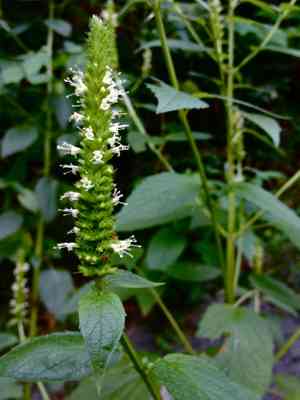
Yellow giant hyssop (Agastache nepetoides)
Also known as: Yellow Giant Hyssop
Yellow giant hyssop (Agastache nepetoides) is a tall and rapidly growing perennial within the mint family. Unlike many of its aromatic relatives, it lacks strong scent. Its bitter-tasting leaves make it unappealing to deer, providing natural resistance. This plant produces green-yellow flowers from summer to early fall, drawing in pollinators.
In This Article
Attributes of Yellow giant hyssop
Lifespan
Perennial
Plant Type
Herb, Shrub
Plant Height
1.2 m to 1.8 m
Spread
90 cm
Leaf Color
Green
Flower Size
6 mm
Flower Color
Yellow Green White
Images of Yellow giant hyssop
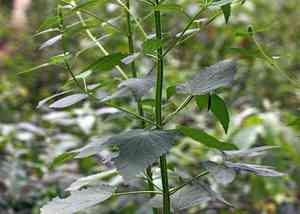
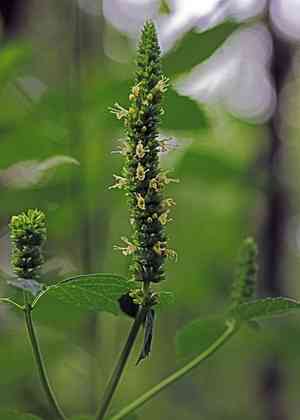
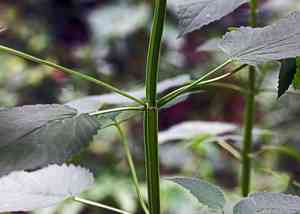
Quickly Identify Yellow giant hyssop
1
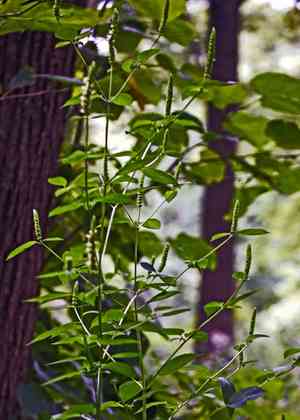
Yellow Giant Hyssop can be identified by its tall stature, reaching up to 7 feet in height, with square stems typical of the mint family. Its leaves are opposite, ovate, and have serrated edges. The yellow-green flowers are small, tubular, and arranged in dense, cylindrical spikes.
Scientific Classification of Yellow giant hyssop
Phylum
Vascular plants
Class
Dicotyledons
Order
Lamiales
Family
Mint
Genus
Giant hyssops
Species
Yellow giant hyssop
Planting and Growing of Yellow giant hyssop
Care Difficulty
Easy
Watering Schedule
Every 4 days
Sunlight Requirements
Full sun
Sunshine Duration
6-10 hours
Ideal Temperature
65-75℉
Soil Type
Potting Mix, Peat Mix
Soil pH
6.5-7.5
Fertilizer Type
Balanced
Pruning Season
Spring, Summer
Pruning Area
Branches, Leaves
Pruning Frequency
2 times a year
Repotting Season
Spring
Pot Type
Plastic, Ceramic
 How to Water Yellow giant hyssop?
For Agastache nepetoides, the watering amount should be enough to moisten the soil evenly but not to the point of waterlogging. This translates to approximately 250 milliliters per session, ensuring the soil remains just damp enough without being saturated, mimicking its native environment where the soil needs to drain well.
What are the symptoms of an underwatered Yellow giant hyssop?
›
What should I do if my Yellow giant hyssop is not getting enough water?
›
What are the symptoms of an overwatered Yellow giant hyssop?
›
How to save an overwatered Yellow giant hyssop?
›
 What Are the Sunlight Requirements for Yellow giant hyssop?
Agastache nepetoides thrives in full sun to partial sun. Ideal lighting promotes beautiful flowering and maintains its aromatic foliage, essential for attracting pollinators.
More About Sunlight Requirements Techniques→
What is the ideal light condition?
›
How to achieve ideal light conditions?
›
Benefits of achieving ideal lighting?
›
 What Is the Ideal Temperature Range for Yellow giant hyssop?
The ideal temperature range for Agastache nepetoides, commonly known as yellow giant hyssop, is between 65°F and 75°F. These temperatures allow the plant to thrive, promoting healthy growth and vibrant blooms. Maintaining this temperature range will ensure optimal photosynthesis and metabolism rates, enhancing the plant's overall health.
 What Soil is Best for Yellow giant hyssop?
Agastache nepetoides thrives in well-drained soil, preventing waterlogging and root rot. This condition helps ensure the plant maintains healthy roots and robust growth. This plant benefits from medium soil fertility, which provides adequate nutrients that support its flowering and foliage without overwhelming it with excess nutrition. Growth is optimal when soil pH is neutral to slightly alkaline. This range facilitates nutrient availability and absorption, enhancing overall plant health.
 How to Fertilize Yellow giant hyssop?
For Agastache nepetoides, use a balanced liquid fertilizer diluted to half-strength. Apply roughly 1/2 cup of the solution per plant, ensuring even distribution around the root zone to promote healthy growth without causing root burn.
 How to Prune Yellow giant hyssop?
Carefully inspect the plant for any dead or faded flowers. These should be removed by cutting just above the node where the flower stem meets a healthy leaf or stem to promote better growth. Agastache nepetoides benefits from trimming to maintain a neat shape. Aim to trim back about a third of the plant, focusing on stems that are growing out of bounds or disrupting the main form of the plant. In late autumn, perform a more significant cut back about a third of the overall height. This helps the plant prepare for winter dormancy and reduces the risk of damage from cold temperatures.
More About Pruning Techniques→
 How to Propagate Yellow giant hyssop plant?
1
Start by moistening your seed starting mix and fill the seed tray. Sow the Agastache nepetoides seeds lightly on the surface and cover them with a thin layer of soil, maintaining consistent moisture.
2
Select a healthy stem from the plant, and using pruning shears, make a cut just below a node. Remove any lower leaves to facilitate root growth and dip the cut end in rooting hormone.
3
For division propagation, gently dig up an established Agastache nepetoides plant, separating its root clumps into sections. Each section should have multiple roots, ensuring successful transplantation.
 How to Repot Yellow giant hyssop plant?
1
Agastache nepetoides typically needs repotting when you observe roots growing out of the drainage holes or its growth slows significantly. Early spring or after its blooming season are ideal times, ensuring minimal stress and maximizing recovery time.
2
Select a pot 2-3 inches larger in diameter than the current one, with ample drainage holes. This size encourages healthy root expansion without overwhelming the plant, and good drainage prevents root rot, a common issue with larger containers.
3
Opt for a well-draining potting mix, rich in organic matter. A blend with equal parts of garden loam, peat, and sand works well, enhancing aeration and drainage while ensuring the plant receives adequate nutrients, critical for thriving growth.



