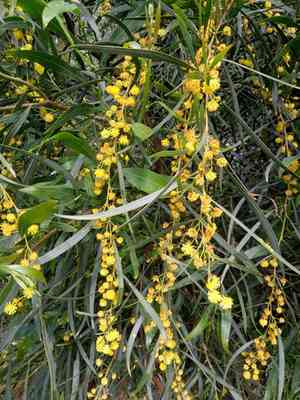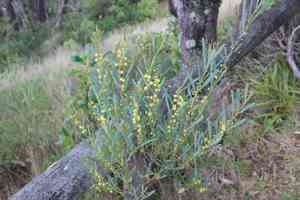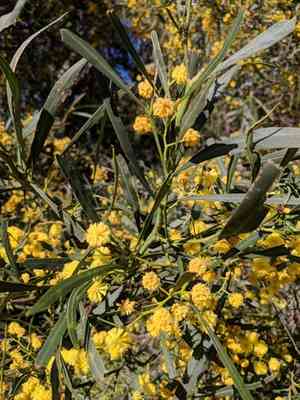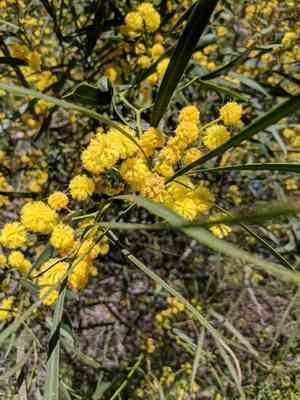
Water wattle(Acacia retinodes)

Water wattle (Acacia retinodes)

Also known as: Retinodes water wattle, Wirilda

Water wattle, an evergreen shrub indigenous to southern Australia, blooms intermittently year-round with clusters of small yellow flowers. This characteristic makes it a favored ornamental plant. It has also been honored with awards from the Royal Horticultural Society.

Attributes of Water wattle

Lifespan
Perennial
Plant Type
Tree, Shrub
Plant Height
6 m to 10 m
Spread
3 m to 4.5 m
Leaf Color
Green Gray
Flower Size
0.5-0.8 cm (0.2-0.3 inches)
Flower Color
Yellow

ForwardPlant - Identify plants with a snap

Identify and diagnose plants, get toxicity alerts, and explore safety guides for all types of fungi.

Try for Free

Images of Water wattle

Water wattle(Acacia retinodes)

Quickly Identify Water wattle

1
Look for light green to glaucous foliage with phyllodes instead of true leaves, which are long, narrow, and slightly curved. The yellow, spherical flower heads appear in clusters, giving a bright and fragrant display. Seed pods are long, narrow, and dark brown when mature.

Scientific Classification of Water wattle

Phylum
Vascular plants
Class
Dicotyledons
Order
Fabales
Family
Legume
Genus
Acacias
Species
Water wattle

Planting and Growing of Water wattle

Care Difficulty
Easy
Watering Schedule
Every 3 days
Sunlight Requirements
Full sun
Sunshine Duration
6-10 hours
Ideal Temperature
60-75℉
Soil Type
Potting Mix, Peat Mix
Soil pH
6.5-7.5
Fertilizer Type
Balanced
Pruning Season
Spring, Summer
Pruning Area
Branches, Leaves
Pruning Frequency
2 times a year
Repotting Season
Spring
Pot Type
Plastic, Terracotta

water icon How to Water Water wattle?

For Acacia retinodes, it's crucial to ensure the soil is thoroughly soaked but never waterlogged. Aim for around 500 ml per watering session. This volume allows the roots to absorb adequate moisture without drowning them. Always let the topsoil dry out before the next watering to prevent root rot.
What are the symptoms of an underwatered Water wattle?
What should I do if my Water wattle is not getting enough water?
What are the symptoms of an overwatered Water wattle?
How to save an overwatered Water wattle?
More About Watering Techniques

sunlight icon What Are the Sunlight Requirements for Water wattle?

Sunlight Requirements: Full sun, Partial sun
Duration of light: 6 to 8 hours daily
For optimal health, Acacia retinodes should receive full to partial sunlight, where 6 to 8 hours of sunlight daily helps it reach its full potential, ensures vibrant foliage, and prolific flowering.
How much light does Acacia retinodes need?
Solutions to achieve ideal lighting for Acacia retinodes
Benefits of ideal lighting for Acacia retinodes
More About Sunlight Requirements Techniques

temperature icon What Is the Ideal Temperature Range for Water wattle?

Ideal Temperature: 60 ~ 75℉
The ideal temperature range for Acacia retinodes, commonly known as the 'Evergreen Wattle,' is between 60°F and 75°F. These temperatures facilitate optimal growth and blooming. This range supports the plant's metabolic activities, enabling proper nutrient absorption and photosynthesis. Maintaining these conditions can help the plant thrive and reach its full potential.

soil icon What Soil is Best for Water wattle?

Soil type: Sandy soil, Loam, Clay soil
Soil PH: 6.5 ~ 7.5
Acacia retinodes thrives in well-drained soils which prevent waterlogging. This enhances root oxygenation and reduces the risk of root rot, crucial for healthy growth. Providing soil with moderate fertility helps in sustainable growth. Excessive nutrients can lead to weak growth, whereas too little will stunt the plant’s development. While drainage is important, soil that retains some moisture ensures the plant doesn't dry out. This balance supports vigorous growth and resilience to drought. More About Soil

fertilize icon How to Fertilize Water wattle?

Fertilizer type: Balanced
For Acacia retinodes, apply a balanced liquid fertilizer at half the recommended strength to prevent nutrient burn. During the growing season, the ideal quantity is roughly 1 fluid ounce (30 milliliters) per gallon of water. More About Fertilizing Techniques

prune icon How to Prune Water wattle?

Pruning Time: Spring, Summer, Autumn
Begin by assessing the overall shape of the tree and decide on the final look you want. Use sharp, clean pruning shears to make precise cuts. Remove any dead, damaged, or diseased branches first, cutting them back to the base to encourage healthy growth. Next, thin out the inner branches to allow light and air to penetrate the canopy, reducing the risk of disease. Shape the outer canopy to maintain a rounded, balanced form, cutting just above a leaf node to encourage new growth. More About Pruning Techniques

propagate icon How to Propagate Water wattle plant?

Propagate Time: Spring, Early spring
1
Before planting Acacia retinodes seeds, it is advisable to scarify them by gently sanding or nicking the seed coat. This process helps to break the seed dormancy and supports quicker germination by allowing moisture to penetrate.
2
Plant the prepared seeds in a well-draining soil mix, ideally a mixture containing sand or perlite. Sow them at a shallow depth and keep the soil consistently moist, but not waterlogged, to promote successful germination.
3
Select healthy semi-hardwood cuttings approximately 10-15 cm in length. Remove the lower leaves and dip the cut ends in rooting hormone. Plant them in a moist, sterile rooting medium to encourage rooting.
More About Propagating Techniques

repot icon How to Repot Water wattle plant?

Repotting frequency: Once every two years
1
You should consider repotting your Acacia retinodes when you notice roots growing out of the drainage holes, or when the plant's growth seems stunted. The best time to repot is during active growth seasons, such as spring or summer, when the plant can effectively recover from the stress of repotting.
2
Select a pot that is 2-3 inches larger in diameter than the current one. This size enables the roots to expand comfortably without overwhelming them with excessive soil that can retain unwanted moisture. The pot should have good drainage holes to prevent waterlogging, which can lead to root rot.
3
Choose a well-draining potting mix, preferably one formulated for cacti and succulents. A sandy or gritty texture is beneficial as it ensures excess water drains away quickly, preventing the roots from sitting in water, which is crucial to avoid diseases associated with damp soil.

ForwardPlant - Identify plants with a snap

Find the best spots for them to optimize their health, simply using your phone.

Try for Free

Toxicity of Water wattle

Is Water wattle toxic to humans?

Water wattle exhibits a moderate degree of toxicity in humans, chiefly when its leaves are ingested. Upon consumption, these leaves emit hydrogen cyanide, a highly toxic compound that disrupts the utilization of oxygen at the cellular level, resulting in significant health risks. Signs of poisoning may encompass respiratory difficulties, dizziness, headaches, confusion, and in extreme situations, could escalate to convulsions or coma. It is vital for individuals to steer clear of accidental consumption of water wattle leaves, despite their easy accessibility, in order to avert these harmful effects.

Is Water wattle toxic to cat?

Water wattle presents a moderate toxicity threat to felines. Cats might inadvertently consume parts of the plant, especially the leaves, resulting in poisoning. The key toxic agent responsible for this hazard is hydrogen cyanide. If ingested, a cat can suffer from various negative health effects that may signify physical discomfort or distress. To reduce the dangers tied to poisoning, it is crucial to observe your cat for any behavioral shifts that could indicate illness and to obtain prompt veterinary assistance if exposure is suspected.

Is Water wattle toxic to dog?

The plant species known as water wattle is regarded as possessing a moderate level of toxicity to dogs. If dogs accidentally consume this plant, which is a relatively common issue due to their naturally curious behavior and inclination to nibble on various plants, they can become poisoned. The most harmful part of water wattle is its leaves, which contain hydrogen cyanide, a highly toxic compound. After ingestion of any parts of water wattle, dogs may exhibit symptoms such as labored breathing, excessive panting, dilated pupils, and, in severe cases, potential collapse resulting from hydrogen cyanide toxicity. Therefore, it is crucial for dog owners to closely supervise their pets and restrict their access to water wattle to prevent any accidental consumption. Should a dog ingest this plant, seeking immediate veterinary care is essential for effective treatment.

Identify toxic plants for your safety

Learn which plants are harmful to you and your pets, and make informed choices for a safer home!

Try for Free
WARNING
The judgment on toxicity and danger is for reference only. We DO NOT GUARANTEE any accuracy of such judgment. Therefore, you SHALL NOT rely on such judgment. It is IMPORTANT TO SEEK PROFESSIONAL ADVICE in advance when necessary.
More About Toxic Techniques