How to Prune Green santolina?
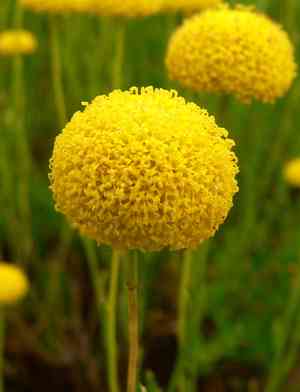
A robust evergreen bush, frequently identified by its silver-green leaves and fragrant foliage, green santolina flourishes with appropriate trimming. Ideally trimmed in late winter prior to the emergence of new shoots, pruning fosters a compact, bushy form and revitalizes mature specimens. Snip off the spent flower stalks and decrease the height by roughly one-third, concentrating on preserving the plant's inherent mounded structure. Consistent trimming not only improves its aesthetic but also promotes strong development and deters sparse growth.
Advantages of Trimming Green Santolina
Advantages of Trimming Green Santolina
Trimming green santolina promotes robust development and preserves its dense, spherical form. Regular cutting prevents excessive growth, encourages thicker leaves, and improves the plant's overall vitality and look.
Optimal Time for Trimming Green Santolina
Optimal Time for Trimming Green Santolina
Trimming green santolina during the winter season is ideal primarily because this timing aligns with the plantâs dormant phase. During dormancy, green santolina's growth and metabolic processes are minimal, reducing stress on the plant when cut. This period also precedes the early spring growth spurt, thereby encouraging strong regrowth and maintaining a compact, healthy structure. Additionally, the absence of leaves provides better visibility for making precise pruning cuts, which can help shape the plant effectively and remove any dead or diseased wood before new growth begins.
Tools Required for Trimming Green Santolina
Hand Pruners
These are perfect for trimming and shaping green santolina due to its small, woody stems. Hand pruners allow for accurate cuts that help maintain the plant's desired form.
Shears (Hedge Clippers)
Useful for giving green santolina a more defined shape, especially during its active growth season. Shears enable quick and uniform trimming of the dense foliage.
Pruning Saw
This tool is recommended for older, woodier stems of green santolina that may have become too thick for hand pruners. A pruning saw assists in removing thicker branches without harming other stems.
Steps to Trim Green Santolina
Identify
Identify and remove any withered leaves from green santolina by carefully plucking them off with your fingers or using sharp pruning shears. This helps to encourage healthy growth and maintain an attractive appearance.
Trim dead branches
Use clean, sharp shears to cut back dead branches on green santolina. Make cuts close to the living stem tissue without cutting into it, to prevent damage to the healthy parts of the plant.
Remove diseased branches
Examine green santolina for any branches that show signs of disease, such as unusual color or texture. Carefully remove these branches using sterilized pruning tools to prevent the spread of disease.
Reshape
After removing unwanted material, step back and assess the shape of green santolina. If necessary, lightly trim the remaining healthy branches to maintain a compact, rounded form, enhancing green santolina aesthetic and promoting dense foliage growth.
Cleanup
Collect all the removed material from around green santolina and dispose of it properly to prevent any potential re-infestation or disease. Clean your tools with a disinfectant to further prevent the spread of any pathogens.
Common Trimming Errors with Green Santolina
Overpruning
Removing too much foliage can weaken green santolina, as it relies on its leaves for photosynthesis and overall health.
Improper cutting technique
Cutting the stems of green santolina too close to the foliage can cause damage to the nodes, impairing new growth.
Neglecting tool maintenance
Using dull or dirty pruning tools can result in jagged cuts, which are more susceptible to diseases.
Ignoring plant shape
Not considering the natural shape of green santolina during pruning can lead to an unhealthy and aesthetically unpleasing plant.
General Trimming Advice for Green Santolina
Timely pruning
Pruning should be done just after the flowering period to encourage new buds without disrupting the growth cycle.
Selective pruning
Focus on removing older, woody stems to promote vigorous new growth and maintain an even, compact shape for green santolina.
Sharp tools
Always use sharp, clean pruning shears to make straight, clean cuts that heal quickly, minimizing stress on green santolina.
Moderate pruning
Remove no more than one-third of the overall growth to keep green santolina healthy and prevent shock, which could potentially stunt its growth.



